Is Labor Too Tame? in Person at the ALP National Conference [S2-12]
Posted on Thursday, Jul 30, 2026 | policy process, Australian politicsShow Notes
Please leave a comment, particularly if you have your own “Why can’t they just…” question, or email us at whycanttheyjust@gmail.com. We’d love to hear from you.
Find out more about us and how you can support us at https://whycanttheyjust.com.au/, which includes a link to our Patreon site where you can sign up for exclusive content.
Please also feel free to rate and review us, as it does help people to find us.
Music: “Insurrection”
Written by Pierre Chrétien
Performed by the Soul Jazz Orchestra
Courtesy of Do Right Music Inc.
Transcript
30 July 2026
Glenn
Welcome to another episode of Why Can’t They Just, a podcast about politics, policy and getting stuff done. I’m Glenn Davidson and I’m a member of the Labor Party.
Janaline
I’m Janaline Oh, I’m also a member of the Labor Party. I’m a former diplomat and a climate, environment and anti-racism activist.
Luke
I’m Luke Robertson, I’m a member of the Labor Party, as well as a conservation biology and environmental policy student.
Janaline
Before we start, I would like to acknowledge that we are all recording this on the unceded lands of First Nations people in Australia, recognising that sovereignty was never ceded, we pay our respects to their Elders, past and present, and extend those respects to any First Nations listeners that we have today.
Glenn
Today is a very special episode of Why Can’t They Just. Not only are Janaline, Luke and myself all present in the same place to record this episode, for the first time, but we also welcome back former co-host William to the team for this episode. Welcome William.
William
Hello team, it’s good to be here. It’s lovely to see you all again. I have been ensconced in Tasmania working, but it’s great to be back on the podcast. I’m so pleased and I hope this continues into the future.
Glenn
Thanks very much Will, great to have you here with us. Now the reason for this being a special episode is that we are all at the 50th Labor National Conference in Adelaide. Now critics of the Conference claim it is just a bit of set piece theatre with everything already decided. Apart from being untrue, it also understates the significance of this event, including for the Labor Party organisation, the Albanese Labor government, and for Australia in total at this critical time.
Janaline, why are we all here, and why does it matter?
Janaline
Yeah, so Labor has a National Conference every three years, it’s essentially in between elections, and what the Conference does is it sets the Party platform essentially in preparation for the next election. So it sets the policy direction. The thing about the National Platform is that the federal parliamentary Labor Party considers itself to be bound to implement the platform, so it is actually a very important document when we’re in government, because it actually says ‘we’re going to do stuff’. And that’s why we’re here.
What is also very interesting about the platform process, is that, before we get to the National Conference, we go through a thing called the National Policy Forum, which spends about eight months working on policy positions that will end up being in the platform. In a sense the Conference is a little bit set-piece, in the sense that a lot of things have been negotiated beforehand, but that doesn’t mean that it’s just a rubber stamp of something that has been delivered by the Prime Minister’s office; it is actually endorsing something that has gone through a pretty rigorous process involving quite a lot of the rank and file membership.
Glenn
Yeah, and we might talk a little bit more about just what that process involves, because those critics that say this is all just a set piece thing and it’s all been decided surely can’t expect that we’d all turn up here with a big pile of butcher’s paper and sit down on the floor, and start from scratch and come up with a policy. Now I’m sure they’re not suggesting that, because that would just be an utter nonsense. So we’ll get to the process in a little bit more detail in a moment, but let’s start off really by having a look really at some of the ‘so what’ aspects, if you like.
So we might start with you, William, as you’re our guest, so can you sort of share with us what is one or two of the main things that you’ve either learned or that’ve had the biggest impact on you, in terms of shaping both your understanding of the Labor Party, and how democracy works, and, more importantly, what your role is in contributing to it.
William
Ah yeah, so how about I just start off with my own role. I, obviously, look, I’m just, I’m a branch member, I’m a member of LEAN, I consider myself to be a very small fish in a very big ocean, so it’s - on top of getting a front row seat in terms of seeing the big action and the big players do their work, obviously I get to play some very very small part of that, which of course is thrilling and satisfying to me, that I can play my little role in this huge organisation. It’s wonderful to be a part of a thing that’s larger than yourself.
To your second question, the biggest impact that’s happened to me to the Conference was the protests outside. I’m not against protests myself, actually. I’m completely in favour of people who are not Labor people handing out stuff; every conference there are people handing out stuff to people going in and out of the conference about anti-war, or anti-AUKUS, there’s always kind of some kind of protest outside the Labor conference; I’m not actually against any of that. What I did see on maybe day one or day two was a pro-Palestine protest where they were sort of hurling abuse at delegates as they walked in and out of the conference, and it struck me that - a protest going wrong. I like protests and even for me, as someone who feels very passionately about the Israel-Palestine issue, it did not strike me as productive at all. For example, I think, you know, Charlotte Walker, who’s the 21 year old senator, and they were just hurling abuse at her and saying ‘shame’ and blah blah blah blah blah. I don’t see the point of that. So that did strike me as not helpful.
Glenn
What about when you’re actually inside the tent?
William
Inside the tent - I think what struck me this time around was how orderly it was, it was much more orderly than last time. Last time there was a big debate about AUKUS and there was some debate and consternation. With this one, it was very orderly. Some people might see that as a good thing, some people might see it as a bad thing, but I think that what struck me is just the very well oiled machine at work. And I think that it’s great to see that so many different people from so different parts of the country can agree about so many different things and agree to settle their differences and come together. I think that’s positive. Obviously the media is going to cast this as a negative thing, but I think that’s positive.
Glenn
And Luke, this is your first national conference. What’s the thing that’s most struck you, or had the biggest impact on your thinking about the Party and the way government happens?
Luke
Yeah, I’ll just say something quick about what you said, Will, that I do think the organisers of that protest outside, the ones who were hurling abuse at all the delegates are part of this club at universities, this sort of Trotsky socialist alternative club, who I would say are not representative of the broader movement for justice for Palestinians.
But on your other questions, there were three things that sort of stood out to me. It’s a lot more accessible than I thought it would be. You know, it was free to sign up - I mean, obviously I had to come in from Sydney, that was a cost, but I mean in terms of just showing up, I mean they let you in and I can count on one hand the number of ministers I haven’t met and haven’t run into. And all the other parliamentarians, union leaders, journalists. Which obviously doesn’t mean that I can influence them to make a decision on the conference floor, obviously a lot of that, as Janaline just spoke to, is sorted out previously, but yeah, I would agree it has been very well organised and free from much dissent. I think we saw a little bit of it slip out today, a very small amount of it from, I think it was Graeme Kelly from the Mining and Energy Union who took a swipe at the green t-shirts in the back. But, you know, being able to meet people like Michael Wright, the Secretary of the ETU, was lovely. And it’s also interesting, and this is the final point, it’s also interesting to see which groups have shown up to Fringe, and to see, you know, that’s sort of representative of those who think they can change something. LEAN included of course, but all the other groups there, like the marine conservation society, the ah, Amnesty International, the Labor for Refugees, ICAN. Interesting in terms of what does exist and how they view their role in the Party and how they view the views and the sway I guess they have, is what I’m trying to say.
Glenn
Excellent, and just come back to you again, Luke, in terms of what you take away from this experience, in terms of how you will do, if you like, your engagement with the Labor Party from this point forward, knowing what you now know.
Luke
I was enamoured at the LEAN event that you hosted, Janaline, the volume of important individuals there, the European ambassador, the delegation from the French embassy and all the press that were there, and all the people that wanted to fill the room and listen. And how that sort of, what seems small, what seems like a small group of green t-shirt wearing agitators are able to do and change. And of course I think we saw that with all the hard work that went on behind the scenes with the diesel fuel tax credit campaign and the motion, sorry the amendment that was passed in regards to removing disincentives to decarbonisation.
I’d agree with Will that you do feel like a small fish in a very big pond, but sometimes those small fish can have a big impact. So there’s probably an ecological reference I could make there if I had one in my head, but …
Glenn
It sounds as though you feel a greater weight on your shoulders to actually participate at a higher level now that you know what you know.
Luke
Yeah, I’ve certainly seen things that make me think, right, they take us more seriously than I thought.
Glenn
And that’s a good lesson. Janaline, you’re a veteran of these conferences, anything you’d like to say about this one compared to others?
Janaline
This is actually only my second conference, but both conferences I’ve been to I’ve actually been a delegate. But you know Glenn, before we get onto me because I can crap on forever about process and how the policy sausage is made in these things. I’m really interested in your take on the conference, because I think this is your first conference.
Glenn
Yes, it is my first and it was a good opportunity to see how the Party side of government worked. I mean, I worked in the public service for a long time, and so the way that side of government works was not unfamiliar to me, but this is more about the Party organisation. And there were some things that really struck me about the complexity - the sort of things that Will sort of alluded to before in terms of the diversity of the people on the floor. The atmosphere, the feeling in the room that this is all one big team made up of a whole lot of very disparate parts that are all coming together to build something better.
And the Prime Minister and others at the beginning in their speeches were talking about building, and I think that’s a distinguishing point from the Labor Party compared to some of the non-Labor parties who are more about destroying and stopping things. Everything about what was going on here was about making things better, and the fact that it’s a very human endeavour. There are always people walking around the floor. The Prime Minister comes in with his security detail, not surprisingly, but everybody else, from the Deputy Prime Minister down, is walking around and anyone can walk up them and engage with them that’s in there. So it’s a very accessible, a very human endeavour. And as I was just asking Luke about, you know, putting a greater weight on his shoulders to contribute more, he’s got a lot more decades to contribute than me, but it does make it is very clear that even the smallest of fish have a role to play, and that’s very reassuring and very encouraging, and very motivating, frankly, even for an old guy like me.
Janaline
I think that’s awesome. I would say on the Prime Minister though, that if you happen to catch him in the corridor, he’s always happy to stop for a selfie. In fact, he will sometimes stop you and take a selfie. He loves his selfies.
Yes, it is very accessible and I think, another thing that really struck me last time - so my history with this process is, I joined the Party in 2019, that was quite late. A number of people talked, like Chris Bowen, talked about how they joined the Party in Year 10. I did not, I joined the Party well into middle age. I got involved in the 2020 National Policy Forum process and leading to the 2021 National Conference, which was a completely online conference, because of course, if anyone remembers what happened in 2021, we were in the midst of COVID. That was a really terrible experience, because of course, because it was online, it was even more stage-managed than the two in person that I’ve been to since.
In 2023, I got quite involved in the National Policy Forum and I also stood for election as a rank and file delegate from the ACT. I was elected and I came to the conference with a couple of agendas. So I felt it was incumbent on me, as an elected rank and file delegate to actually represent the rank and file, so I went to all the policy committees, and I went to the sub-branches and I asked them what they would like me to do at Conference, and I laid out for them what I had in mind to do. And the focus of my involvement was very much the Labor Environment Action Network process and I was deeply involved in negotiating on our campaign at that time which was about forestry, and it was about creating a new approach to forestry that really looked at forests not just as a source of timber but also as a source of carbon and biodiversity and therefore issues around management for conservation. Which still haven’t quite been implemented.
I was also very involved, mainly because of my foreign policy background, in the debates around AUKUS which, I don’t know people might remember, were very contentious in 2023. We had a total of about six hours of intense meetings with the Deputy Prime Minister, Richard Marles, and a number of key unions, a few interested members of parliament and we negotiated a statement in detail which outlined that the government, in implementing this commitment, would really focus on workers, would really make sure that this was part of reindustrialising Australia. And that the national security aspect would be firmly grounded in the Labor values of protecting working people and giving them decent jobs, upskilling manufacturing and improving the industrial base of Australia.
The last thing that I spent a lot of time on in 2023 was how we make the Party more inclusive and more culturally and linguistically representative of the country as a whole and, as a result of that, I ended up being part of a working group that reported to the National Executive.
So I want to be clear, right. I am a random rank and file member. I am not an elected member of parliament either at state or federal level, I am not a union official, I am not a Party official. I’ve been in the Party for five minutes compared to most of the people at this conference. But it really demonstrated to me that, if you have some ideas and you are willing to put in the work, people will listen to you and people will engage. And through the National Policy Forum process, you have elected delegates to the National Policy Forum, but there is also a rank and file consultation process where any member of the Labor Party can submit an amendment and have it considered, and be part of the conversation.
I feel like the Party has quite a democratic process to develop the platform. Now having said that, I want to be clear, the ministers don’t just take what rank and file members say and say ‘ok, we’ll do that’. Definitely they will push back, definitely they will engage in discussions, but I think what I really appreciate is that they will engage in those discussions. They don’t just chuck out your amendment. They will actually call you - I mean not the ministers, someone from their office will call you and say ‘let’s talk about your amendment, what are you trying to achieve?’ If they can do it, they’ll find a way to do it. If they can’t do it, they’ll explain to you why they can’t do it.
And I think this does a couple of things: one is I think for rank and file members who actually put through submissions and who actually engage in the policy process, I think it actually helps to improve their policy understanding and their policy capacity, because then you have people telling them, you know, why their idea can’t work, or what bit of their idea can work and how it can work. The other thing I think it does is it really empowers rank and file members who want to get involved to actually have their say, to actually raise their hand and say ‘here’s an amendment, here’s a thing that’s important to me, I want to talk about it. So I find it very interesting that a big political party like the Labor Party, that actually holds government, is willing to engage its members at that level of policy.
Glenn
Yeah that’s a very important point and a very personal articulation of how the process works, which brings us to really what I think is the nub of this episode and that is about the Party Line. Now one of the outcomes of this conference is the ratification of the Labor Party platform for the next three years that basically says this is what is important to us and this is what we’re going to do. So, for want of a better term, the Party Line. Now this so-called Party Line is often cited by critics of the major parties as being inimical to the interests of ordinary people. For example independents often campaign on the basis that they are not beholden to a party line and can therefore better represent their communities.
Janaline, while this argument can be very compelling for some, why is it ultimately flawed?
Janaline
Well, that’s a very leading question, Glenn. I’m going to just hazard a guess that you disagree with that too.
I guess what I just described is how the party line is made, how the party line is written and developed. The party line is not something that is handed down from the leader’s office, or handed down from ministers’ offices.
So just to go through a little bit of the sausage making: the way the platform emerges is you start with the old platform. Everybody who cares about this in the party - the unions, the branches, the policy committees - know that the previous platform is going to be the starting point. So they will go through that platform and they will offer ideas about what they would like to see changed. Those ideas get fed into ministers’ offices. The relevant portfolio minister will look at those ideas and will then use that to draft a first draft of the new platform. That takes about two months. That is then issued to the National Policy Forum. There are sixty people on the National Policy Forum: there are 20 members of the federal parliamentary Labor Party, who are elected by the Caucus; there are 20 union officials, who are elected by their unions; and there are 20 rank and file members who are elected by the rank file in sort of roughly proportionate to the number of people in the state. So the ACT has one member, the Northern Territory has one member, you know New South Wales I think has four or five and Victoria has four. Anyway, you get the picture.
These people then crunch through the platform, have a look at the amendments; the good rank and file delegates, the union delegates will then take that back to their branches, back to their constituents and ask people what they think, so there is one iteration of how you can feed it in. That then goes back to the ministers’ offices, there’s a little bit more to-ing and fro-ing, there’s another National Policy Forum where they do the same process. There are three meetings of the National Policy Forum, going through, steadily refining the platform. And then they get the draft platform which is issued just before conference. And at that point the National Policy Forum delegates step back, the elected conference delegates step forward. Now there are many many more conference delegates; there are 400 conference delegates and they include members of the federal parliamentary Labor party, they include union officials and they include rank and file members.
I guess what I’m saying is that what comes out in the draft platform and the amendments that are negotiated to that draft platform, have already been through a whole lot of process of to-ing and fro-ing between people in the branches who put forward ideas and ministers’ offices who work through those ideas with those people. Then we get to conference itself and we are left with a smaller number of amendments and issues that have not yet been resolved, and we go through that process in a very condensed form at conference.
So I’m sorry that’s kind of a boring and long-winded explanation, but I think what I’m trying to say is, the party line is made by the members of the Labor Party in a very very real sense. So it’s not just made by the cabinet, it’s not just made by elected members, it’s not just made by the conference delegates. It’s actually something that every single member of the Labor Party can have a part of.
Glenn
All right, so what you’ve described there is a very detailed and rigorous consultation process over an extended period of time, where all of the various interested parties, action groups, whatever, the unions, groups like the Labor Environment Action Network and all, have their input in terms of what’s important to them, into a policy platform that is an agreed position, not necessarily a unanimous position, but an agreed position across every issue relevant to the government across the whole Party. It’s not to say everybody in the Party agrees with everything in that platform, but it is something they can sign up to. But it is a very rigorous process that as you say is done in a way that is quite transparent within the Party and arguably even more publicly because even with the conference, you’ve got the media are in room, and ministers and others are giving interviews in real time as this stuff is unfolding, and this is quite different to what happens in a lot of other areas, which run on the basis of kitchen table conversations, for argument’s sake. While there’s a place for that in our democratic process that is not anywhere in any way comparable with what’s gone on here, with the process.
Now Luke, are you persuaded by that argument?
Luke
Almost. But I would say, is perhaps what people who make this critique, are they referring to at least in small part, maybe things like talking points and language around things like, I just thought of a few examples then, the ISIS brides, when they were being brought back to Australia, I mean I know these are small things, and things like the tariffs that were put on us and boat arrivals, and of course comments made by other politicians. Is that perhaps what they are talking about, in some small part, about the party line, in things that come up and are not so broad policy agenda issues as are discussed here.
Glenn
Yeah, so you’re talking about the difference, if you like, between the day to day issues versus the statements of principle that are in the party platform. Janaline that sounds like something for you to address.
Janaline
Yes, of course. I mean, if you’re talking about day to day issues coming up, I mean, Chinese missile tests in the Pacific, US bombing Iran, the government obviously and the relevant cabinet minister is going to control what the line is, in terms of the talking points. But underlying that is the policy platform and the values that are articulated in that platform. So I think, if you’re talking about those specific issues, then yes, cabinet ministers do need to make a decision on that particular issue, but that decision is grounded in the principles and values that are articulated in the platform. So I think they are sort of two different things, but they are also different manifestations of the same thing. And the point of the federal parliamentary Labor Party saying that they consider themselves to be bound by the platform is that, they are basically saying ‘when we make these decisions on a day to day basis as issues come up, we will be bound by the values in the platform’. And sometimes, when they don’t behave in accordance with the platform so, for example, on mandatory sentencing for a specific offence: the platform used to be very clear that Labor opposes mandatory sentencing. That has been a little bit watered down because of that call. I’m not going to lie, I disagreed with that. But it was a big issue because it was contrary to the platform and that was really a thing so people could, you know, go to the relevant minister and say ‘how can you agree to this? It’s actually contrary to the platform’ and then they have to explain it.
So I think the value of the platform is that it sets the baseline of policy and principles and values that Labor parliamentarians are supposed to be bound by. And I think, coming to Glenn’s point, I am really quite encouraged by the fact that that base set of values and principles has been through this pretty rigorous process. And to Will’s point about the people who are involved in this process, you’ve got people from, you know, fitters and turners, and sparkies and, you know, carpenters, and teachers and nurses and childcare workers, as well as your university educated party apparatchiks, all getting together and agreeing, and as Glenn says this is not unanimity but it’s consensus and what we mean by consensus is that we come to a position that everyone can live with. Not everyone’s going to love it.
And I’m not going to lie. I’m not going to pretend that, if you put up a policy position that the relevant cabinet minister doesn’t want to be bound by, then you are not going to get that in the platform. There are processes that might it very difficult, but what they will do is either explain to you why they can’t put it in or they will negotiate with you a set of words that you can live with, that go at least some way to addressing your concerns. And I say this from experience because I’ve just spent the last two days, you know, on the phone to various ministers’ offices negotiating little bits of things that I have put forward and that they have not wanted to accept. So I think what I like about this process is not that I can say a thing and it gets accepted, but that I can say a thing and it gets put through this kind of sausage machine and out the end of it comes a thing that I can live with.
Glenn
And how does that all sit with you, Will?
William
Yeah, so I’m just reflecting on what I said at the beginning of this episode that I enjoy, I like how well managed the Labor Party is. Obviously in our history there have been periods where the Labor Party has not been well managed. And obviously I like a Party that is functional and unified. I have concerns at the scale of the unanimity. I have not seen any dissent on the conference floor yet. Maybe there will be some tomorrow. But ultimately, how conferences are supposed to go is that when there’s a dispute within the Party, one side believes that the motion should go ahead, the other side believes that the motion should not, we come to vote and then the majority rules. And I’d like to see a couple more things go to a vote, because I think that what that allows for is that the spectrum of Labor thought can be revealed. So let’s say there’s someone who is Labor-aligned, and they might agree with the minority view. Now let’s say that minority view gets defeated on the conference floor. But that person maybe looking at the conference from the outside can take comfort in the idea that there’s someone inside the Labor Party, maybe not in the majority, who agrees with my way of thinking. Maybe I have doubts about AUKUS, maybe I have doubts about the Israel-Palestine conflict, maybe I have doubts about whatever it is, and I know there is some little group in Labor who thinks the way I think so I can live with that as an outcome.
If instead people just see everything rolled through unanimously, we don’t see the spectrum of beliefs, we just see a particular point, and people can judge how far or close they are to that point. I have concerns that it doesn’t go far enough to capture enough voters looking in from the outside.
Glenn
Yes, so in terms of the sausage machine, there’s the contested ideas at the beginning and the consensus at the end and all we’re seeing is the consensus at the end, not the contested ideas at the beginning.
Janaline
I think that’s a really good point, Will, and I actually think the Party should be a little bit more open to public airing of dissent. Because this narrative that there’s no dissent in Labor because, you know, the iron fist of the Prime Minister and everything’s so controlled and the Party’s so disciplined, I agree with you, I think it actually does the Party a disservice. Because there is a big narrative out there that Labor is just some hive mind. And I can tell you from the kinds of conversations that I’ve had trying to get things through, it is very very far from a hive mind. There are very very robust conversations and there is a lot of dissent. And what I actually love about the Party is that we can resolve those issues and we can come to a consensus.
Now I’m a little bit in two minds about the value of giant public debates on very contentious issues, right. So on the one hand, I think you’re right, I think it is really valuable to show the public that there is - that there are different views in the Labor Party, that it is actually quite a big tent. I know the Liberal Party likes to call itself a big tent; I think Labor is actually quite a big tent. So I think that helps the Party.
On the other side, I have to say, as a former diplomat, having public debates can actually make it really hard to come to an outcome. Because if you are articulating a very strong public position, it is much much harder to walk back to a compromise. I mean it depends on the issue, and it depends on how that is presented, but I think the danger of having too much debate in public is that you start to create the sense of people being winners and losers. And don’t forget, the delegates at this conference are actually representing people. So for example, I’ve had a few motions that were given to me by members of the ACT branch, that I have put to the conference and that have been essentially rejected. I’ve been given reasons for it. If I had to put that to the conference floor in public, I think it would be much much harder for me to suck up a compromise. Because it would just, it would look like a loss, and it’s harder for people to take a loss.
So I think we need to have more transparency of those debates. I totally agree with you on that. But I also think that, at the end of the day, if we’ve got our eye on the outcome, then some things are actually better negotiated behind closed doors and then the consensus put forward. Now I think ideally what would happen is that when that consensus position comes, then the people who speak to it on the conference floor, who may have had different views, at least acknowledge that they started with different views and at least explain how they came to the position that they thought that this was ok. I think that would be helpful. I think it would also be helpful if people were not so allergic to criticising the government in public.
Having said though, there are a lot of groups in Labor who are very very loud: Labor Friends of Palestine, Labor Against War, Labor Environmental Action Network. Many of the unions will say things in public that are really pretty critical of the government. I think, I’m sort of agreeing and disagreeing, I suppose. I think that the Party could do better at displaying the diversity of views, I think the Prime Minister could do a little bit less emphasis on unity and a little bit more emphasis on consensus and the way in which we come to a position where we start from different places and we come together, because I think we can use that as a demonstration of how we can operate in this whole country.
Glenn
Ok we’ve been talking for almost all of our time now in this episode and it’s time to wrap up so let’s have some final comments. We’ll start with you, Will.
William
I’m so glad the LEAN thing got up. I’m so glad that this podcast is continuing. I’m so glad that this Party can work together. I’m so glad that the unity is still here, obviously I like internal division and debate to some extent but my concern moving forward is, as our enemies disintegrate, as the Liberal Party goes away, will we be able to hold that unity into the future, is my ominous concern.
Glenn
Thanks Will. And from you, Luke?
Luke
Ah, it’s been really interesting to see the internal workings of power, but also yeah, a good moment of hope to see the way in which, you know, I’ve seen - I mean I passed the diesel fuel tax credit motion at my branch, but see how all those little actions of activism have sort of formed together into this really big thing that LEAN and of course all the other groups and unions who’ve been pushing for their ideas and policy changes have really come into something that we can all, all be pretty proud of and take away with, that we made a change and that first step’s done.
Glenn
Very good. And your final word on the 50th National Labor Party Conference, Janaline.
Janaline
Well I think the fact that we’re in the Labor Party suggests that we have a certain theory of change, which is that you can effect change from within and from government in a way that is more durable and more wide-reaching and more solid than you can from protesting from the sidelines or engaging from the outside. I mean, I’m with Will on the protesting; I totally support people having peaceful protest, but I also get his point that yelling abuse at people is not constructive protest in terms of actually achieving your outcome.
Obviously I’m an old diplomat, right, I mean I clearly have spent my life doing things behind the scenes and negotiating little bits and pieces and grinding through the internal processes. But I think it is actually pretty exciting to see all these disparate interests, people with really different points of view raising issues that I had never even thought of as issues. You know, particularly some of the unions, I have to say, often raise issues that are relevant to their members, their workers that I had never even thought was a thing.
Just as an example, not here but at the ACT branch conference once, we passed a resolution about enforcing speed limits on roadwork sites, because the relevant union was sick of having its members injured by speeding drivers, and I’ve got to say, I’d never thought of it. I have never ever exceeded the speed limit in a roadworks since, because I see those people on the side and I think ‘wow, actually, I should pay attention’. So things like that I think for me are a really good demonstration of what can happen when you get all sorts of diverse people from diverse occupations with diverse interests together to put together some principles and values around how we govern this country. And I find that very encouraging and I’m really happy to be a part of it.
Glenn
That was another episode of Why Can’t They Just? The piece that we use for our theme music for this podcast is a piece called Insurrection by Pierre Chrétien, performed by the Soul Jazz Orchestra, courtesy of Do Right Music Inc.
Janaline
You can also hear us on Canberra community radio, 2XX FM 98.3 on Tuesdays between 6 and 7, or via 2XXfm.org.au. If you like our work, consider supporting us on Patreon, via our website whycanttheyjust.com.au.
Glenn
I’m Glenn Davidson.
Luke
I’m Luke Robertson.
Janaline
I’m Janaline Oh, and this is Why Can’t They Just?
Hosts
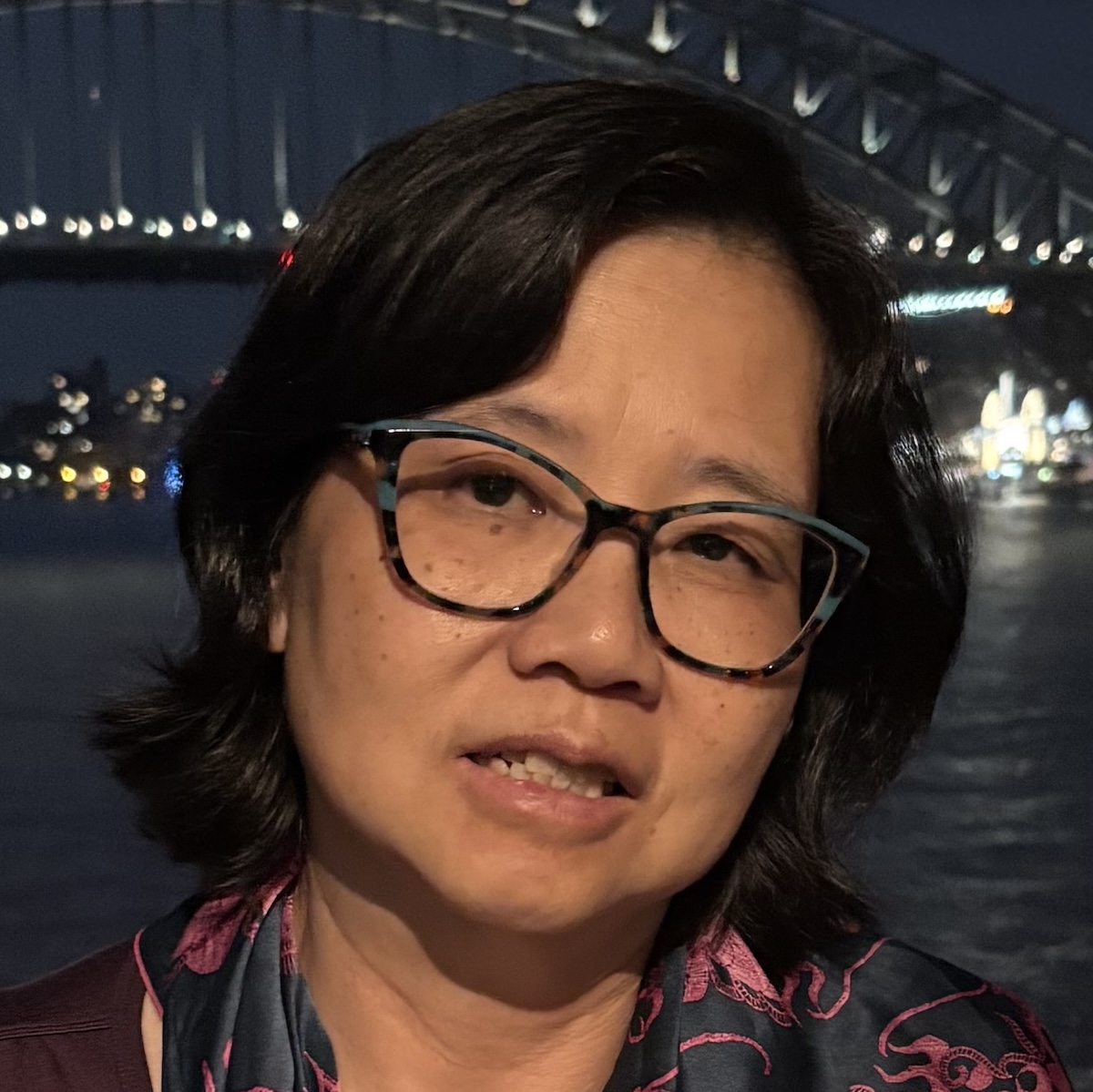
Janaline Oh
Janaline is a former diplomat and current climate, environment and anti-racism activist.
“As a longstanding Canberra-based bureaucrat, I believe in the power of policy to shape and improve lives. I am also acutely aware of the importance of having those policies understood by the people affected by them.
“I started Why Can’t They Just? as way of moving beyond slogans and into what policies really are and what they mean for real people.”

Glenn Davidson
Glenn has a background in education, public service and community radio.
“After far too long being annoyed about the confected outrage, gaslighting, punching down and wilful distortion of facts in our national discourse, I jumped at the opportunity to join the team at Policy 4 People and Why Can’t They Just. I hope to contribute something positive to ordinary people like me understanding complex issues and exercising their vote in an informed way to build and sustain a community and nation that works for all of us.”
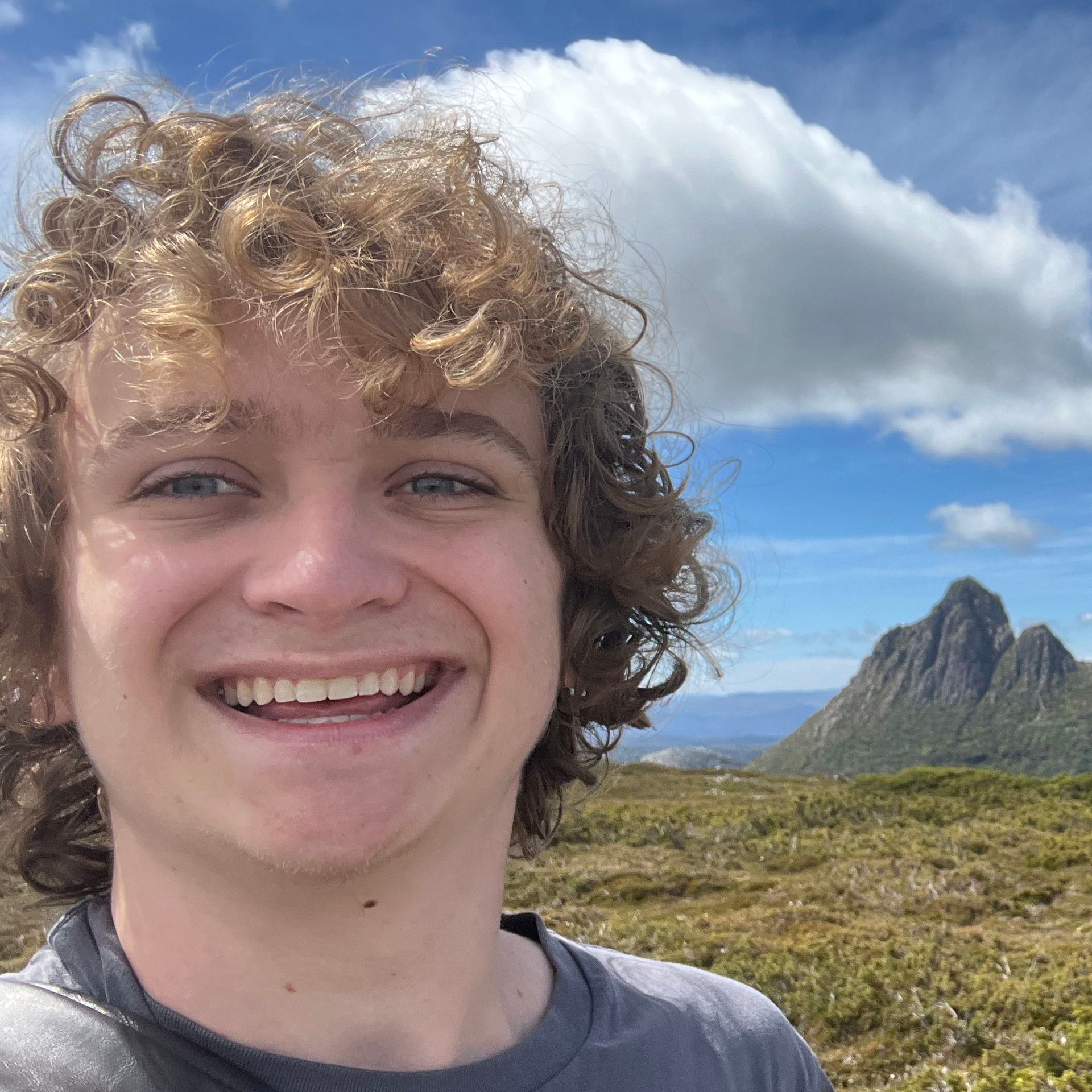
Luke Robertson
Luke is a student in conservation biology and environmental policy.
“I got interested in public policy and particularly environmental policy around 2020, seeing the damage that things like the ‘Wild Horse Heritage Bill’ did to Kosciuszko National Park, as well as budget cuts made to the national parks service that eventually worsened the Black Summer Bushfires.
“I joined the Policy for People and Why Can’t they Just team after seeing the hard fought passage of the Environment Protection and Biodiversity Conservation Act and the power of community organising for good. I am now hoping to help with community outreach in all areas of policy to make Australia the fairest and most equitable country that it can be.”
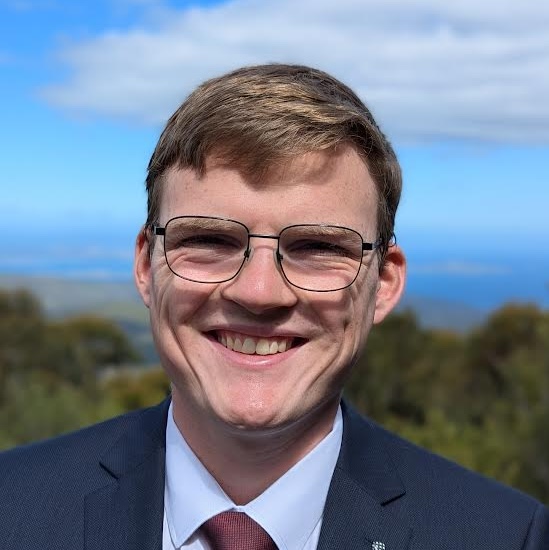
William Sinclair
William is an economist and mathematician.
“People on the progressive end of the political spectrum have legitimate questions: Why can’t they just stop new coal and gas? Why can’t they just end the AUKUS program or stand up to Donald Trump or do all the ambitious things that progressively minded people would support?
“This podcast tries to answer these sorts of questions in a compassionate way without the dismissiveness that often accompanies mainstream politics. We try to examine the other side’s point of view without condescension or contempt. I wanted to make a podcast that would rise above the petty politics of gossip, horserace punditry and psychological conjecture on politicians that passes for analysis. I wanted to talk about the thing that really matters: policy.
“I hope our listeners will hear an argument they genuinely find novel and reach their own conclusions about what we’re discussing.”