Why Can't the Government Ditch AUKUS and the US Alliance? [S2-08]
Posted on Wednesday, Jul 1, 2026 | defence, US alliance, national securityShow Notes
Please leave a comment, particularly if you have your own “Why can’t they just…” question, or email us at whycanttheyjust@gmail.com. We’d love to hear from you.
Please also feel free to rate and review us, as it does help people to find us.
Music: “Insurrection”
Written by Pierre Chrétien
Performed by the Soul Jazz Orchestra
Courtesy of Do Right Music Inc.
Transcript
1 July 2026
Glenn
Welcome to another episode of Why Can’t They Just, a podcast about politics, policy and getting stuff done. I’m Glenn Davidson and I’m a member of the Labor Party.
Janaline
I’m Janaline Oh, I’m also a member of the Labor Party. I’m a former diplomat and a current climate, environment and anti-racism activist.
Luke
I’m Luke Robertson, I’m a member of the Labor Party, as well as a conservation biology and environmental policy student.
Janaline
I’d like to acknowledge that we are all recording this on the unceded lands of First Nations people in Australia, recognising that sovereignty was never ceded, and to pay our respects to their Elders, past and present, and to any First Nations listeners that we have.
Glenn
Well today, we’re going to delve into the AUKUS project, perhaps the biggest, most expensive, most controversial, and most consequential policy initiative that will span decades, cost billions, and be managed by multiple governments of various political persuasions. When AUKUS was announced in September 2021 by Prime Ministers Morrison and Johnson and President Biden, it was arguably a logical progression in the strategic relationship between longstanding allies, aimed at balancing power in the Indo-Pacific and strengthening deterrence against a rising China that had recently shown itself willing to use economic coercion, including against Australia. The US was pivoting towards Asia, the UK was looking to take a more global role post-Brexit, and Australia was re-thinking its defence posture with an immediate need to replace an ageing submarine fleet.
Janaline, why did the Morrison government enter into this arrangement, and what did AUKUS offer Australia at that time? What other choices did we have, or what did we reject?
Janaline
So I’m not going to speak for the Morrison government, I don’t know what the thinking was to move towards AUKUS. I think it was very heavily influenced by some analysis within the foreign policy establishment and the Department of Defence that the submarine options that we were currently engaged in at that time, so you will recall that when Scott Morrison concluded the AUKUS agreement with the UK and the US, he actually cancelled a submarine order from France, much to the dismay of the French government.
One of the problems that we’ve had in Australia is that over about the last twenty years, we have known that our current fleet of Collins class submarines is nearing the end of its life. We knew when that was happening. And in that interim 15 years or so, we went through all sorts of extraordinary pivots and backflips on how to replace them. The Rudd-Gillard-Rudd Labor governments were thinking about building submarines in Australia. When Tony Abbott came in, I think it was David Coleman was then Minister for Defence Industries and said something to the effect that he wouldn’t trust Australian shipbuilders to build a canoe. Tony Abbott wanted to buy submarines from Japan. Subsequently, Malcolm Turnbull ditched the Japan deal and went with French submarines.
And then Scott Morrison cancelled the French submarine contract, where he didn’t tell them until the last minute, and Emmanuel Macron, the President of France, very famously told the world’s media that Scott Morrison had lied to him, which was pretty extraordinary.
So that is a long-winded way of saying successive Australian governments have actually been pretty crappy at forward planning on replacing the submarine fleet.
So we’re now at a stage where the Collins class submarines are going to exceed the end of their life within the next ten years or so and we need to have something to replace them quite urgently. So we have AUKUS. What is AUKUS? AUKUS Pillar One says Australia and the UK will build a particular new class of submarine called the AUKUS SSN. Part of it will be built in the UK, part of it will be built in Australia. They will be very high tech submarines. Controversially, they will be nuclear powered. They will not be nuclear armed, but they will be powered by a core nuclear reactor.
The key feature of that reactor is that it doesn’t need to be touched for the whole of its life. It gets put into the submarine and it lasts for the couple of decades of the life of the submarine. The other important thing about using a nuclear powered submarine as opposed to diesel electric submarines, which is what the French submarines were going to be, is that diesel electric submarines have to come up every couple of weeks to do what they call ‘snorting’. And what that means is that every couple of weeks, your adversaries know exactly where your submarines are, and so you can plot the path.
The AUKUS nuclear submarines can actually stay submerged for several months at a time. They have a very very long range, and they are very very stealthy.
Glenn
OK, so that’s a good background, but it’s more than just about submarines. I recall the French were actually retrofitting diesel electric engines to what was already a nuclear submarine, so the question came up why didn’t you just buy nuclear powered subs from us. So AUKUS is a whole lot more than just submarines, which is often forgotten because AUKUS is often presented as just a synonym for submarine lately. So do you want to tell us a little bit about what AUKUS is?
Janaline
So the other really important part of AUKUS, and potentially the more significant part of AUKUS is what they call Pillar Two, which is basically an agreement for technology cooperation. And what it means is that the three countries, the US, the UK and Australia will intensify and deepen their cooperation in military technology. This is really important for Australia. Because we just don’t have the capacity, the population base, the skills, the depth of research that we can get access to via our alliances with the UK and the US. And other countries. So Pillar Two is actually a very very important part of this.
So just on the submarines, so the SSN AUKUS is not due to be completed - the first one is not due to be completed until the 2040s. In the interim, the agreement was that the US would sell us three Virginia class submarines, so they are current US technology, and this has been the subject of some controversy at the moment, about whether they will actually be delivered, whether we should have in-service submarines or whether we should get a new one. I’m happy to talk about that if you want me to.
Glenn
Yeah, well we’ll get to that, but before we sort of delve into that, because that is a whole topic on its own, is AUKUS an all or nothing package? Do we have to have everything that’s on offer because clearly there’s a lot of shifting sands going on here in terms of the landscape and the capacity to deliver on all of this. If we don’t get the submarines, is there value in all of these beyond submarines?
Janaline
Well I mean definitely the Pillar Two agreement is very very important. That will be facilitated by the submarines, I mean AUKUS is a complete package, but there are probably elements of Pillar Two that can continue without the submarines. But the point is we do need these submarines. And we will come to that no doubt, because that is actually the key strategic call about AUKUS. I don’t think I’ve heard anybody suggest that the technology is not better than the French option. And the French nuclear submarines were not the same. The French nuclear powered submarines would have required refuelling, it would have been a lot more complicated. And I think one of the reasons that the Turnbull government asked them to retrofit them to be diesel electric was because we don’t really have the kind of civilian nuclear capability to do all of that complicated refuelling.
So the AUKUS submarines are different. They don’t require us to have any kind of capacity to do anything other than put the thing in and take it out, and eventually to deal with the waste, which is a whole other issue. But it doesn’t require Australian nuclear engineers to be able to refuel the subs, because they don’t get refuelled.
Glenn
So this, as I said at the very beginning, this was an agreement that was announced by Prime Minister Morrison in Australia, that fella down under, as he was called by President Biden in the US and Prime Minister Johnson in the UK. None of those three individuals are currently in office and the world has changed somewhat since this project was announced in 2021.
Since signing the AUKUS pact, the political sands have shifted. Labor is now in power in Australia and the UK, and there is a new US President whose actions demonstrate a fundamentally different world view to that of his predecessors. We now have a US President who is openly contemptuous of the rule of international law, who attacks and denigrates longstanding allies and imposes unwarranted economic penalties on them, who has taken his country to war without the approval of the US Congress, as required by the US Constitution, let alone the imprimatur of the United Nations, the list goes on. And yet the Australian government continues to describe the US as our closest and strongest ally.
Janaline, five years in, are we where we expected to be, and need to be, if the targets are to be met? How’s it all going? Should we be worried?
Janaline
Yeah, look I think this comes to a bigger question about the US alliance. So I think the government is correct in saying the US continues to be our strongest and closest ally. That is just a fact. Australia has, over the last 80 years, entwined its defence with the US in a way that has given us access to an extraordinary degree of technological and military capability that there is no way we could get on our own, given the size of our economy, given the size of our research industry, of our manufacturing capacity.
That is the first true thing: we cannot just walk away from the US alliance because Australia would be demonstrably less safe. That doesn’t mean that there are not risks and vulnerabilities in the closeness of that alliance. And definitely, we’ve seen the current Administration behave in a way that is not consistent with, I think, Australian interests. I mean the war in Iran was devastating to a lot of countries.
I think we need to acknowledge that, while our biggest strategic threat remains the big authoritarian state to our north, the most significant damage that has actually been done to our economic and national security interests over the last 12 months has actually come from our biggest ally. Given those two facts, that we cannot just walk away from the US alliance and still defend Australia to the degree that we can now, and that I think we need to to keep Australians safe, and that our biggest ally is erratic, it means that the government needs to do what it actually has been doing. Which is to run around the world and develop security cooperation partnerships with pretty much everybody else who will deal with us. And that includes the Pacific islands, North Asia, South East Asia, Europe - and the government has been doing that.
The security agreement with Indonesia is absolutely extraordinary: Indonesia has been steadfastly neutral, refused to have any kind of security cooperation with anybody since independence. And yet they have agreed to a security cooperation agreement with Australia. So I think the world has changed. But having said that, this government since it came in has been cognizant of the fact that the US gave us Trump One and Trump Two was always a very live possibility. So now that it’s eventuated, I think the government has been crafting its foreign policy to accommodate that.
Glenn
Those points are all very valid and it’s been very obvious that the government in Australia has been seeking to broaden its range of contacts, and has established some really important and innovative and unique defence relationships with our nearest neighbours. Because all countries are in much the boat: all those that previously relied on the US to be a central pillar of global security are rethinking the situation. And I would point out that we are only 18 months in - barely 18 months into the second Trump presidency and we’ve still got two and a half years to go.
The thing that does worry me, though, is that Australia and the US do not exist as some separate entity; they are all made up of, as a collection of the people in them, and the people who are running things in the US are doing them in completely and a fundamentally different way to the way things had been done previously and old assumptions and shared values can no longer be taken for granted.
But be that as it may, let’s look at the capacity of the US to actually deliver on these submarines, whether they’re new or in-service as they call them, used. Are the concerns about the capacity of the US to actually build enough Virginia class submarines for their own needs, let alone ours, and the recent downgrading of our order to three used or in-service submarines cause for concern?
Janaline
So I would say no, and the reason for that is because AUKUS Pillar One is not actually about Virginia class submarines. The Virginia class submarines have always been an interim solution to get us from the current Collins class submarines that we’re using now, to the AUKUS submarines that will be built in the 2040s. Now what the government has done as a contingency measure is it has taken technical steps to extend the lives of those Collins class submarines so that, in an absolute pinch, if those interim Virginia class submarines do not eventuate, we can keep using the Collins class until we get SSN AUKUS.
Now obviously the preference is not to do that, because it is a little bit risky; it relies on SSN AUKUS appearing on time, and of course that’s a bit of a heroic hope for any major infrastructure project. But in terms of the Virginia class submarines, I have actually been quite impressed by the degree of bipartisanship on this. So, you know, notwithstanding all the huffing and puffing in the media about you know people conducting reviews, those reviews have concluded that AUKUS is in the interests of the UK and the US. And it’s been pretty clear that the US is on board, is committed, and has issued the procurement contracts necessary to deliver. So we’ve actually seen concrete steps that have been taken to ensure that we get these submarines.
The idea of having in-service submarines rather than a new one - I am the last person to say that the government’s comms are good; I think the Defence Minister, Richard Marles, could have done a better job at explaining why you would do this. If you have in-service submarines, they have already been tested, they’ve been in the water for a couple years. Any glitches that may have come up in their manufacture have been sorted out, and they’re operating smoothly. If you have a new submarine, you have to kind of do that. When Richard Marles says he thinks that actually this is kind of a better deal for us, I think he’s probably right: it means we probably have to put a bit less effort into making sure they work.
So people who say ‘oh, but they’re not as good, they’re old technology’ - they are slightly older technology; the new ones would probably be marginally better, but I just come back to the fact that these are an interim solution. The Virginia class submarines are not the replacement for the Collins class submarine. The Virginia class submarines are a bridge to the SSN AUKUS.
Glenn
That’s a very important clarification there and it’s a point that probably should be made much more strongly than what it is, because it’s really a, what would you say, about a ten year window perhaps, which as you say, at a pinch, the Collins class submarines could get us across to that point.
Coming back to the point I made earlier about countries being collections of people, and the people running the country on the other side of the Pacific are doing it in a very different way to what we’ve been very used to in the duration of our very close relationship with the US. And I would that, as I said, we’re only 18 months into this Trump presidency and he’s got another two and half years to go. He will be long gone when the submarines are due for delivery in the 2030s. But do you think we can still have faith in the integrity of the US system to deliver, or has it been irretrievably broken and corrupted by the current Administration, where as we’ve seen the replacement of people at the head of agencies with people whose fundamental criterion is that they are loyal to the President?
Janaline
I’m not going to get into a commentary on US internal politics at this point. We could literally do a whole episode on this. I think yes, the US does have very very serious democratic and administrative problems. But, having said that, the US does also have a very strong and capable military, whose expertise is much much deeper than the few people that Pete Hegseth, the Secretary of War, has appointed at the top. And these programs are delivered over a very very long time by people with very very deep expertise, who are there across Administrations.
It is important to have political backing. But I think we have that political backing, and importantly we have bipartisan political backing. There are a lot of Republicans in Congress who, notwithstanding how supine they are to the President on many many other issues, have actually been willing to stand up in favour of the Australian alliance.
Glenn
That’s encouraging. It’s also encouraging that there are some mid-term elections coming up which could see a bit of a change.
Now how quickly Australia’s strategic outlook has changed since 2021. Back then, we were still in the throes of the COVID-19 pandemic. Although the medical breakthroughs were pointing to a more positive outcome, the economic implications were stark. That said, the strategic environment was generally stable and secure, with generally extended time horizons for threats to the Australian mainland. In 2026, we find ourselves in a more dangerous and fast-moving threat environment, and shifting to a more deterrence-focused and war-ready posture.
Janaline, have successive governments been asleep at the wheel? Is it already too late to prepare? What should the Australian government be doing to prepare for the next five to ten years?
Janaline
I think through the 2010s there was a real complacency about the rise of China, I’ll be honest. You know I was in Hong Kong at the time on posting as an Australian diplomat, and looking at the changing behaviour of the Chinese government and the Chinese Communist Party with the advent of Xi Jinping. People call him President; his more important job is as the General Secretary of the Chinese Communist Party. The reason that’s important is because the People’s Liberation Army, which is the Chinese military force, is not run by the Chinese state or the Chinese government on behalf of the people; it is run by the Chinese Communist Party as the military arm of the Chinese Communist Party. Whereas the militaries of I think every other country in the world, potentially with the exception of North Korea, those militaries are run by governments on behalf of the people. The Chinese military is run by the Party on behalf of the Party. So that makes its objectives and its decision-making a little bit different.
Glenn
We’re in a very interesting position now between the economic coercion coming from China, our major trading partner, and the US, our major security partner. We’ve got some interesting friends at the moment, but it certainly has changed the landscape.
Janaline
Yeah and I’d also like to give a bit of a shout out to Don Farrell the Trade Minister, who has done a tremendous amount of work in building that trust and rebuilding that trade relationship. Now China is a significant strategic threat but, having said that, the Morrison government’s gratuitous jibes at the Chinese state, the Chinese people, were really unhelpful and unnecessary, and actually damaged Australia’s interests, as you point out, the economic coercion.
Now that is not to excuse the reaction of the Chinese Communist Party, because economic coercion is absolutely a hallmark of its responses to political challenges from other countries. But no, the Morrison government’s behaviour towards China was I think really damaging to Australia’s interests.
Glenn
Let’s now have a little bit of a talk about the change in our defence posture. Now previously it was very much a defensive posture, if you like, based on protecting the homeland here. There wasn’t as much force projection as what there is now. And the, when we get these nuclear-powered nuclear submarines, they’re more about a force projection rather than a defensive measure. Now we’ve had a couple of commentators, if you like, within the broader discourse, who are challenging the reasoning behind that. I’ll draw attention to two in particular.
Greens MP David Shoebridge has argued that Australia does not have the capacity to defend distant sea lanes and we should be focused much closer to home. Former Labor Prime Minister Paul Keating is also opposed to Australia acquiring such a force projection capability that ties us to US military strategic objectives.
While David Shoebridge is focused more on the cost and impracticality of such a stance, Paul Keating is more about the strategic independence, sovereignty and diplomacy as an alternative to military hardware. Yet they both arrive at the same point, and that is that we should not be doing this. Are they right?
Janaline
So let’s take David Shoebridge. To say that we cannot defend Australia’s sea lanes is basically to say, we’re going to give up on the defence of Australia. Why is this? There is no credible military threat to the Australian mainland. China is not going to invade the Australian mainland. They have no interest in doing that, they have no capacity, and there’s just no benefit to them. Traditionally we built our Australian defence on the idea that we might get an invasion on the Australian mainland. And this came from, you know, threats from Japan in the Second World War, subsequently fears of Indonesia and, sort of as an undercurrent, the idea that you know Russian submarines or ships might come and try to invade Australia.
Now none of that came to pass, which is a good thing. I don’t think anybody thinks that that is a credible threat now. What is the real strategic threat to Australia? There are two significant strategic threats to Australia from China.
One is the interference with our significant trading routes which come through the South China Sea. Now the Chinese Communist Party and the Chinese government claim pretty much the whole of the South China Sea as Chinese territory. This is based on a claim that originates with the KMT, the Kuomintang, which fought a civil war with the Communists, lost and went to Taiwan. The Chinese Communist Party adopted the Kuomintang’s interpretation of Chinese territory. That conflicts with the sovereignty claims of pretty much every other country in South East Asia. And it has been comprehensively debunked by historians, by strategists, and by the Permanent Court of Arbitration, which found that most of the Philippines’ claims against Chinese assertions of sovereignty in the South China Sea were upheld.
And, as you say, in 2021 China showed that it was perfectly happy to exercise extreme economic coercion on Australia. And interfering with our trade routes and our commercial aviation is one of the easiest tools that they have to use. And I would add to that, this is not theoretical. Chinese fishing vessels, Chinese coastguard and Chinese military vessels and aircraft are interfering with commercial shipping and aviation in the South China Sea on an almost daily basis and have done so for the last ten years. Some of these instances have come out in the media, usually when a Chinese aircraft undertakes some dangerous manoeuvre in relation to other aircraft, and it gets reported by the western media. But there have been many reports of Chinese coastguard and Chinese fishing vessels interfering with other countries’ commercial vessels in the South China Sea. This is not a theoretical threat.
If we are to say ‘oh well, we’ll just give up, and if they want to exercise coercion in that way then there’s nothing we can do about it.’ That is essentially saying ‘we are going to give up on the defence of Australia’. Now Senator Shoebridge may be able to say that, because he is not likely to be sitting in the seat of the Defence Minister, but I think any government that is going to be responsible enough to look after its people, and defence of the security of the nation is one of the primary responsibilities of any government, absolutely cannot give up on the defence of Australia.
Glenn
Luke, you had a question I think on that?
Luke
Yeah, I get that China does do some antagonistic things, like I think it was the Virgin flight that had flares popped in its face, and then the, I don’t know, the boats that were going around the coast. But I don’t understand what the strategic goal is for China in doing those actions in the first place. I get in the South China Sea they have a claim to it, right, but why would they interfere with people trying to give things to them? That doesn’t make sense to me.
Janaline
Well it’s the same reason that they’ve interfered with people trying to sell things that their people want, and that their businesses want. They do it because they see a political interest. Because the Chinese Communist Party is not driven by the economic interests of…
Luke
Then what’s the political goal?
Janaline
The goal is to exert sovereignty. The goal is to make clear to the entire world that China owns this territory, that China controls this territory and if you want to use these sea lanes, you need to acknowledge that. You need to accept Chinese sovereignty in order to have free passage of these, frankly, international waters, and waters that actually are credibly and legitimately claimed by other countries. It’s a political goal. The thing that people do not understand about the Chinese Communist Party is that it is principally driven by the political imperative to retain power.
Glenn
OK so that really accounts for the David Shoebridge argument, and Paul Keating sort of sits a little bit inconveniently within all of that because he agrees that China is not a military threat to Australia, but he disagrees that we also should be having nuclear powered submarines and this force projection stance rather than building relationships through diplomacy and other, if you like, soft power initiatives. Luke, what’s your perspective on that?
Luke
Yeah, it seems that forward defence, and I think in the Press Club address that I think you’re talking about there, Paul Keating said that the tactical goal is to pick off Chinese submarines as they attempt to cross this plateau, where he’s referring to the shallow continental shelf off the coast of China, and essentially treating them like ducks in a shooting gallery to essentially deny them a nuclear second strike capability. To me that seems really high risk. I don’t understand why we would put ourselves in a position where we would need to be denying China a second strike capability. Why would that be our responsibility, given that we rely so much on China in terms of trade? Is that not overtly antagonistic?
Janaline
I will go back a step and take issue with Paul Keating’s analysis of what these submarines are for. They are not about denying second strike capability. They are not about sucking up to the US and being part of the US forces. They are about having a deterrent - an independent Australian deterrent capability so that, if China wants to interfere with our trade in the South China Sea for some coercive political reason, we have a capability out there that is big enough and ugly enough and stealthy enough that we could potentially take out a Chinese aircraft carrier. The calculation is, that capability is enough to make them think twice therefore about interfering seriously with our trade.
Let me be clear, the purpose of these submarines is not to take out - you know, is not to take pot shots at a Chinese aircraft carrier; it is about providing that deterrent capability so that they know we could, they don’t know where these submarines are, and that might give them pause. One of the interesting things that I heard a few months ago was the Economist did a podcast series on US nuclear facilities, as in nuclear weapons facilities, and they interviewed the head of one of these facilities, who said ‘our weapons have not been deployed for 50 years, but they are used every single day’. Because the knowledge that we have them and we can deploy them, stops people from doing stuff that might make us want to deploy them.
That is the purpose of these submarines. It’s not about picking off Chinese submarines crossing some particular line in the ocean. It is actually about defending Australia’s trade interests and national interests.
And when you say, Glenn, that there is no military threat from China, there is no threat of a military invasion on the Australian mainland. That is not the same as no military threat from China. There is a very serious military threat from China that will probably come via our trade routes and that is why we need a forward projection. It is not about protecting US interests. It is about protecting Australian interests.
And on the sovereignty issue, you know, one of the things that people keep saying, or people did say a few years ago was ‘oh but this just means that if we have US submarines, then the US is going to tell us how to use them. Nobody ever said that about the French submarines. I don’t know why people think that buying submarines from France gives us more sovereignty than buying submarines from the US. But having said that, I think I’ve heard a lot less of those arguments recently and I think the reason for that is that this government has shown that it is quite capable of saying no to the US. The fact that we have refused to have anything to do with the war in Iran, other than providing a surveillance aircraft to the UAE - not the US - I think has been very very - I think has made very very clear that this government at least, and hopefully future governments, will act in Australia’s national interest, regardless of what the US wants its allies to do.
Glenn
Yes that’s a very important, very important point and that’s been encouraging I think for a lot of people to see that the government has been prepared to take that independent stance. I’m reminded in your very salient quote there about weapons not being deployed but being used every day, there was a line in that movie Thirteen Days about the Cuban missile crisis where they had the blockade of the ships and someone got a little bit trigger happy in the US navy and fired on the ship and I think the US Defence Secretary sort of went ballistic about all of that and said you know ‘this is not about firing, this is language’. And so those submarines in the South China Sea or wherever else are language, rather than things that go bang. Very important.
Now our time is coming to an end, but do we have some final statements? We’ll go to you first, Luke.
Luke
I think there are still some questions that are more philosophical in nature about whether our security should be coming from the US inherently and whether it’s worth investing more in sovereign capability beyond creating our own submarines with another country. But I think there’s been a lot of questions answered today.
Janaline
Yeah, just to respond to that, yes there are questions about sovereign capability, but I think we need not to confuse sovereign capability with sovereign self-sufficiency. Because, as I said at the outset, we cannot deliver the kind of capability with Australian made weaponry, Australian made technology and military equipment, materials and capacity that is solely generated in Australia. We just don’t have the size, depth of research, and that capacity that a genuinely large, highly advanced country like the US has. In terms of our reliance on the US, as I said in the beginning, we cannot walk away from the US alliance and keep Australia as safe as it is now. We could spend 10% of GDP on defence. We could have conscription. And we would still not be as safe out of the US alliance as we are now with our current level of defence spending and no conscription in the US alliance. So I think that needs to be very very clear.
But having said that, we do need sovereign capability, we do need to have independent capacity. And I think one of the things that is under-appreciated is that all of these security arrangements and agreements and cooperation agreements that this government has made and is continuing to make, and is continuing to explore with countries as far afield as Europe and Canada, is not just about shoring up against China. It’s also about shoring up our vulnerability to over-dependence on the US. Having security agreements in the Pacific, and I saw recently the new Prime Minister of Solomon Islands, Matthew Wale, talked about the possibility of having a Pacific-wide security arrangement, and I think that is a fantastic idea, that is not just about China. That is also about shoring up our defence and our capability, in cooperation with our neighbours, against our vulnerability to erratic decision making in the US.
Glenn
So on that note, it seems that AUKUS will be with us for the next few decades, will continue to evolve and reshape in various ways, and it will certainly take place in an emerging and evolving context.
That wraps another episode of Why Can’t They Just? Our theme music for this podcast is a piece called Insurrection by Pierre Chrétien, performed by the Soul Jazz Orchestra, courtesy of Do Right Music Inc. I’m Glenn Davidson.
Luke
I’m Luke Robertson.
Janaline
I’m Janaline Oh, and this is Why Can’t They Just?
Hosts

Janaline Oh
Janaline is a former diplomat and current climate, environment and anti-racism activist.
“As a longstanding Canberra-based bureaucrat, I believe in the power of policy to shape and improve lives. I am also acutely aware of the importance of having those policies understood by the people affected by them.
“I started Why Can’t They Just? as way of moving beyond slogans and into what policies really are and what they mean for real people.”

Glenn Davidson
Glenn has a background in education, public service and community radio.
“After far too long being annoyed about the confected outrage, gaslighting, punching down and wilful distortion of facts in our national discourse, I jumped at the opportunity to join the team at Policy 4 People and Why Can’t They Just. I hope to contribute something positive to ordinary people like me understanding complex issues and exercising their vote in an informed way to build and sustain a community and nation that works for all of us.”
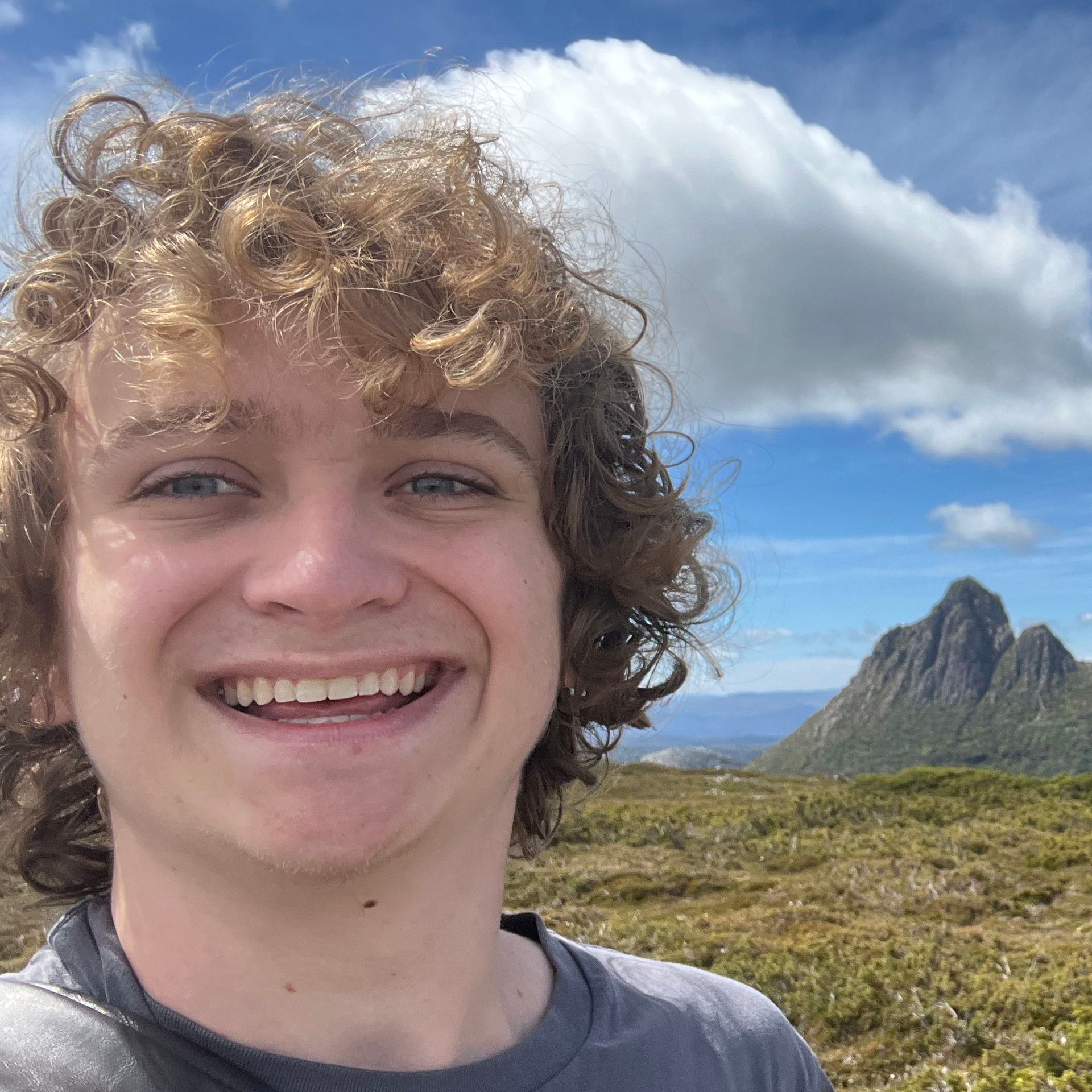
Luke Robertson
Luke is a student in conservation biology and environmental policy.
“I got interested in public policy and particularly environmental policy around 2020, seeing the damage that things like the ‘Wild Horse Heritage Bill’ did to Kosciuszko National Park, as well as budget cuts made to the national parks service that eventually worsened the Black Summer Bushfires.
“I joined the Policy for People and Why Can’t they Just team after seeing the hard fought passage of the Environment Protection and Biodiversity Conservation Act and the power of community organising for good. I am now hoping to help with community outreach in all areas of policy to make Australia the fairest and most equitable country that it can be.”