Why Can't They Just Fix Medicare? [S2-13]
Posted on Wednesday, Aug 5, 2026 | social policy, fairness, inequalityShow Notes
Please leave a comment, particularly if you have your own “Why can’t they just…” question, or email us at whycanttheyjust@gmail.com. We’d love to hear from you.
Find out more about us and how you can support us at https://whycanttheyjust.com.au/, which includes a link to our Patreon site where you can sign up for exclusive content.
Please also feel free to rate and review us, as it does help people to find us.
Music: “Insurrection”
Written by Pierre Chrétien
Performed by the Soul Jazz Orchestra
Courtesy of Do Right Music Inc.
Transcript
5 August 2026
Glenn
Welcome to another episode of Why Can’t They Just, a podcast about politics, policy and getting stuff done. I’m Glenn Davidson and I’m a member of the Labor Party.
Janaline
I’m Janaline Oh, I’m also a member of the Labor Party. I’m a former diplomat and a climate, environment and anti-racism activist.
Luke
I’m Luke Robertson, I’m a member of the Labor Party, as well as a conservation biology and environmental policy student.
Janaline
Before we start, I would like to acknowledge that Glenn and I are recording this on the unceded lands of First Nations people in Australia, recognising that sovereignty was never ceded, we pay our respects to their Elders, past and present, and extend those respects to any First Nations listeners that we have today.
Glenn
Today we’re talking about Medicare, perhaps the most profound social policy area in Australia since the early 1980s. Its short-lived predecessor, Medibank, which was a Whitlam government initiative in 1975, was effectively dismantled as a universal public health system by the Fraser government that followed it. With Labor’s return to government under Prime Minister Bob Hawke in 1983, universal health care was again on the agenda as a high priority, and Medicare was born in 1984.
Medicare established the principle that every Australian should have access to health care, regardless of their income, location or personal circumstances. It also created a universal system of publicly funded health care, providing free public hospital treatment, and free or subsidised visits to doctors and specialists.
But for the Labor Party, Medicare is more than just a health program. It’s one of the pillars of Labor’s belief in fairness, equity and collective responsibility. In a sense, Labor sees it as a right of citizenship, rather than a privilege for those who can afford to pay. Medicare is based on Australians contributing according to their means, and receiving care according to their need.
Janaline, why is universal health care in general, and Medicare in particular, such an important issue for the Labor Party? What’s wrong with having people individually responsible for their health care? I mean, if I lead a healthy lifestyle and take care of myself, why should I have to pay for people who don’t make healthy choices?
Janaline
Medicare is definitely a thing that Labor considers to be a very deep part of its DNA. I think public health care is a deeply held Labor value, it’s a thing that successive Labor governments have consistently campaigned on and really made a point of differentiation between them and the Liberal National Coalition, which it constantly accuses of trying to shut it down, sometimes with more justification than others.
I think the reason for that is because of a deep sense that health care is a human right and it is more particularly a right of working people. It comes from a long history of post-industrial revolution, bad health outcomes for working people, where, if you were the victim of an accident, or if you got sick, you just didn’t get paid and you could end up destitute and your family could end up destitute. So I think public health care is a very very deeply held Labor value.
On the second question of why should a healthy person who makes good choices subsidise the health care of people who make bad choices, I think it comes again to the idea that there are some things that are just good for society. That getting public health care is not just good for the individual; it’s actually good for society not to have people having to bankrupt themselves to get medical treatment, or having people avoid getting medical treatment for minor ailments which might then become major ailments and make them incapacitated, reduce their ability to work. So from a purely transactional, societal point of view, I think there is a really strong case for public health care to maintain productivity in the economy.
Coming at it from two sides, one is a kind of rights-based, looking after the individual worker, who may for reasons beyond their control end up needing health care, and therefore the public health care system is there to support them. And from a kind of cold-hearted economic productivity side, that says that it’s good to ensure that people maintain their productive capacity.
Glenn
My question there was somewhat tongue in cheek, although I have heard that question expressed in exactly that way on radio programs unlike this one. And I think that economic argument is one that holds force, because as we see in the US, health care is often provided by employers for their workers because they recognise that economic value to them and hopefully the broader society of having people cared for when they need medical assistance. Our system of course being universal as it is means that people don’t have to renegotiate their health care arrangements every time they change employers.
Janaline
I think the other argument, just taking the US as an example, is that, having health care supplied by employers and having people dependent on their employers for health care actually also in itself is a productivity-sapping measure, because it means that it increases a point of friction for people to change jobs. So someone might hang around in a job that they’re not that great in, or they don’t particularly like, or they give up a better opportunity somewhere else because they’re worried about losing their health care. And this actually happens in the US, and it is a brake on productivity.
But I mean I think the biggest reason is that you have so many people in the US with really really chronic health conditions; you have terrible poverty that is specifically driven by a catastrophic illness that people cannot afford to have treated. And I think that’s not an example that I think we want to replicate in Australia.
Glenn
And of course all of those healthy people that have made good healthy choices who are complaining about having to pay a contribution towards the cost of Medicare do of course benefit from having a broader population that is healthy and productive and able to, you know, continue to contribute to society so they do indirectly benefit. The same as they do from public education, and defence, and law and order and, you know, that whole spectrum of services that are provided by government. So it is a little bit disingenuous to disaggregate health from everything else and say ‘why should I pay for somebody else’. We really should be above that in Australia, and I think sometimes we are, sometimes not so much, perhaps.
Janaline
I would just say, again, to those people who say ‘I have a healthy lifestyle, why should I subsidise someone else’s health care?’: I have a healthy lifestyle. I fell off my bike and smashed every bone in my elbow a few years ago, and had it fixed by the public health system. I eat well, I haven’t drunk alcohol since 2003, I ride my bike every day. I had an accident and, because of Medicare, I was able to get it fixed very very smoothly and at no cost to myself. So, even if you have a healthy lifestyle, bad things can happen to you.
Glenn
And as people age, their requirements for health care go up and their ability to pay, you know, extremely expensive treatment diminishes and we certainly don’t want the older people in our community basically falling apart unnecessarily.
Janaline
Well, the other thing is, as we said in our episode on aged care, one of the ways in which you can actually reduce the long term costs of aged care is to ensure that your population stays healthier for longer, and one of the important components of that is investments in public health care, so that people can get early intervention, so that they can get cancer screening. And so that they can live healthier for longer and be less of a call on the public system when they get older.
Glenn
In our next segment, we’ll have a look at how Medicare has evolved over the last 42 years or so, but before we do that, do we want to have a perspective from a younger person?
Luke
What a heartless argument! My goodness, I was shocked. I don’t know, just that argument as well, like ‘I live a healthy lifestyle’, but like you said, Janaline, bad things can happen to people who do. But what about those with chronic conditions, like babies? And children? I don’t know, what a heartless thing to say. But I did - when you mentioned how America has, their health insurance is tied to their employer, I thought that’s one of those pro-worker productivity things, I just had in my head the comparison with those non-compete clauses, where they’re all sort of keeping people where they shouldn’t be and don’t want to be, because they have such a reliance on their employer.
Janaline
Yeah, it’s pretty outrageous. There was a suggestion at one point in Singapore, I think, where a health minister floated the idea of withdrawing public health care from people who smoked. Because if you’re going to do that, then, you know, it’s your fault if you get lung cancer, and you should pay for it and the public shouldn’t. But even that, I mean, smoking is addictive. Like a lot of people who smoke don’t really want to smoke. It’s not a thing you can just turn on and off. And I think there needs to be, you know, a bit of compassion as well about how people might end up making bad choices for their health for a really large range of reasons. And the idea that they should be punished for it seems, you know as you say, a bit heartless. But then again, I also come back to the productivity argument. I mean the number of smokers is actually reducing and the reason for that is because of education, because of helping people to get off their addiction and not because of punishing them because they have an addiction.
Luke
That’s interesting. I suppose you could say the same thing about people who drink or people who vape or whatever. There’s thousands of vices that would have an impact on one’s health.
Janaline
Well, and what about people who eat hot chips? And what about people who eat chocolate?
Glenn
The other dimension to that with the young people is that you qualify for Medicare from a young age, you move off your parents’ Medicare card as you become an adult and have full access to Medicare from the start of your working life so before you’ve accumulated enough resources to be able to look after yourself, you’ve got full coverage, so I think that’s an important issue.
Now let’s have a little bit of a look at the evolution of Medicare and where we are now, because it’s a little different now to what it was when it was introduced on the first of February 1984 by the Hawke government. At that time, they took a fragmented health system reliant on private insurance and state-based arrangements and introduced a national hybrid system with widespread bulk-billing in the public system, although still with private hospitals and private arrangements for those who could afford to pay. This provided a huge challenge for the government in terms of how to have a high quality public system that was financially sustainable. Now that was partly achieved by seeking to maintain a strong private health sector alongside the public system, with incentives for people to maintain and purchase private health insurance.
Over time, more services have been included in Medicare, with a wider range of consultations, specialist services and diagnostic procedures included. The Albanese government has widened the range of service delivery platforms with the creation of nurse-led walk-in centres, fully bulk billed GP clinics and mental health centres. These initiatives improve accessibility as well as take the pressure off hospital emergency departments.
Now, Janaline, while Medicare is currently enjoying a big increase in funding and resources, previous Liberal and National Party governments have not shown the commitment to supporting Medicare and have considered alternate funding models and delivery options. Is Medicare in its current form really the best option for Australia and Australians?
Janaline
I reckon that is a really, really good question because it is a thing that I think a lot of countries that have public health care systems, or that are designing public health care systems think about. There are different models: in the UK, the National Health Service directly employs doctors and then allows those doctors also to provide additional, privately funded services to people who can afford them. In European countries, I think there is a mix between direct employment of doctors by the state and the kind of system that we have here, where the government basically pays doctors a fee per consultation and then the doctors can either charge a gap or they can provide private services.
There are pluses and minuses in all of those models, and all of them have struggled to contain costs, because health care is expensive and people need it.
I think the current system does need a bit of a review, and certainly the health minister, Mark Butler, has indicated that he wants to do a comprehensive re-look at Medicare and one of the key things that he’s identified is that, in the 1980s, Medicare principally dealt with one-off or acute conditions. So someone would get an illness, go see the doctor, get it treated, get better. The health profile of the population now, partly because of ageing, is much more towards chronic illness and that needs a different type of care.
Another issue is the emergence of mental health as a serious health concern, which obviously makes it harder to do things in 15 minute consultations. So I think the funding model does need to be looked at and I think doing things like the bulk billing incentives, where you actually create incentives so that doctors and clinics can provide fully bulk billed services and not feel short-changed. One of the things that the Australian Medical Association has called for for a very long time is a review of the Medicare rates and how they’re applied and how you take into account that a lot of the consultations are now more costly, longer consultations.
I think the walk-in clinics and the nurse practitioners and the advanced practice nurse model is a very good one, and I think allowing pharmacists to write and fill prescriptions for minor ailments is also a good idea, because doctors are very expensive, and so being able to push medical treatment and medical decisions as far down the skill ladder as you possibly can means that you will save money. Even though advanced practice nurses are also highly skilled, they are cheaper than doctors. So it makes sense for them to be able to diagnose and treat illnesses up to the level of their capacity. If the nurse sees that the condition you’ve got can’t be dealt with by them, they can send you on to a doctor. But what it means is that many many illnesses or minor injuries can now be dealt with by a lower cost health professional.
Glenn
Yes, they have been very good initiatives that means that you don’t have people with sniffles or headaches or minor issues clogging up emergency departments and freeing up doctors - it frees them up to deal with those things, those cases that do need more acute care. The other aspect that is a fine balancing act is the whole funding model, because Medicare is a hugely expensive policy to implement, and it is a hybrid system, as we’ve said, and it does rely on those people who can afford to have private health insurance taking out their private health policy and having all those people who can afford to pay for their elective surgery doing that in the private hospital system so you’re not clogging up public hospitals with that, and leaving the public hospitals for those who do rely on the Medicare system. But as the cost of private health insurance is going up and real wages currently are either not growing or are sliding, more and more people are giving away their private health insurance and thinking ‘I will just rely on Medicare’. That may not end well down the track if it keeps going in that direction. What can the government do about that, do you think, Janaline?
Janaline
The explosion in cost for private health insurance and the increasing complexity of private health policies, which I feel is kind of deliberate because it makes it harder to compare them, and so they can kind of get away with having bigger exclusions or bigger excess, or limits on how much they will cover. I think that is a system that really is ripe for reform as well. I think the government probably needs to be a lot bossier about looking through those policies and developing a system to make the private health insurers present their policies in a way that makes them more comparable, and potentially develop tools, like online web comparator tools that enable people to compare private health insurance more easily.
Glenn
Another aspect of that and one of the things that’s partly driving the increase in premiums for private health insurance is specialist fees, some of which are outrageous and way out of control where they’re charging fees that are, you know, well in excess of what is a fair return on their expertise and the time they spend on their patient. That’s fairly difficult to get under control because the private health insurers will pay a certain amount and then there’ll be gap fees for wealthy clients, so they can pay that but not everybody can pay those big gap fees. So I’m not sure what the answer is to that because, again, they’re a private market. It’s up to them to charge what they want for their services, and people will pay it if they can but it does all add to the overall cost of providing that expensive medical care.
So whereas the Albanese government has done a lot with Medicare; it’s really breathed a lot of life back into it because it had become pretty moribund under the previous Liberal National government, which had starved it for funds and not adjusted bulk billing fees for several years. So they’ve addressed that and there are more bulk bill GP clinics around, including in Canberra, which was a bulk billing free zone for a long time under the previous government, but there’s still a long way to go and, as you say, health minister Mark Butler is going to be looking into that.
Luke
I’ll talk from experience, I used to have a GP who got to the point where, whenever I went to see them I would sort of be rushed through. I don’t know, it just felt like they didn’t care as much, and I’ve since switched to someone else who doesn’t do that. My question is, how does the funding model of paying per consultation, does that not incentivise the continual churning through of patients? Are there alternative ways to prevent that from happening? Is it even a problem? Do lots of people experience it?
Janaline
That is such a good point, and I think it is a manifestation of the fact that the previous Coalition government basically froze Medicare funding for more than ten years. Doctors’ bulk billing rates didn’t move for a long time while their costs went up. So the costs are not just what goes into the doctor’s pocket. It’s also things like rent for the surgery and the wages of their reception staff, and the infrastructure and energy bills.
The freezing of the Medicare bulk billing rate that went back to doctors really did manifest itself in a lot of ways for doctors compensating for it by basically condensing their consultations into like three minutes instead of fifteen minutes because then they could see more patients. One of the things that the current government has done is, firstly, increase the bulk billing rate quite substantially, and also provided an additional bulk billing incentive for doctors who bulk bill every single patient. I think the fact that not only the government established bulk billing clinics but also a number of private clinics are now moving to bulk billing suggests that those measures have done enough to make at least some doctors feel that it is worth their while to offer the bulk billing service.
One of the problems is that the nature of illness has actually changed since the 1980s. If you have someone with a sniffle or you have someone with, I don’t know, a cut finger, you can actually deal with that relatively expeditiously. If you have someone with a complex chronic illness, or a conflation of several different illnesses that interact with each other to make that person sicker than any individual illness would, then that becomes a lot more time-consuming and I think this is the thing that the doctors have been asking the government to look at and to consider how you design a funding model that actually reflects the additional time and the additional costs the doctor’s going to incur for dealing with those more complex issues.
I reckon the specialist issue is one where the government just needs to be a little bit more bossy. And I think it is an area where you might actually want to look at something like the National Health Service model in the UK, where the government actually employs specialists. And they work for the government at a government rate and people who see those specialists get to see them bulk-billed, they don’t have to pay out of pocket, but then allow them to spend a certain proportion of their time treating people through the private system and so allowing them to charge whatever they feel like for people who can afford it.
I think again with kind of increased complexity of medical conditions, that is going to be a challenge because inevitably with public health systems, demand generally outstrips the budgets. I think they do need to look at creative ways of ensuring that costs are kept to a reasonable level.
Glenn
Now Medicare today is one of Australia’s most trusted institutions and policy areas. It remains a hybrid system that provides universal health care for the body and mind, although remains reliant on the private health insurance and health care markets for its sustainability. It also faces huge challenges in sustaining bulk billing, meeting work force levels needed to support an ageing population and reducing inequality in access to care. And there is also a push to have dental care included in the Medicare system. The cost of dental care in Australia is prohibitive for some and there are long waiting lists for some public services, which means some people delay or cannot access timely care. Others who can, resort to dental tourism, particularly to lower cost Asian countries.
Janaline, while Australia ranks highly against similar countries for its universal health care system, we are an outlier when it comes to the inclusion of dental care. Why can’t we just fix this aspect and have possibly the best system in the world?
Janaline
I would love to see dental into Medicare. I think it is an important investment. There’s a whole lot of evidence that shows that bad dental health actually bleeds into bad health outcomes overall. One of the categories of free dental care is for pregnant women, because there has been credible research to show that bad dental health in pregnancy can actually affect the child. There are various carve-outs for public dental care, as you say. Children under the age of twelve are entitled to a certain number of free dental visits. I think older people, in some categories, are also entitled to publicly funded dental care, and, as I said, you know, pregnant women are entitled to I think one or two dental visits during their pregnancy.
I think universal public dental would be a terrific thing. It is very very costly so I think the government does need to sort out the funding model before it can provide it, but I hope they will do that as a priority. Because it does affect people’s lives. It affects their ability to work. I mean, if you’ve got really terrible teeth, you cannot work. And anybody who has had tooth pain knows how crippling that is in terms of your ability to do literally anything else, or think about literally anything else while that pain continues.
But I think they probably have a bit of work to do first to sort out a good funding model that enables that care to be delivered to the people who really need it and also keep the system sustainable in a financial sense.
Glenn
Yes and the other issue we’ve touched on there is the whole issue of work force levels and this comes back to that perennial issue that has come up on every topic we’ve talked about and that is the role of migration in supporting the delivery of services in this country where most people who are working across the care sector and particularly in the medical and hospital sector are migrants, either that have been here a while or are more recent arrivals and we need to continue to, not just encourage that, but continue to support that. Recognise that that is an essential part of the sustainability of our system, and stop some of this nonsensical, damaging public debate and discussion that goes on from some quarters about cutting back on the migration.
Janaline
Yes, can’t argue with that. And I’ve got to say I think one of the reasons that you see a lot of Asian doctors with Australian accents in the Australian health system is because every Asian kid of my generation was basically pushed into medical school. I resisted, personally, but yes, definitely a thing.
Luke, do you have anything to say about this?
Luke
Are there alternative funding models that would address being able to see a specialist and the emergence of mental health? How do you fund and reward doctors for seeing as many patients without making them rush through them? I don’t know, it feels like an impossible ask. Are there any solutions around?
Janaline
I think the government needs to be a bit creative about this. I mean one of the things that Mark Butler has floated is the idea of creating a chronic care package. These things actually exist: I remember when I broke my arm, it led to a couple of other things happening and my doctor actually signed me up for a package designed for people who have multiple and chronic illnesses, and it entitles you to a range of services related to those illnesses paid for by Medicare that you might otherwise have had to pay significant gap fees for. I think there are ways of kind of developing packages like that.
You know, in the way that you do an aged care assessment or a disability assessment, you might also have a chronic illness assessment and that then leads to the application of a budget for you to manage that condition and that might include specialist care and it might include mental health support and it might include a range of other things.
I think it is worth it for Australians to understand though, as Glenn says, that in terms of Medicare, if you exclude the issue of dental, Australia actually does have one of the best systems for delivering high quality care to most of the population most of the time. I think we should do what we can to make it even better and, yeah, I’ll leave it at that.
Glenn
Now that brings us towards the end of our time for today. Medicare is a very big and complex topic and it continues to evolve. That green card we see brandished around, sometimes as a badge of honour and, dare I say it, sometimes as a weapon in times of election campaigns. But you’ve only got to see the pride as health minister Mark Butler stands up in Question Time to talk about anything to do with Medicare, with the things that the government has done, is time to see that this is something that this government takes very seriously, is very invested in and will continue to invest in.
Luke, can we have any final perspectives from you first, please?
Luke
Yeah, there are some interesting bits in there and big policy questions to solve about how you get the funding right. I think that’s something we’ve really explored over the past few weeks and what I’ve listened to aged care as well, is what is the correct use of public and private methods of providing care? And how do you get the best of both worlds, but how do you do it in a way that doesn’t impede on anyone’s ability to access the care, or to access care of a lower quality? So I think there’s a very big question at the end of all this which is, how should the funding model change in order to compensate for emerging health problems, and who knows what that looks like? I think that’s a really interesting question.
Janaline
I reckon a big issue relating to that, Luke, the issue that you raise around funding is what are the investments in terms of broader social policy, that are useful to make, that will help to bring down the cost of Medicare. I mean one of the issues that we discussed when we were talking about the National Disability Insurance Scheme and the danger that people who were pushed off the scheme before those support systems at state and territory level or at community level were ready to receive them, might actually end up in very expensive hospital emergency rooms.
So I think it is worth it for any government that really wants to take universal public health care very seriously, and also wants to take the sustainability of that system very seriously, needs to look at where they can make investments in preventative health care or in other social policy areas that will have a dividend through reduced pressure on the Medicare budget. And I’m thinking about things like, you know when I was a kid, we had this big social campaign run by the Hawke government, I think, called Life, Be In It, where they had all these cheesy ads of Norm, who was a big gut, beer swilling, chip eating guy on a couch watching sport being encouraged to actually get out and play sport. And the purpose of that program was basically to encourage people to have more active lives. To encourage people to exercise. I mean, this was in the 1980s, when there was a massive concern about increased rates of heart disease, increased rates of obesity, increased rates of, you know, what you might call sort of lifestyle-affected chronic illnesses.
I think one of the things that we talked about in aged care was the idea of government policy making it easier for people to make healthy choices. I mean I don’t believe in governments, you know, pushing people into doing stuff. You know, one of the things that some of our more conspiratorially-minded compatriots say is that, you know, big government just wants to force you into doing things and tell you how to live your life. I don’t think that works and I don’t think that’s an appropriate thing for governments to do. But there are a lot of things that governments can do to make it easier for people to make those choices. You can do things like publicly funded exercise classes that are accessible. A lot of councils do this sort of thing. My mother, who is quite elderly, had access to a council-funded weekly exercise class. My sister goes to a council-funded pilates class three times a week. That kind of thing makes it easier for people to make those healthy choices.
You know, ensuring that everybody has access to affordable fresh fruit and vegetables is a way of making it easier for people to make healthy choices. There are whole communities in remote Australia, particularly I have to say, First Nations communities, where there are no affordable fresh fruit and vegetables, where a capsicum costs $10 and people just can’t afford them.
So I think there are lots of ways in which public policy interventions can make an investment in preventative health care, and helping people to be healthier that will provide dividends in terms of the Medicare system and in terms of how chronic illnesses play out in Australia.
And things like, you know, vaccinations and screening. Screening for diseases, particularly for cancers, has been shown to be incredibly effective in preventing the onset of cancer. If you get a bowel screen, you know, you have a colonoscopy, they find some polyps, they scrape them out, they don’t become cancers. I think having, you know, a universal program of mammograms for women over 40 has been incredibly successful in reducing the rates of breast cancer. So I think those sorts of interventions are much much cheaper than dealing with people being sick.
So if we look at the health care system and health care funding as the most expensive part of the system is actually fixing illness, then how do we make investments throughout social policy that will reduce the number of people needing that very expensive type of care. And also have the very significant additional benefit of having healthier people in your society and having people living more active, healthy and engaged lives.
Glenn
Thank you, Janaline. So I think we’ve determined that Medicare is a world-leading policy area; Australia stands up pretty well against likeminded countries with its universal health care system, but it’s still a work in progress, and there’s still some further initiatives and further investment that the government can make.
Janaline
I think the approach that will really help to take Medicare to the next level is for the government to actually do what is pretty hard for governments to do, which is joined-up policy, and look at social policy as a whole, and look at those investments. And that includes including dental into Medicare, because frankly the government funding two dental visits per year for every person in Australia will help to resolve a lot of medical issues as well. So I think joined-up policy, with a huge focus on preventative care, will do a lot to reduce the cost and increase the sustainability of a really world class public health care system.
Glenn
That was another episode of Why Can’t They Just? The piece that we use for our theme music for this podcast is a piece called Insurrection by Pierre Chrétien, performed by the Soul Jazz Orchestra, courtesy of Do Right Music Inc.
Janaline
You can also hear us on Canberra community radio, 2XX FM 98.3 on Tuesdays between 6 and 7, or via 2XXfm.org.au. If you like our work, consider supporting us on Patreon, via our website whycanttheyjust.com.au.
Glenn
I’m Glenn Davidson.
Luke
I’m Luke Robertson.
Janaline
I’m Janaline Oh, and this is Why Can’t They Just?
Hosts
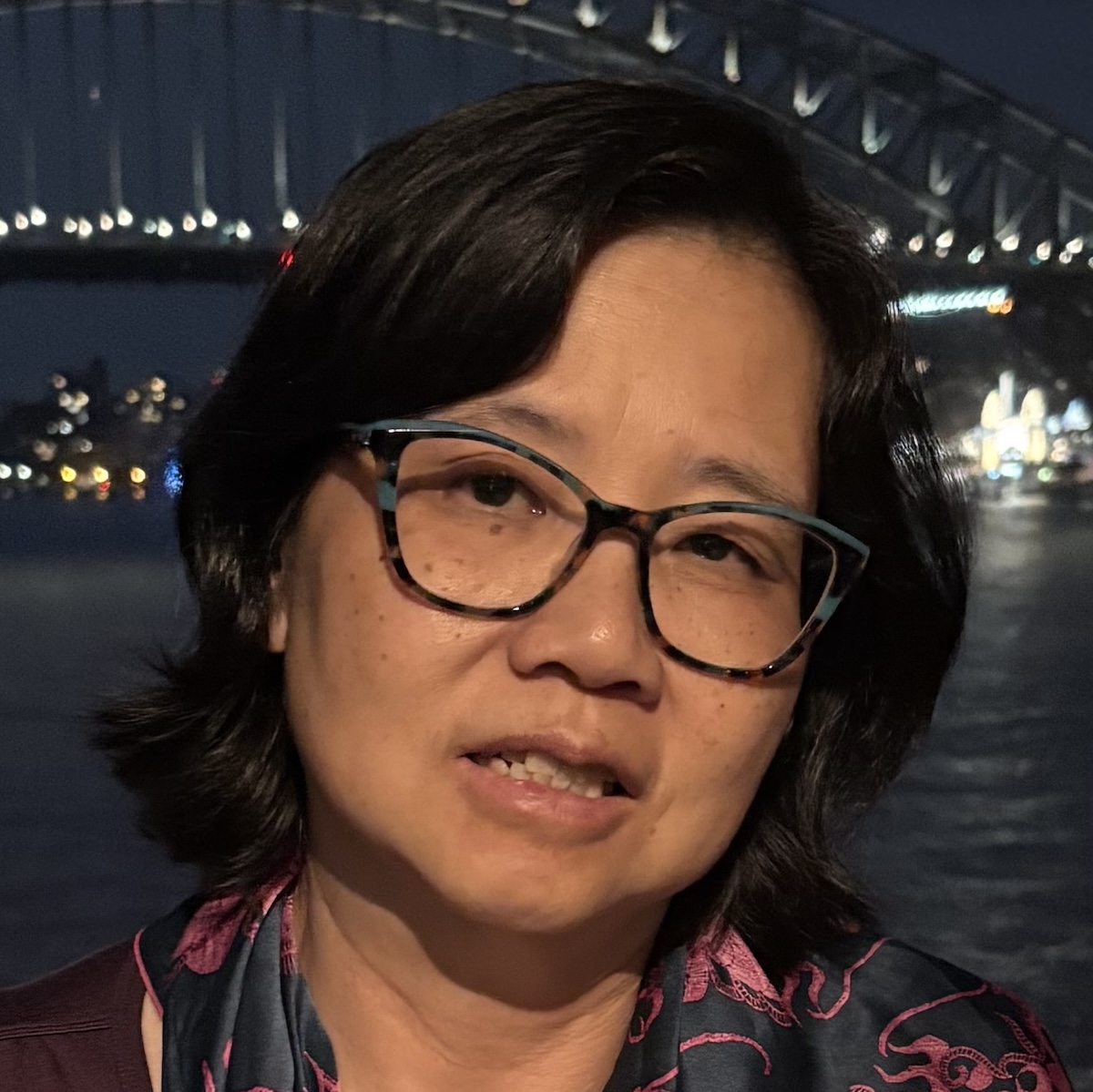
Janaline Oh
Janaline is a former diplomat and current climate, environment and anti-racism activist.
“As a longstanding Canberra-based bureaucrat, I believe in the power of policy to shape and improve lives. I am also acutely aware of the importance of having those policies understood by the people affected by them.
“I started Why Can’t They Just? as way of moving beyond slogans and into what policies really are and what they mean for real people.”

Glenn Davidson
Glenn has a background in education, public service and community radio.
“After far too long being annoyed about the confected outrage, gaslighting, punching down and wilful distortion of facts in our national discourse, I jumped at the opportunity to join the team at Policy 4 People and Why Can’t They Just. I hope to contribute something positive to ordinary people like me understanding complex issues and exercising their vote in an informed way to build and sustain a community and nation that works for all of us.”

Luke Robertson
Luke is a student in conservation biology and environmental policy.
“I got interested in public policy and particularly environmental policy around 2020, seeing the damage that things like the ‘Wild Horse Heritage Bill’ did to Kosciuszko National Park, as well as budget cuts made to the national parks service that eventually worsened the Black Summer Bushfires.
“I joined the Policy for People and Why Can’t they Just team after seeing the hard fought passage of the Environment Protection and Biodiversity Conservation Act and the power of community organising for good. I am now hoping to help with community outreach in all areas of policy to make Australia the fairest and most equitable country that it can be.”