Why Should Anyone Care About the UN and International Law? [S3-09]
Posted on Wednesday, Oct 21, 2026 | foreign policy, international law, national security, US allianceShow Notes
Please leave a comment, particularly if you have your own “Why can’t they just…” question, or email us at whycanttheyjust@gmail.com. We’d love to hear from you.
Find out more about us and how you can support us at https://whycanttheyjust.com.au/, which includes a link to our Patreon site where you can sign up for exclusive content.
Please also feel free to rate and review us, as it does help people to find us.
Music: “Insurrection”
Written by Pierre Chrétien
Performed by the Soul Jazz Orchestra
Courtesy of Do Right Music Inc.
Transcript
21 October 2026
Glenn
Welcome to another episode of Why Can’t They Just, a podcast about politics, policy and getting stuff done. I’m Glenn Davidson and I’m a member of the Labor Party.
Janaline
I’m Janaline Oh, I’m also a member of the Labor Party. I’m a former diplomat and a climate, environment and anti-racism activist.
Luke
I’m Luke Robertson, I’m also a member of the Labor Party, as well as a conservation biology and environmental policy student.
Yassine
I’m Yassine Andrews, I’m a Year 11 student, and I’m also a part of the Labor Party.
Janaline
Before we start, I‘d like to acknowledge that we are all recording this on the unceded lands of First Nations people in Australia. Recognising that sovereignty was never ceded, we pay our respects to their Elders, past and present, and we extend those respects to any First Nations listeners that we have today.
Glenn
Today we are talking about multilateralism and considering whether it is in its death throes, whether it is simply evolving to confront new realities.
It is clear that the old machinery built to keep global peace and trade running is now largely ineffectual, if not failing outright. The UN Security Council is routinely locked in vetoes, major powers are bypassing global courts whenever the rules don’t suit them, and some even engage in lethal conflict at will. And the UN is powerless to do anything about it. For decades Australia relied on being a law-abiding and loyal middle power and a champion of international law and the rules-based order. We expected and trusted that broad, consensus-driven institutions would guarantee our security and economic prosperity. But that system, and the traditional era of global multilateralism has effectively ended.
Thankfully, international coordination is not completely dead, but it is changing form and shape. Universal agreements are giving way to localised or issue-specific agreements such as AUKUS, the Quad and targeted regional security pacts across the Pacific. The world is shifting from broad global consensus to a form of transactional minilateralism; in some cases blatant unilateralism.
So Janaline, where does that leave Australia? How does a nation built on the traditional rules-based order adapt when the rules, and the institutions enforcing them, are being rewritten at best or being ignored or undermined at worst? Is it a case of the big powers do as they please and the rest of us do as we must? And does it matter whether the big powers are even in the United Nations anymore?
Janaline
Yeah, all very good questions, Glenn. People have been asking since the inception of the UN, ‘what is the point of multilateralism and why are all these countries pretending to abide by these rules?’ when clearly some of the big powers have always flouted the rules when it suited them.
And particularly the US, which was part of creating the UN and has also at various points in history invaded Grenada, kidnapped the head of state of Panama, invaded Iraq without UN sanction.
I think when we talk about this, I come back to a 20th century American legal scholar called Louis Henkin who said something to the effect of: most countries abide by international law most of the time. And the reason they do that is because abiding by international law is actually in their interests. So notwithstanding that big countries and even smaller countries, do violate international law at various points, most of the time, at very least they pretend that they’re abiding by international law.
And why is this important? Because by pretending that they abide by international law and by loudly observing international law, even if everybody can see that they’re not actually carrying it out, they are saying international law is important: it is important to have rules; it is important to abide by them.
And I kind of liken international law to Tinkerbell in Peter Pan, right? Tinkerbell stays alive because children believe in her; international law stays alive because countries say there is such a thing as international law and it’s important and we should abide by it. Because, as you say, there is no international police force. There is an international court, but it doesn’t have the enforcement power of a domestic court.
So international law is sort of the ultimate fiction where countries pretend it exists, and by pretending it exists, they make it exist because they abide by it.
So the deal with international law is that you constrain your behaviour on the understanding that other people will also constrain their behaviour according to these rules that you have all negotiated and agreed to observe. And they are fundamental rules for things like not invading other countries.
Now clearly some big countries have invaded other countries. Russia invaded Crimea and arguably North Ossetia and Abkhazia, and the Donbass region. And arguably they wouldn’t have subsequently put on a full scale ‘special military operation’ in Ukraine had other countries responded more forcefully to their invasions of Crimea and Abkhazia and North Ossetia and the Donbass in previous years. But at the same time they pretended that there was a justification under international law. They went to extraordinary levels of claiming that they had been invited in by these struggling independent states.
Similarly, George Bush invaded Iraq in 2003. He went to extraordinary lengths to try to get Security Council agreement to do that. When he failed to get Security Council agreement, he nonetheless bothered to go out and try to make a legal case.
Now, a lot of international lawyers, me included, thought the legal case was pretty thin, but the fact is he tried to do it. The difference between that and the current US Administration is that the current US Administration does not even pretend. Donald Trump literally says ‘international law, what’s that? Who cares? Nobody constrains me but my own morality’.
And he openly invaded Venezuela and cheered about it. He has killed people in the Caribbean under the pretext of anti-terrorism operations without any kind of due process. I mean, frankly, the actions that the US military has taken in the Caribbean against arguably fishing boats could be said to be the international crime of piracy, which is literally the oldest international crime ever. Piracy is the first crime that was recognised centuries ago as an international crime.
So your question is very pertinent in the current day and age, because you have a big power that is not even pretending anymore. So even China - China has arguably violated international law in the South China Sea. They have claimed other people’s territories. There was an international tribunal that found that they had acted unlawfully in the South China Sea with respect to the Philippines and they didn’t stop their activity, but they have still bothered to try to justify it under international law.
I think we are in a new era and maybe we are in an uncomfortable position where if a really major player says ‘I don’t want to play ball anymore,’ what does the rest of the world do?
Glenn
And that sounds like a good point to bring Luke in.
Luke
Yeah, that’s, that’s a really good point. I remember a while ago reading an article and I’ve forgotten where it was, but it was called ‘Why We Will Miss the Hypocrisy of the US’. So that’s a really good point where everyone at least pretended to follow international law but now the US is just saying ‘Nope, we don’t care’.
A lot of this conversation to me, reminds me of the speech that Mark Carney gave at the World Economic Forum where he asked the question, ‘is it worth continuing to diversify relationships around the world and branch out? Or should we be living in a world of walls and putting up tariffs and becoming defensive fortresses?’
He took the view that we should continue to branch out with more countries away from the hegemons that he described. But that speech was delivered in January of this year, and a month later, the US and Israel kicked off the war with Iran, which is still going on.
So given that context at the time, I listened to that speech and I found that idea of becoming an even more global country a way to face all these sorts of challenges, like we could all get together and everything would be OK. And then we found out that Iran, thanks to America deciding it can do whatever it wants, can hold us for ransom economically.
So to me, that sort of broke the idea that we could all get together and continue the rules-based order, just without these big countries. We really do need these big countries to come along or at least pretend that they’re coming along like you described with George Bush, with Iraq. He did try to make that legal case, as shaky as it was.
That being said, there’s certainly no harm from diversifying with other countries: it’s smarter to have strong alliances with more countries. And we saw that demonstrated when the war kicked off and we could leverage our healthy trade relationships with countries like South Korea, Brunei and Malaysia to get all the fuel that we needed.
So I’m, I’m sort of conflicted in that, yes, becoming more global, I guess, and having stronger trade relationships, having stronger diplomatic relationships, rather, with more countries is such a good idea. But I, I really don’t think that it is the panacea for preventing this sort of ‘big powers can do whatever they want’. Because at the end of the day, I think we are all, at least in part, beholden to the whims of these large powers. Maybe it takes a little bit of the heat off if we have some more friends around the world.
Glenn
Really sobering comments there, Luke. Thank you, you know, for that. And it does go to show just how quickly things can change and particularly when you’ve got countries acting unilaterally and in what they see as their own interests.
Yassine, what’s your take on this?
Yassine
So even at my model UN at my school, they asked the question of, like, ‘what happens if a big country pulls out and there’s no consequences because there’s no international police?’ It gives permission for other countries too, and then the whole system collapses because no one can hold anyone else accountable. So why would countries bother being constrained by so-called international law?
Janaline
I think those are all really good points. So just to take Yassine’s question first, I think the reason countries are happy to be constrained by international law is because they see it as in their interests to do so. And this comes to Luke’s point about why bother cooperating with other countries.
You cooperate with other countries because you get a benefit out of it. You can do things with them that are of mutual benefit and it can hopefully constrain them from doing stuff that is not in your interests.
Now for the UN, a US withdrawal means a massive budget cut because the US provides 25% of the UN’s budget. So in a world where all European countries are in serious budget strife, everybody’s under cost of living pressure, so how the UN then funds itself is a really big question.
Maybe it just has to dramatically cut back on some of its programs. And look, don’t get me wrong, I was on the UN’s Budget committee for a while and in no universe could you say that the UN operates on a shoestring and as efficiently as it possibly could. Is there 25% of its budget that can be saved without cutting real programs? I doubt it.
But it is still worthwhile in my view, for other countries to do what Mark Carney has proposed and what Mark Carney is actually doing, and to do what the Australian government is doing, which is focus on all of those other relationships.
I push back on the idea that you can only have a multilateral system which includes absolutely everybody or some kind of fragmented fortress-like system of nation states all scrabbling for their bit of the pie.
It is unfortunate if you have a very significant player not want to be part of the multilateral system. But I think the country that ultimately is likely to be harmed the most by that is the country that pulls out, because they are cutting themselves out from those alliances that have promoted their interests for the last 80 years. If you look at the post World War 2 international system, it is the reason that the US has become the wealthiest country in the world. It is the reason that the US has enjoyed eight decades of peace with its neighbours.
This idea that if you have a big enough military you can just unilaterally go and grab stuff and beat people into submission has been found to be patently false: look at the Straits of Hormuz. Iran is not a country that anybody would suggest was a military equal of Israel and the US, and yet that war is dragging on after eight months.
Glenn
Yes, that whole issue of asymmetric warfare where you don’t need to be of an equal size to be able to inflict damage on a much bigger opponent. I think that was the lesson of the Vietnam War. But apparently lessons really aren’t learnt anymore. And just because it didn’t work last time doesn’t mean it won’t work next time.
So if the UN is being sidelined and there are now new ways of engaging with and in the world, this has substantial, even existential implications for Australia. It’s reshaping our national security, our economy and our place and role in our neighbourhood and the world. Australia is working hard on strengthening and deepening regional partnerships, including by building bilateral defence pacts across the Pacific, deepening ties with India and leveraging the Quad. We’re also exploring new ways to engage with the likes of Europe and Canada. Old certainties are now far less certain.
In a world where the World Trade Organisation can no longer police global trade rules, the era of open and free trade is giving way to supply chain resilience and critical minerals diplomacy, amongst other things. Australia is having to change its whole approach to protecting its trade and other interests.
So, Janaline, does this shift towards tailored, issue-specific arrangements mean Australia is simply being pragmatic in a broken global system and hoping for the best? And can these new arrangements really ensure our security and prosperity in a world where the rules are no longer agreed, let alone followed by the big powers?
Janaline
I guess I come back to the idea that you need to do all of the above. It’s not either you have a multilateral system or you have strong regional partnerships.
I think if you’re a country like Australia, which is a medium-sized, not very powerful country, it’s partly about using your leverage where you can, with the partners that you can, in everybody’s interest. This government is doing the right thing by focusing so much effort and resources into the Pacific region, into Southeast Asia, into North Asia and with the European Union and with Canada and New Zealand and also in the Middle East.
It is so important to ensure that we have as many friends as we possibly can on different issues and this is not a new thing. Australia invented the Cairns Group of agricultural exporters in, I think, the 1980s, as a like-minded bloc of countries to free up agricultural trade within what became the World Trade Organisation. That was in the face of extreme protectionism on agriculture from the European Union and from the United States. We’ve been setting up partnerships with other countries on specific issues of interest for a very, very long time and we do it in every international negotiation that I’ve ever been part of. So at one level it’s just normal diplomatic behaviour, particularly for a smaller country. Of course, the need for it is a lot more evident now. Luke?
Luke
I just agree, given that we are a very import-heavy nation, there’s no reason not to have these relationships and continue to maintain the economic security that we have by being able to leverage the things that we export so that when these big things do happen, we can use the relationships that have been cultivated over such a long period of time.
I mean, that being said, there also is a sort of intrinsic value of doing it, particularly with the Pacific. It should be our job to be friends with them, even if it’s not so transactional.
Janaline
Yeah, I reckon that’s a really good point. One of the downfalls of the current US policy is its extremely transactional nature. I think it is being strikingly short sighted of the current administration to see the investment that the US puts into these alliances as being a cost rather than an investment that has actually delivered ample returns. The US is unquestionably better off because of the 80 years of trading relationships and alliances than it will be going forward after trashing those alliances and destroying those trading relationships by imposing absurd unilateral tariffs that are actually just hurting the US economy.
And because countries ultimately have choices, even countries like Canada, that has, up until now, been extraordinarily dependent on the US. Having now been spurned, they are going through pain, unquestionably, but they are also actively shoring up their resilience in the future by building these alternative relationships. And at the end of this process, I am willing to predict that Canada will be significantly better off and the US will be significantly worse off.
Glenn
Yes, it’s interesting that Canada and even Australia are sort of being considered as almost like associate members of the European Union, which is really quite bizarre when you think about it. But because of the situation we all find ourselves in, those types of considerations and types of options are suddenly worth pursuing.
Luke
I like the framing you have of investment. If we really were such a transactional world, and America had been doing that before 9/11, all those countries wouldn’t have come to help it. Sometimes you just got to do the right thing. If we live in a world of transactions, then I mean, that’s moronic. So I really like that framing of an investment, not a cost.
Janaline
Yeah, and the US has seen the cost of giving that up in Iran. When it happened, the US president runs around the world and asks his allies for help, and the allies that he has recently slapped massive tariffs on, rhetorically demeaned, threatened to invade parts of their territory - as in Greenland and Canada - to nobody’s surprise, said ‘ah, don’t think so. Actually, we are not convinced this war is a totally great idea and we don’t want to be part of it’. Those allies that have not been able to escape because they have actually been in the region - Saudi Arabia, the UAE, Qatar - have all suffered because of their alliance with the US. So the hosting of US bases in those countries has gone from a form of protection to a target and that is a real issue.
I know that there’s a debate in Australia about having US bases here and does that make us a target? I take the view that it doesn’t because we are not in the same situation as those countries in the Middle East and we never have been. The US alliance is essential for Australia to deliver the kind of military capability that we need to defend ourselves. We cannot deliver that capability ourselves because we don’t have the industrial base, we don’t have the research base, we don’t have the manufacturing base. It doesn’t mean that we give up the US alliance because it remains important to us, but I think it does mean that we put a lot of investment into other relationships to ensure that that is not the only thing that we’re relying on because it is proving not to be that reliable.
Glenn
Yes, and I must admit I’m probably a little bit more sanguine than you. Yes, the US alliance is important to us. I think it is decreasingly important to the US, and it’s just our turn hasn’t come yet to be slapped around the way they’ve basically slapped around other European allies and Canada.
Tempering that perhaps a little bit is that a lot of what’s happening with the US is down to one person. And if their democratic processes work as they should over the next couple of months, maybe there will be a change in that dynamic. But I don’t think anybody could have any real confidence that that’s going to be the way it will play out.
That brings us to the future. Historically, Australia’s foreign policy relied on two main pillars: a strong security alliance with a global superpower; and a broad commitment to global institutions to keep everyone else playing by the rules. But in a more transactional, multipolar world, relying solely on those traditional mechanisms is no longer enough.
The Albanese government has worked very hard and continues to work hard to build wider and deeper relationships with near neighbours, regional partners and like-minded countries elsewhere in the world, including with Indonesia, Papua New Guinea, Pacific Island states, Japan, South Korea, Canada, India, European allies on various targeted fronts. Whether it’s securing critical minerals or setting standards for artificial intelligence, or upholding maritime law, middle powers are working together to preserve their strategic agency. Yet this raises a fundamental tension: should Australia continue to focus on trying to make the UN work from within, like our bid for a UN Security Council seat, or should we divert our primary diplomatic energy into these more agile specialised mini-coalitions?
So, Janaline, is Australia’s current strategy of agile diplomacy enough to give a middle power like us real strategic agency when great powers play by their own rules? Or does spreading our diplomatic resources across dozens of mini-coalitions risk diluting our influence when and where we need it most?
Janaline
It’s a good question because obviously Australia’s diplomatic resources are not infinite. I would say, in defence of my former colleagues at the Department of Foreign Affairs and Trade, we have pretty good diplomats.
One of the features of being a not very powerful, not very big country is that you have to work quite hard to get attention and to get the outcomes that you need. And so therefore you do need to have quite a skilled diplomatic corps.
And I do think we can still do a little bit of all of the above. We can still put effort into those agile relationships while also not losing sight of the importance of the bigger multilateral system. And even without a very significant player, I think there is still a point in participating actively in the decision-making of the UN because the UN remains important to the other 200 countries that are members.
And it’s a very good forum for Australian leaders to bump into leaders of countries that they don’t often see. I can’t remember the last time we had a prime ministerial visit to the Caribbean islands. The UN General Assembly and the Commonwealth Heads of Government meeting are two important opportunities for our Prime Minister to talk to those countries. Our relationships with those countries may not be the most important relationships we have, certainly compared to our relationships in the Pacific or in Southeast Asia, but there are areas where we work together: we work together on narcotics control; we work together on financial crime and money laundering. So it is important to have those opportunities to have face to face contact with the leaders of those countries.
I think it would be a mistake in the current environment to put all of our eggs in the multilateral basket, but I think it is still worth putting some of our eggs into that basket and putting some effort into being part of the important decision-making processes. And don’t forget the UN still does things like peacekeeping; the UN still does things like important coordination on important technical issues.
One of my favourite international organisations is the Universal Postal Union, which coordinates delivering mail to every country in the world from every other country in the world. The reason people can get birthday presents from their aunties in other countries is because of the Universal Postal Union. The International Telecommunications Union deals with mobile phone roaming or international phone calls. The reason we have international communications is because of coordination at really boring technical levels to do with things like signal standards and switching protocols.
Luke
I’m just going to pick up on something you said earlier about having US bases here can make us safer. I think that’s certainly true.
But recently, I’m not sure how long ago it was, I think it was in the previous two weeks, there was a planned terrorist attack on RAF Fairford in Britain, where allegedly British Iranian nationals were planning to blow part of the place up because the US had been operating bombers out of the air base which were being used to move to Iran. So obviously our bases aren’t so engaged in a physical sense; I mean, Pine Gap is probably involved in an intelligence sense. So does that not put us up to the same sort of risk?
Obviously having the bases here comes with the benefits of not having to source our own technology and all that sort of thing, but surely they put us at risk in some sense of the word.
Janaline
So I reckon we need to look at it as a cost benefit. So yes, you’re right, there is a risk inherent, particularly with the current Administration doing things unilaterally, that its allies would not have agreed to. I don’t think a previous US administration would have done what the Trump administration has done in Iran without any kind of consultation or coordination with its allies. When George W Bush went into Iraq, he did not do so with no notice and ‘surprise, I’ve just bombed Iraq’. That operation came at the end of months and months of, firstly trying to get UN Security Council agreements, and intense discussions with all of the allies, and they went in very, very clear about who was going to support them, for what reasons and what they were going to do. The Trump administration did not do that in Iran.
And as a consequence, there is a risk, I totally agree, but it is a cost benefit. So yes, there was a risk. That terrorist attack did not come to pass, law enforcement did its job and the base was not attacked. Those terrorist attacks can happen for any reason, in any circumstance. So you’re not going to eliminate the risk of terrorist attacks by not having US bases. At the same time, the intelligence facility at Pine Gap provides a lot of benefit to Australia.
I’m not going to say US bases are an unalloyed good for Australia and they only make us safer. There is a risk inherent in all of these things. People will have different views about the relative weighting we should give the costs and the benefits, and those are legitimate debates to have in a democracy.
Definitely, government should be willing to make the case for why they think the benefit outweighs the risk.
Glenn
Yes, and on that point, I think it’s important to note that the US is not a constant entity. The US of today is not what it was in 2024, let alone 2020 or 2003 when the Iraq war happened.
But on another matter, if we can bring the focus back on to the future, what does the UN look like without a US in it? For the last eight decades, it’s operated somewhat lumpily with a strategic tension between the US and China and Russia and the rest of the world. If you take out one of those major balancing entities, how does the UN change? Does it suddenly become more of an instrument for Chinese strategic ambition simply because they are now the big dog in the room?
Janaline
Well, it certainly helps Chinese strategic ambitions. The other thing that it does is it removes the veto from the Security Council on any kind of sanction, criticism or action against Israel. So a US pull out from the UN is not very good news for Israel because the UN Security Council under its charter is able even to authorise use of force.
Fundamentally, the US pulling out of the UN, or China pulling out of the UN, or Russia pulling out of the UN, is actually quite bad for the country that pulls out; again, because they have an incredible amount of power with their veto on the Security Council to at very least stop the UN from authorising pretty serious actions against them, their interests or their friends. I think fundamentally the UN may be an annoyance for those big countries, particularly if they get into their heads that they can just do what they like unilaterally, but it’s also a significant protection for them against other countries seriously ganging up on them.
So I don’t know what the cost benefit analysis would be. I’ve got to say, personally, I would favour staying in even if you are a massive country with the most powerful military in the world; particularly since we’ve seen that having the most powerful military in the world has not led to an easy resolution of a conflict of choice against a country with a very weak military. Asymmetric warfare is actually a thing, it turns out.
Glenn
I think it’s fair to say that we don’t just live in interesting times, we live in very volatile times and perhaps even the most dangerous times since the 1930s. Countries are acting, as you’ve been saying, Janaline, not in their own interests, even though that’s what they think they’re doing.
It makes it very difficult to chart a course forward, particularly when you’re just a small country sitting a long way from other places, although hopefully that’s going to work to our advantage.
Now, that’s been a very full and long discussion, but it has brought us to the end of our time. So it is time to have our final statements and we’ll start with you, Yassine.
Yassine
So I just want to say that there are so many issues that are so important for the younger generation’s future and well, everyone’s future really, and that all the countries in the world really need to work together on.
Glenn
Thanks Yassine. And Luke?
Luke
We shouldn’t accept that the current situation with the United States is what will remain forever and that we should think of this situation as an aberration, not a - not the norm of relations with the rest of the world. So I still think there is hope for a big happy globe.
Glenn
Yeah, thanks, Luke, for that balance, countering my glass half empty pessimistic view of the future with your glass overflowing very optimistic view of the future.
But you are right that this could just be an aberration. It is very dependent on the actions of one individual. How would you see it playing out if that one individual is no longer in the position that they’re in now to be shaping the world the way they are?
Luke
Oh, I think that the US relationship with the world has been irreversibly damaged, and that no matter who they get to replace Trump, even if it’s someone who is really good at building those relationships, the trust will never be there again. And as such, I think we’re going to see an emergence of a more together world, but also one that is divided less into blocs. I think the US has certainly damaged its defence relationships and I don’t think they are as trusted. But I still think it’ll be possible to have positive relationships with them. And I don’t know, that might make way for another big power and we’ll see China take the top of the pedestal.
Glenn
And Janaline, your final words please.
Janaline
I think that is so well said, Luke, I think you’re right. I think whoever wins the US presidency in the future or whatever happens in Congress with subsequent elections, nobody is ever going to really trust the US again.
Because as you say, even if you get a committed multilateralist and a great diplomat as president, even if you get a series of those people, everybody will still remember that the US electoral system is capable of turning out someone like Donald Trump not once, but twice.
OK, let me give you my optimistic view because, you know, I believe in hope and I believe that our listeners need hope.
I think you are right, Luke. I think we will have a more connected world in many ways. I think that the kind of diplomatic activity that is going on between countries like the European Union, Canada, Southeast Asian countries, North Asian countries, African countries and, notwithstanding recent elections in Latin America, I think ultimately Latin American countries, the rest of the world sees the benefits of international cooperation.
As Yassine says, there are so many issues that are so important to the whole world - climate change is the most obvious - that really need international cooperation. And governments are not stupid and they will cooperate because they see it as in their interests. And I come back to Henkin and most countries abiding by most international law most of the time. The reason they do that is because it’s in their interests.
I continue to maintain that the country that is suffering the most and that will continue into the future to suffer the most from the actions of this Administration is the United States. Because even if those alliances are revived, the US will always take a less important role in those alliances for all of those countries going forward. All of these countries are now acutely aware that they need to be bolstering their other relationships and investing heavily in those other relationships to ensure that they can survive independently of, let’s call it, a rogue US administration.
What does that mean going forward for those countries? It means that even with a future benign US that is honouring alliances and behaving in a more rational way on trade, they will nonetheless be aware that this kind of extreme unilateralism is possible. Donald Trump is not the first US president to take trade actions that his trading partners have not liked. He has, however, been the first US president to take severe trade actions against practically every trading partner simultaneously.
So I do think the pendulum will swing back in the US. I mean we could do a whole session on US democracy and whether it is indeed broken and the extent to which it can be recovered. But this Administration is probably an extremity. I don’t know that I would call it an aberration in the sense that I don’t think that after Donald Trump leaves the presidency, the US will suddenly revert to some kind of pre-Trump norm. I do think the extremity of the unilateralism will abate; I think future US administrations will understand the value of alliances and will understand the value of partnerships and will understand the value of diplomacy. And I think they will start to reinvest in those things. They will have a very, very tough time to rebuild those relationships.
What does this mean for the multilateral system? I think as you say, Luke, I wouldn’t even call it multipolar. I think it will actually become a lot more genuinely multilateral in the sense that we will see a diminution of the dominance of the really big players. I think it will be empowering to the middle powers and the smaller countries, because I think what this period has demonstrated and is demonstrating is that collective action can be powerful. And that, just as workers collectivising into unions were able to transform themselves from a very unequal relationship with their employers into a powerful force that was able to negotiate better conditions, I think the smaller countries of the world are learning that they can work together in their mutual interests to generate the kinds of benefits that international cooperation can deliver, preferably with the cooperation of the major powers, but, if necessary, in their absence.
Glenn
That was another episode of Why Can’t They Just? The theme music that we use for this podcast is a piece called Insurrection by Pierre Chrétien, performed by the Soul Jazz Orchestra, courtesy of Do Right Music Inc.
Janaline
You can also hear us on Canberra community radio, 2XX FM 98.3, on Tuesdays between 6 and 7, or via 2XXfm.org.au. If you like our work, consider supporting us on Patreon, via our website whycanttheyjust.com.au.
Glenn
I’m Glenn Davidson.
Luke
I’m Luke Robertson.
Yassine
I’m Yassine Andrews.
Janaline
I’m Janaline Oh, and this is Why Can’t They Just?
Hosts
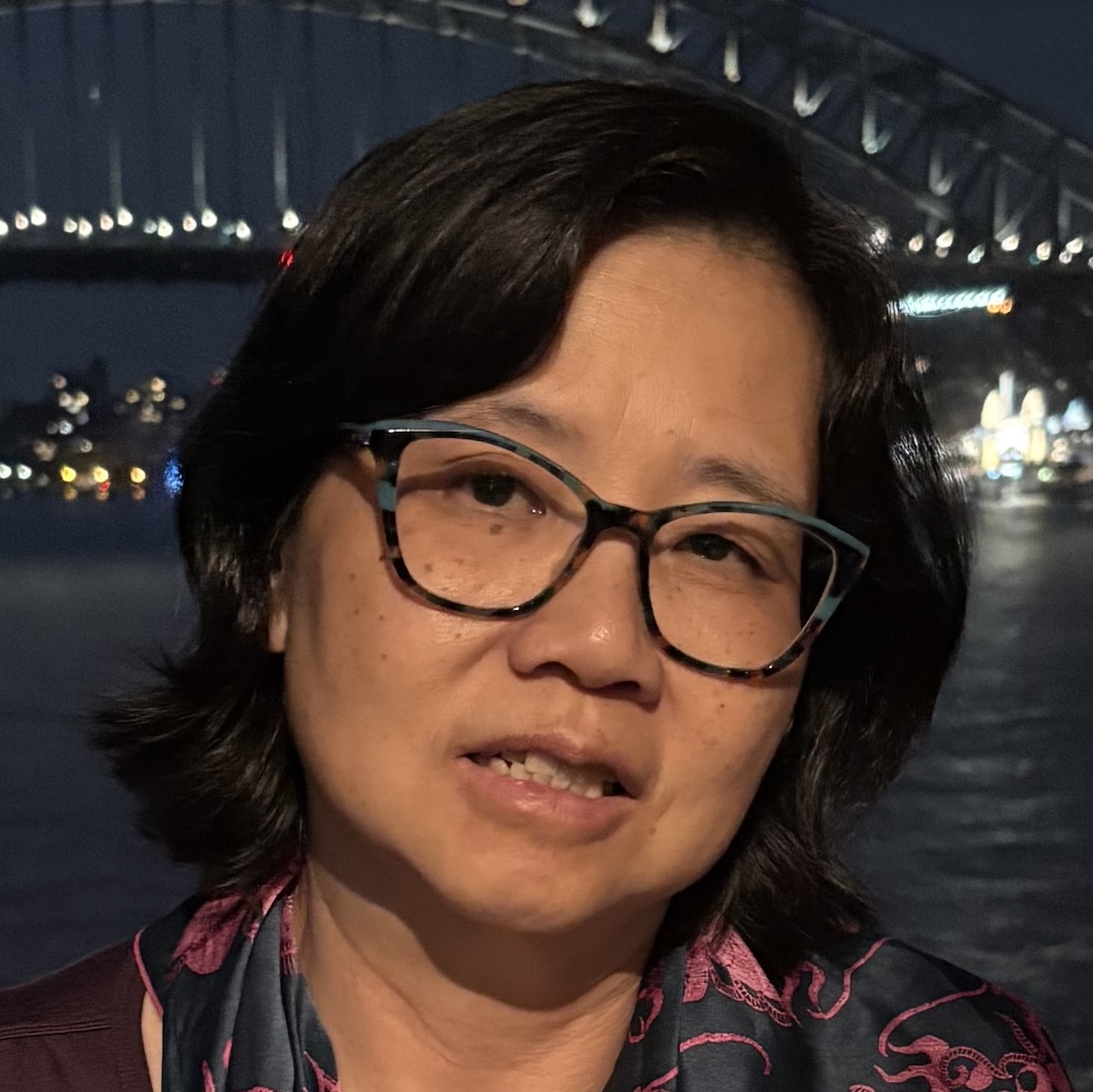
Janaline Oh
Janaline is a former diplomat and current climate, environment and anti-racism activist.
“As a longstanding Canberra-based bureaucrat, I believe in the power of policy to shape and improve lives. I am also acutely aware of the importance of having those policies understood by the people affected by them.
“I started Why Can’t They Just? as way of moving beyond slogans and into what policies really are and what they mean for real people.”

Yassine Andrews
Yassine is in Year 11 at a public school.
“I think it is important for the younger generation to be interested in and aware of policy and its impacts on their current and future lives - especially since a lot of young people have no interest in government policies.
I joined Why Can’t They Just and Policy 4 People because I think that it is important to have the perspective of a younger Gen Z. I think people my age need to be a part of the discussion and taken into consideration when talking about the impacts of policy. Since I have lots of strong opinions about things, I can express them in the context of policy through the podcast.”
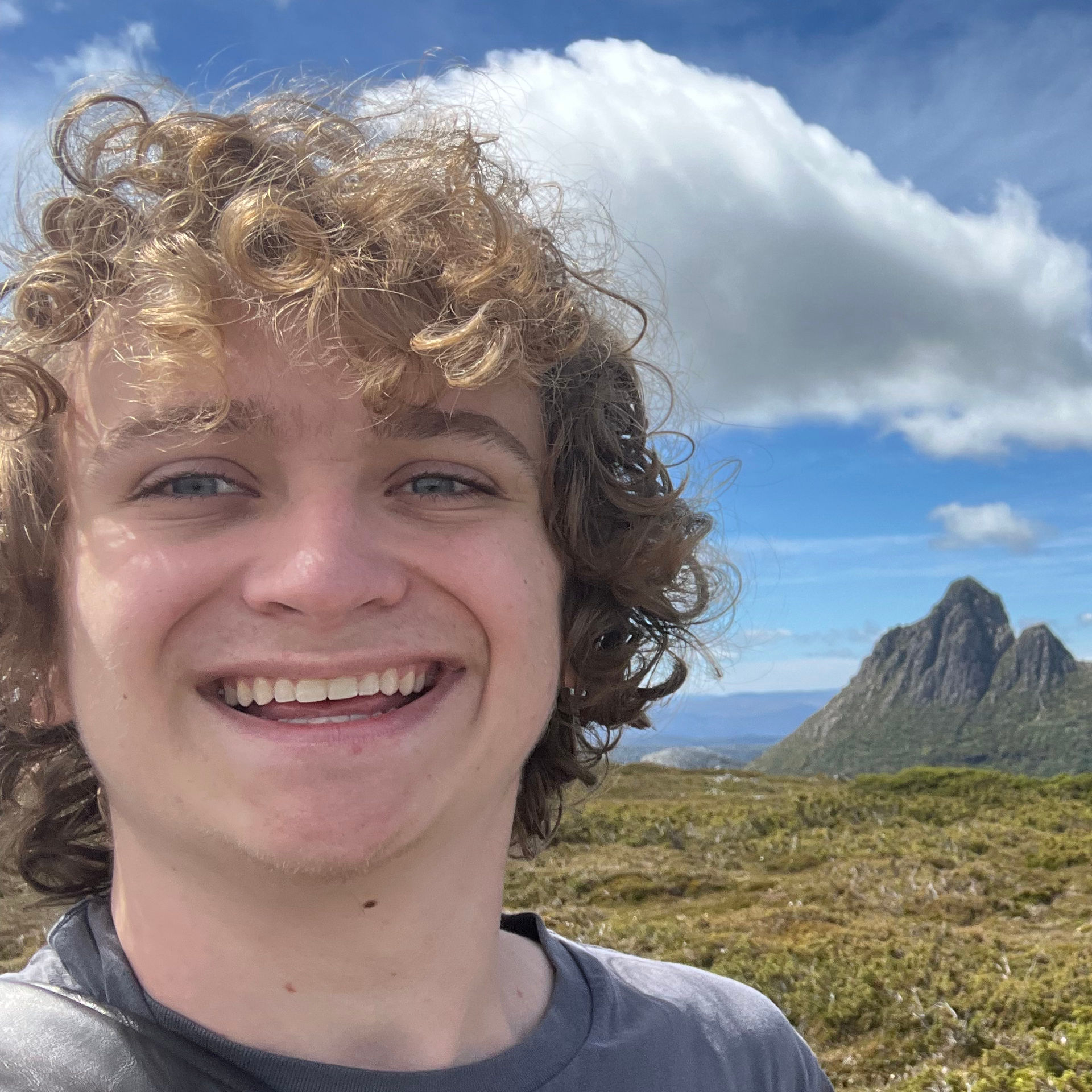
Luke Robertson
Luke is a student in conservation biology and environmental policy.
“I got interested in public policy and particularly environmental policy around 2020, seeing the damage that things like the ‘Wild Horse Heritage Bill’ did to Kosciuszko National Park, as well as budget cuts made to the national parks service that eventually worsened the Black Summer Bushfires.
“I joined the Policy for People and Why Can’t they Just team after seeing the hard fought passage of the Environment Protection and Biodiversity Conservation Act and the power of community organising for good. I am now hoping to help with community outreach in all areas of policy to make Australia the fairest and most equitable country that it can be.”

Glenn Davidson
Glenn has a background in education, public service and community radio.
“After far too long being annoyed about the confected outrage, gaslighting, punching down and wilful distortion of facts in our national discourse, I jumped at the opportunity to join the team at Policy 4 People and Why Can’t They Just. I hope to contribute something positive to ordinary people like me understanding complex issues and exercising their vote in an informed way to build and sustain a community and nation that works for all of us.”