What Is Like in Public Schools and What Policies Could Make It Better? [S3-02]
Posted on Wednesday, Sep 2, 2026 | social policy, youth, educationShow Notes
Please leave a comment, particularly if you have your own “Why can’t they just…” question, or email us at whycanttheyjust@gmail.com. We’d love to hear from you.
Find out more about us and how you can support us at https://whycanttheyjust.com.au/, which includes a link to our Patreon site where you can sign up for exclusive content.
Please also feel free to rate and review us, as it does help people to find us.
Music: “Insurrection”
Written by Pierre Chrétien
Performed by the Soul Jazz Orchestra
Courtesy of Do Right Music Inc.
Transcript
2 September 2026
Luke
Welcome to another episode of Why Can’t They Just, talking about politics, policy and getting stuff done. I’m Luke Robertson, a conservation biology and environmental policy student, as well as a member of the Labor Party.
Janaline
I’m Janaline Oh, I’m also a member of the Labor Party. I’m a former diplomat and a current environment, climate and anti-racism activist.
Luke
I’m Luke Robertson, I’m also a member of the Labor Party, and I’m a conservation biology and environmental policy student.
Yassine
I’m Yassine Andrews, I’m a Year 11 student and I’m also a part of the Labor Party.
Janaline
Before we start, I’d like to acknowledge that we are all recording this on the unceded lands of First Nations people in Australia, recognising that sovereignty was never ceded, we pay our respects to their elders, past and present, and we extend those respects to any First Nations listeners that we have today.
So today we’re going to do something a bit different again. Last week we talked about school funding and the inequality between public and private schools. This week we’re going to explore what it’s actually like at school and what government policies are needed to improve the school experience and school outcomes.
So let’s start from first principles. What is school actually for?
There’s a bunch of debates around knowledge-based explicit instruction versus teaching of skills or project-based learning; school as a place for kids just to learn how to be with other people.
What do you guys think is a good approach? Luke, you have recently graduated from school, you’re in second year uni, why don’t we start with you?
Luke
I think the role of school really depends, and I think each school really serves a different purpose, and that’s OK. You know, for some students, it’s the only safe place they have. For some schools, they’ve just got to get kids there every day. Of course, other essential skills like developing social skills, basically being able to provide whatever they can to empower children to set a path for their life.
Obviously I don’t think schools’ goals should be to get every kid into a university: you know, there are other tertiary pathways like TAFE that provide amazing, fulfilling and incredibly important careers in the same way that, you know, certain university degrees might provide. No doubt results are important and they’re particularly a benchmark, but that definitely starts with what we were talking about last week, with appropriate funding. By giving everyone a level playing field so that, by year 10, everyone’s ready to make a decision of where they want to be in the future.
I think pre-AI, there was definitely the right balance. The main goal I felt, particularly in high school, was the teaching of those learning skills. And obviously knowledge based learning has a place and particularly with developmental subjects like maths, English and all the humanities in primary and high school. But I didn’t of course see it that way at the time. My dad was a maths teacher and put so much time in to get me through maths. Between year 8 to 12, he made this ginormous book of notes for HSC Advanced Maths with me, and they’re the most amazing diagrams and reference notes, and it was really sweet, but it didn’t make me hate maths any less.
But after I finished the course, he said something that really resonated with me. He said that the point of learning all this stuff is to complete the challenge of learning it, even if you don’t use any of the content. It’s the skills that you learn. And now that seems obvious, but he was certainly right. It’s been two years since I finished that course. But I think I am a smarter person because of it.
I’d say the same about English. There was nothing more I loathed than trudging through our books for quotes and techniques, but it did give me a lens of viewing media differently, even if I didn’t think it would. I find myself watching video essays and all sorts of pieces of media from the same perspective my English teacher probably would have, just minus the marks.
That being said, I completed all that before ChatGPT and other AI models really existed. And I think in the last term of year 12, it was taking off. But I didn’t use it, because I didn’t really know what it was and how to use it. And most of my peers didn’t use it either and not because of any moral objection, just because it was new and we didn’t really understand it. So we were forced to do all the thinking during that time.
Of course, all of that is, you know, my experience. And some people say that one exam at the end is like a monkey, butterfly, snake, turtle and elephant all being made to climb the same tree. And that’s what those standardised testing experiences feel like for many. But also not being able to climb that proverbial tree can show you that you might want to go down a different pathway.
I think today it’s probably a bit of a nightmare. And I’ve from those I know in education, the curriculum, that has been slowly weaning back the amount of raw knowledge you have to memorise in place of focus on more critical thinking skills, that’s really a challenge because now AI is doing the thinking skills for a lot of kids. And no amount of banning and creating, like in New South Wales, we have an Edu-chat education AI model, no amount of that will stop kids from using it. Fundamentally, to adjust for this, for better or for worse, the country is going to have to shift back to that knowledge-based teaching. And I think that is the right thing to do in this context. But I’m definitely agnostic to other solutions. I just haven’t heard anything else.
Janaline
Thank you, Luke. We’re going to do a whole other episode on AI and society and the impact of things like that on young people as well as, you know, people’s jobs. But I want to hear what Yassine has to say because she is actually in school right now.
Yassine
Just to make it clear, the ACT system has primary school from kindergarten to year 6, high school from year 7 to 10, and college from 11 to 12. So it might be a bit confusing for people in other states. But anyway, I think it works really well because especially the college system; it gives a lot more freedom from high school because in high school it’s kind of just like primary school with more assignments. And in college, you have, like, timetables where you can go home during the day if you have free periods and you’re in charge of your own learning. And you can take other career pathways that are not completely academic. So you can take, like, a few classes and then also an apprenticeship part time, if you want. But you are in charge of your own learning. Like it’s very independent. But if needed, you can still get support if you ask for it, from teachers or support staff. And you’re still required to have, like, a certain amount of attendance to graduate.
So what I think about the first principles of school is that, throughout primary school and high school, there should be underlying basic knowledge to give you an insight into all the subjects like creative writing, science, whatever, to let you know: this is what is involved in science; this is what is involved in English; this is what involved in maths. So that later on you can say, ‘oh, I’m interested in what we did in maths, so I want to do that later in college’ or further.
So I think that’s important. But also I think the main point is to learn how to learn and how to work with other people, which is kind of what Luke said. Learning how to accomplish difficult tasks or difficult assignments, even if you don’t use it in your later life. And I think that’s really important.
My primary school was a public school and I think it did a very good job at this, because we mainly just learned how to work with other people because we did a lot of group assignments and they made everything really fun. We didn’t really get assignments. We just got one big project a term in Year 5 and 6. So that was really good because it gave us a little bit of, you know, how to make a presentation and how to start, you know, doing assignments leading up to high school.
On the other hand, my high school, I think, did a lot of explicit instruction and didn’t really get us to work with others. But using basic knowledge and skills based learning, they did quite well at that. They taught us how to write essays and write scientific reports and stuff like that.
Janaline
Thank you. I think, OK, my perspective as your parent watching you go through primary school and high school was that I agree, I think your primary school was amazing. They did give you quite a lot of content. I mean, they taught you reading and writing, and they taught phonetics in reading. They taught basic numeracy. You’ll remember your principal went through a phase of running around the playground and demanding people answer times tables questions on the spot.
As I saw it, they did a lot of the explicit stuff, but they also did a really creative job in doing some of that project based stuff. So remember how in - was it Year 4? - your, all the year 4 teachers got together and designed a term’s worth of work organised around a Harry Potter theme. So they had maths projects, they had chemistry involving potions, they had writing tasks, they had geography skills. It was very impressive, I thought.
I think there is a balance for schools as to how they develop a curriculum and how they deliver it. And I must say, as a non teacher, but as someone who has had a couple of children go through the public education system quite recently, I feel like you need to have a certain amount of explicit knowledge in order to do critical thinking. Because you need a subject to be thinking critically about. And you need a certain amount of knowledge before you can go and do a project on it. Because until you have that basic knowledge, you don’t really know what you’re going to be interested in to pursue further. So that is actually one of the things that I liked about your primary school, that they gave you that basic explicit learning. And then they said out of this, on the basis of this, here’s a choice of things that you can do further to match your interests. And I feel like that is a good approach.
So data around teacher dissatisfaction and burnout are pretty sobering. Almost half, 48%, of Australian teachers in a 2025 survey said they were planning to leave the profession, with more than half of those, 53%, citing heavy workloads as a reason, and more than a third, 34%, citing student and parent behaviour. That’s a little bit alarming.
Another survey in 2025 of school principals found that more than half, 53%, were planning to leave, with many citing anxiety. More than half of the principals surveyed, 53%, had received threats of violence and nearly half, 49%, had experienced actual physical violence. Around 80% of these incidents of violence were at the hands of students, which I find a bit alarming because that means 20% were probably at the hands of parents.
I mean, this is pretty terrifying, particularly the school principals’ outcomes, I think because one of the things that other educational research has found is that good quality school principals can make a massive difference to the school and its outcomes by setting culture. And I must say, as a former diplomat, the attitudes and the kind of culture set by your ambassador would make a colossal difference to the way in which the embassy worked, the staff morale, how productive people were, how committed they felt. And this was true regardless of the size of the embassy, whether it was, you know, Beijing with more than 100 Australian-based staff or a much, much smaller mission with only a handful. So I think the principals’ outcome is pretty alarming to me.
So I guess the question I have is, does Australia have a cultural problem around valuing education and the people who deliver it, compared to, for example, China, Singapore, Finland, other countries that score very highly on international tests? And, I guess, the question for you guys is, in this kind of environment, how do you guys think teachers and principals actually function and what’s it like for the students?
Luke
So there’s a lot in there, so I’ll break it down. But I’ll definitely say the same thing I did for the previous answer in that the role of each teacher and each principal should change depending on the school and the student. In my own experience, it changed. Obviously what I needed in kindy was different from what I needed in year 12. Even in the scope of just high school, it should change year by year, term by term, and day by day. In year 7, I needed help adjusting: I was the only kid from my primary school. In year 89 I was very sick and doing very poorly academically and needed support to keep me moving, even if that was just barely getting through.
But the teachers I remember the most are not those that just helped me get the best marks at the end of the journey, but those that had pivotal roles in building my character and giving me the essential characteristics that I think make me today. Whether that’s in the form of a proverbial kick up the ass for being an annoying teenager, or opportunities for growth by providing me with extra learning and support to help me extend, you know, beyond the curriculum.
And of course that changes between every single student. Maybe some kids are really just consistent the whole way through and can continually be nurtured with things like accelerated courses, and on the complete opposite of that, having teachers that just get the kids to turn up to school in the first place and pull them away from whatever places of harm they might be near.
On the question of culture, I don’t think, again, shaped by my experience, I don’t think we have a cultural problem. I think the culture can only change with what I said in the last answer if we give everyone a strong baseline that comes along with it, assuming the curriculum doesn’t drastically change, and of course that goes for teachers as well, assuming they don’t drastically change either.
In my experience, the high school I was at was a public school. It was doing pretty well by those standards, and we had missing walls in the bathrooms, not enough equipment, broken windows, doors. And all of that stuff obviously adds to a teacher’s workload. And on top of all the teaching, behaviour management, mentoring and everything else, it’s no wonder that there isn’t enough time in a day. And that probably explains why there’s so much of that burnout.
But I feel like that influences the culture rather than the culture influencing those things. I wouldn’t say that it’s broadly a cultural issue. I think, like, you mentioned. You mentioned China and Singapore. I wouldn’t want to go through China’s education system. I think that’d be pretty intense.
On the principal question, I 100% agree with what you said. I’ve only ever had one good principal experience. I don’t remember it, but my mum told me when I was in kindy, a crow stole my lunch and I was apparently in tears and the principal got me in his office and he made a drawing. He gave me a little, like, wanted poster of the crow that he’d drawn. But he then retired. In high school, the principal was quite absent from the playground and the classrooms, and eventually disappeared mysteriously at the end. Obviously a bit different.
But I know someone in my life who’s a very good principal. And the difference that makes, you know, the kids roar with excitement when he comes to talk. You know, they’re high fiving him. There was one time I saw where they were wearing masks with his face on it. And it makes being able to have those tough conversations with kids easier. That relationship that a good principal can build can make such a difference to the school and individual culture. And obviously having that leadership can help bring those results up, whether, you know, that’s NAPLAN or attendance rates.
Janaline
Thank you, Luke.
Yes, I have had some indirect experience of school systems in Singapore through my relatives. My cousins who went to school in Singapore would have the most ridiculous tuition schedules after school and I know a lot of kids in China have the same thing. We made the choice not to put our children through that. We did have them in a school in Hong Kong for a few years, when we were there on posting where, I have to say, their school day was actually the same length as Australian standard public service working hours, which I think was pretty rough, particularly since Yassine was not quite 7 when we left. So this is when she was 5 and 6.
I don’t know that that kind of highly disciplinary culture is the issue, but I do think there is a sense of the value of education, and the value of the people who deliver it, that maybe is not quite so much replicated in Australia. And I’m glad that you said all those things about how awesome some of your teachers were, because I really do want to give a massive shout out to public school teachers. I genuinely think that, by and large, they do an incredible job. They show incredible dedication. And I really think that government policy needs to take into account the kinds of workloads that they have. And I think we touched on it last time about resourcing to make sure that they don’t have so much bureaucracy to go through and so much reporting to allow them to do more actual teaching.
Yassine
So talking about the different culture of school, as Luke said, there’s definitely different cultures for different years because, in primary school and college, everyone is more excited and willing to learn. But in high school, it’s not so much. In primary school, everyone’s really excited to learn these new things and be with their friends and, you know, have teachers who are really engaging them in the content because, you know, they make games out of it, little projects, which is all very fun. And there’s not that much pressure.
And then in college, people start to get serious about their learning because their grades go towards their ATAR and so they listen more in class and they kind of are forced to value learning more.
Janaline
Sorry, I’m just going to explain that ATAR is the Australian tertiary standard that decides whether you can go into different courses at university.
Luke
I think it’s Australian tertiary admission rank.
Janaline
Thank you, Luke.
Yassine
So people are taking school more seriously in college and, you know, have adjusted to life of doing assignments and, you know, have gotten used to having a bit more pressure on them to do work. But in high school, it’s kind of a transition period between the two. And I think it makes kids not really want to learn, and also not think that it’s important enough to learn. But I think it also makes it really hard for the teachers to teach them because they don’t really know how to treat them, because they’re not adults yet and they’re not kids anymore. You need to put a certain amount of pressure on them to do work and tell them specifically what to do. But you also, like, you still want a bit of independence, yes?
Janaline
I’m going to be honest, my primary school experience was nothing like your primary school experience. I don’t remember it being super fun. I think your primary school experience was a lot more fun. I loved that school because the teachers were very motivated. There was a fantastic principal and they were organising classes in a very engaging way.
I think the challenge for high school teachers is they’ve got these not quite mature kids and these kids who are at different stages of maturity, going through puberty, so also having a whole lot of hormonal issues and social issues. And it’s quite hard to get that balance between treating them like adults and giving them responsibility and independence, and also giving them enough support and enough scaffolding and, you know, a disciplinary framework that has them not go feral.
Whereas I think in college, firstly, everybody’s a lot more mature. They’re 16, 17, 18 and, by and large they’re in college doing things that they want to do. In the ACT, you have to be in some sort of education and training until you’re 17. So at least in year 11, you need to be in college or doing a full time apprenticeship. So the kids in college are either doing a vocational path or an academic path or a mixture of the two, but essentially they’re allowed to choose what they want to do, which is not the case in high school.
Yassine
I think also for my primary school, like the primary values at my primary school was kindness and respect. And I think that was really important because it created a really good basis for, you know, a mutual understanding of: these are the expectations. We had to be kind and respectful. In every single classroom, there was a thing that was like a little quote and it was either, you know, ‘kindness and respect’ or ‘do the right thing, not the easy thing’ and ,you know, things like that. But I think that created a really good basis for people to value learning because in an environment where you are not supported, people aren’t kind to you, people aren’t respecting you, then you know, it’s kind of hard to value learning.
I also think that there are different cultures for different classes. Like Luke said, like in my year 10 maths class, my maths teacher was my best teacher ever because she was able to control the class and provide support and teach well, which is like the three main things that you need to be a teacher. Because, like, in my other classes, maybe the teacher was able to control the class, but they weren’t very supportive or they couldn’t teach very well, or maybe they could provide a lot of support, but they didn’t really control the class, which made it hard to learn. So you really need a good balance of all those, but it’s very hard. Like it’s very hard to be able to do all of them.
Janaline
Yeah, I’m not sure that there aren’t policy measures that you can take. I’m going to bring it back to policy because this show is all about policy.
I’m just going to put a plug here for teaching philosophy to children and psychology to teachers. The reason I think it is good to teach philosophy to children is because that is a really good framework to impart good values and good culture. And we kind of do it. In the ACT, as early as preschool, your preschool teachers will often start the year with a bunch of four year olds saying, ‘let’s look at what you think some of the rules should be’. And it’s a really great device to get very, very tiny kids to start thinking about things like fairness and how you should behave towards other people in a way that is commensurate with the behaviour you would like them to display towards you. And delineating things like, well, ‘I have certain rights, but my rights should be limited to the point where they don’t interfere with other people’s rights’. These are very fundamental human rights issues, but they’re also very important to lay the groundwork for a value system that is going to actually help your learning.
As you grow up and you become more mature and you get into higher grades, those lessons are still important and can still be adapted in a way that is age appropriate. And so, when you get into primary school, you might start dealing with slightly more complex concepts of behaviour and ethics, and you might look at things like kindness and respect. And I also think, things like theory of knowledge, teaching children to think about how they know things and how other people might perceive things and how other people might understand things, I think is really important for building empathy as well.
I must say, one of the things that I actually loved about what your primary school did was it really tried to get the kids to look at dispute resolution and arguments as a learning exercise rather than a competition. So there was a lot of emphasis on: if you have a disagreement, what you’re aiming for at the end of that conversation is not to have won, but to have learned something. The idea is that both of you might still disagree at the end of it, but you both understand each other more and you both understand the issue more. And I think that is a really fundamental lesson that frankly should be taught in our parliament, and should be taught to all of our politicians and media commentators. So that’s my pitch for philosophy for students.
So my pitch for psychology is that I think it is really important for teachers to have an understanding of child development and child psychology. Now, as I understand it, this is part of the teacher training curriculum. I think there could potentially be a bit more emphasis on that.
And finally, I would say I think there could be a lot more resourcing of those sorts of support officers to be available for teachers, not just to deal with the really high level headline disruptive incidents, but also some of the low level disruption in classroom, to help teachers to manage classes.
Yassine
In my high school and actually college, we have student services. So all the year coordinators for each year have a place in student services. And if any student has any family issues that they want to talk about, or just don’t want to go to class because they’re so miserable, because something’s on their mind, they can go talk to these teachers and they will listen or give advice. But also it’s for where students have done something really bad. But it’s always the same people going down to student services and getting called down, and literally nothing changes, because clearly that system doesn’t really work very well.
But also student services doesn’t really address the low level disruption that you’re talking about. Like, that is up to the teachers to handle. And sometimes it gets too much. And there’s been instances where teachers have started crying and have, like, have had to leave the classroom because they were under so much pressure and stress from these students who are just giving them a hard time for reasons that are not relevant to the teacher.
So definitely there’s something that needs to be changed about that, like maybe more support staff for this kind of thing rather than them being left to fend for themselves.
Janaline
I mean, I’ve seen some documentaries from other countries where schools have things like specific classrooms for particularly disruptive kids. So these are kids who are identified as being at greatest risk of dropping out, and who are also kids who are disrupting other students’ learning and, by and large, they’re high school level, so they’re year 7 to 10. And they actually have a whole separate class where they remove the kids from the mainstream class for part of the time and give them very, very concentrated, individualised instruction. And a lot of these kids actually just need to be taught to read because somehow in primary school they missed out on being able to read. And the cumulative effect of that by the time they get to Year 7, is that they are so far behind that they have no hope of catching up in the mainstream class. So I think these sorts of targeted interventions are also very good.
So in the midst of this incredibly challenging environment, we’re also seeing that Australia’s academic attainment, as measured by international testing, is falling. We see a lot of arguments about what should be in the curriculum, apart from the sort of fundamental arguments about knowledge-based learning and explicit instruction versus project-based learning and skills-based instruction. We’re also seeing a number of calls for what we might call cultural inclusion in the curriculum. So things like teaching consent, teaching positive masculinity, countering cyberbullying.
I mean, I can see a lot of value in having these things incorporated in school. I think the challenge for schools and for the education system is incorporating them in a way that doesn’t take away from teaching time and doesn’t add to the workload of teachers.
Luke and Yassine, what do you think about this? How do you think teachers can be helped to deliver education more effectively? And can government policy help? And if so, how should it?
Luke
Isn’t that true, everyone wants their two cents in the curriculum and it’s hard to balance so much going on at once. I think, in large, the curriculum’s in the right place. I think the challenge is the method of teaching. I’d love to see ethics in every state and territory. It’s an option for kids in New South Wales if they’re not doing a religion. I think David Gonski put that idea out as part of his role in this anti semitism education task force, I think it’s called.
In terms of policy, I think there should be much greater support to teachers to access resources, particularly those made by departments. For example, in New South Wales, languages has an amazing set of resources that teachers can access to make their lives easier. There are also statewide staff rooms here, which are another great idea. So you can speak digitally to every other teacher in the state and trade resources and exchange ideas and all that sort of thing.
Yassine
I think the curriculum is actually doing a very good job.
This is probably just my personal view because I think it does impact other people differently, but since it’s keeping me engaged and making me want to learn, even though I don’t know how I’ll apply it in the future, I think that means that it’s doing its job well.
So I think the way that the testing is structured is really good, because it means that if you’ve learnt what has been taught in class and if you’ve got a basic understanding of it, then you can pass the test. But for those who really want to extend themselves and put in the extra work and go the extra mile, there are things that they can do to get those high marks. So for example, in a maths test, there are lots of questions and the first ones are just basic testing of your knowledge of the formulas and everything. But after that, there are extension questions that people who have worked really hard on this and want to extend themselves, they can do these questions and get those higher marks.
It’s like, my maths teacher said, you’re not meant to be able to answer every single question on the test because the final questions are made for those one or two kids who are, like, the best in the year. And it’s just so that everyone can go as far as they can.
Janaline
I love the idea of a virtual staff room so the teachers all over the state can talk to each other and can share experiences and learn from each other. I think that kind of professional engagement and professional mutual support and mutual learning is so, so important, and I’m very encouraged by that.
I love the idea of compulsory ethics in school. I guess that’s what I was getting at when I was talking about philosophy for children. I think the two things that would be really great to teach are ethics and theory of knowledge. Ethics because it goes to that embedding of values and teaching of human rights and theory of knowledge because it goes to understanding and developing empathy.
I would actually love to see the development of some units for each year level to teach the Universal Declaration of Human Rights in schools. And I think that goes a long way to dealing with some of the cultural issues around social cohesion, around mutual understanding, around prejudice.
And I would just say one of the most fun things that I’ve done with my elder daughter was one day, when she was probably about 10 years old, her father and her younger sister Yassine, went skiing. She couldn’t go because the previous skiing trip she had injured herself. So she was stuck at home with me for the day. For some reason that I can’t remember, we started talking about the Universal Declaration of Human Rights, and she was asking all sorts of questions about the different rights. About, you know, what does the right to life mean? What does arbitrary attention mean? And I feel like it was a really good conversation. It is really fun for kids to talk about these things because they do actually relate to their own lives. They do relate to their experience of things like unfairness, or bullying, or people not being respectful, or all of those things that kids experience on a daily basis, are encapsulated. And it actually gives a really good framework for discussing those very fundamental values.
So I reckon we’re pretty close to time. I would be interested in any final thought that you guys have. Luke?
Luke
Like, I think it’s been a bit of a theme of my views the past two weeks is that with the right amount of funding and being able to lift everyone up, give everyone that baseline so that they can be empowered to have the autonomy to make the decisions about where they want to go in life and can be fully informed about that, with all the skills that they need to do that. So I think it goes back to funding.
Yassine
I think when talking about skills-based learning, it’s really important to teach that. But you know, in my generation there’s a lot of AI and that really prevents that from being learnt because even though the schools try to prevent it, it’s kind of inevitable that some people are just going to use AI to write their essays and to write their assignments. So we are going to talk about this in a future episode, but I think it’s important to note that this society is changing and technology is changing, and that’s impacting the learning environment.
Janaline
I think that’s a really good observation as well as a really good plug for a future episode.
Yeah. I mean, AI was obviously not a thing at all when I was at school. It was science fiction at that point. But it is a real issue. And I think, Luke, you touched on it when you were talking about critical thinking and skills based learning.
And again, you keep coming back to the importance of funding, with which I completely agree, I think funding is the absolute baseline to achieve all of these things. Because apart from anything else, until you can fix those leaky roofs and until you can actually have the resources to have class support for behaviour, for teachers, it’s really, really hard for teachers to deliver what they want to deliver and what they do deliver really well.
I’m going to keep banging on my drum for ethics and philosophy because it is one of the mechanisms that you can use to actually have kids engage explicitly, and articulate their relationship with AI, and the relationship that AI has to their learning, and the extent to which it can help their learning, and the extent to which it can stop them from actually learning stuff. But I think what I gather from talking to you guys in this conversation is that actually public schools are doing OK. I actually get quite a lot of hope from hearing both of you because it says to me the public schools aren’t just the sort of cesspit of hopelessness that some of the media narrative would suggest.
I think it is tough for principals and it is tough for teachers. And I think governments have a responsibility to provide those professionals with the kind of support - both the professional support and the funding support that they need to be able to continue their jobs and do the things that they’re doing. But I reckon actually things aren’t that bad. And I think with decent funding to fix the infrastructure issues, Australian public schools could potentially have a very bright future.
Luke
Well, that wraps up another episode of Why Can’t They Just.
Our theme music for this program is a piece called Insurrection by Pierre Chrétien, performed by the Soul Jazz Orchestra, courtesy of Do Right Music Inc.
Janaline
You can also hear us on Canberra community radio, 2XX FM 98.3, on Tuesdays between 6 and 7 or via 2xxfm.org.au. If you like our work, consider supporting us on Patreon via our website whycanttheyjust.com.au.
Luke
I’m Luke Robertson.
Yassine
I’m Yassine Andrews.
Janaline
I’m Janaline Oh and this is Why Can’t They Just.
Hosts
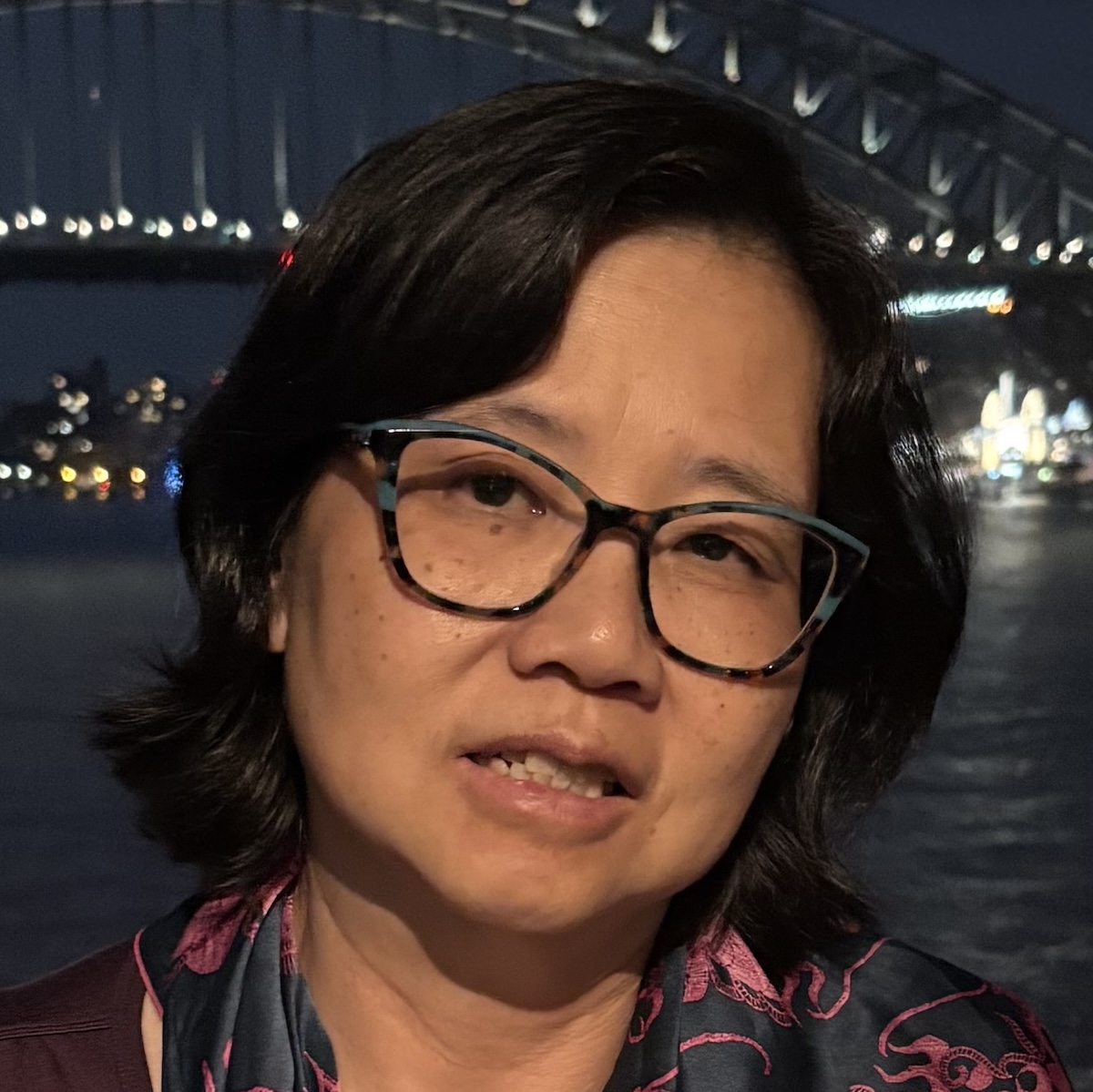
Janaline Oh
Janaline is a former diplomat and current climate, environment and anti-racism activist.
“As a longstanding Canberra-based bureaucrat, I believe in the power of policy to shape and improve lives. I am also acutely aware of the importance of having those policies understood by the people affected by them.
“I started Why Can’t They Just? as way of moving beyond slogans and into what policies really are and what they mean for real people.”

Luke Robertson
Luke is a student in conservation biology and environmental policy.
“I got interested in public policy and particularly environmental policy around 2020, seeing the damage that things like the ‘Wild Horse Heritage Bill’ did to Kosciuszko National Park, as well as budget cuts made to the national parks service that eventually worsened the Black Summer Bushfires.
“I joined the Policy for People and Why Can’t they Just team after seeing the hard fought passage of the Environment Protection and Biodiversity Conservation Act and the power of community organising for good. I am now hoping to help with community outreach in all areas of policy to make Australia the fairest and most equitable country that it can be.”

Yassine Andrews
Yassine is in Year 11 at a public school.
“I think it is important for the younger generation to be interested in and aware of policy and its impacts on their current and future lives - especially since a lot of young people have no interest in government policies.
I joined Why Can’t They Just and Policy 4 People because I think that it is important to have the perspective of a younger Gen Z. I think people my age need to be a part of the discussion and taken into consideration when talking about the impacts of policy. Since I have lots of strong opinions about things, I can express them in the context of policy through the podcast.”