Why Can't They Just Make Social Media Safe for Young People? [S2-15]
Posted on Wednesday, Aug 19, 2026 | social policy, social cohesion, youth, technologyShow Notes
Please leave a comment, particularly if you have your own “Why can’t they just…” question, or email us at whycanttheyjust@gmail.com. We’d love to hear from you.
Find out more about us and how you can support us at https://whycanttheyjust.com.au/, which includes a link to our Patreon site where you can sign up for exclusive content.
Please also feel free to rate and review us, as it does help people to find us.
Music: “Insurrection”
Written by Pierre Chrétien
Performed by the Soul Jazz Orchestra
Courtesy of Do Right Music Inc.
Transcript
19 August 2026
Luke
Welcome to another episode of Why Can’t They Just, a podcast about politics, policy and getting stuff done. I’m Luke Robertson and I’m a member of the Labor Party, as well as a conservation biology and environmental policy student.
Janaline
I’m Janaline Oh, I’m also a member of the Labor Party. I’m a former diplomat and a climate, environment and anti-racism activist.
Before we start, I would like to acknowledge that Luke and I are recording this on the unceded lands of First Nations people in Australia, recognising that sovereignty was never ceded, we pay our respects to their Elders, past and present, and extend those respects to any First Nations listeners that we have today.
So today we’re going to do things a little bit differently. We’re talking about social media and its impacts, particularly on Gen Z, the generation born between 1997 and 2011, which is 15 to 29 year olds. I’m so happy to have two members of that generation with me today: here in the studio I have my daughter Yassine, who is in Year 11 and the youngest of the Zoomers, born in 2010; and Luke, who is literally on Zoom, born in 2006.
They are the first generation to grow up exclusively in the digital age and the age of social media. They’ve also just missed being captured by Australia’s social media ban, which makes it illegal for children under 16 to have a social media account. So they are the generation first fully exposed, and the last to be unprotected. So I’m going to ask them to paint a picture of what growing up in the social media and constantly online age has been like, and I’m going to start with Luke.
Luke
Yeah, look in the early years of my life, I don’t remember too much. I don’t think it played such a large role in my household. I was around when ABC 2 was telling me to go to bed, you know Giggle and Hoot and waking up before broadcasting had started. But around Year 2 I would say YouTube was taking off but by then I don’t think the algorithm was particularly advanced and it was more sort of me looking things up and I wasn’t seeing anything that I wasn’t meant to see at that stage. I got my first phone by the end of Year 6, which didn’t have any social media on it; it was just really to call my mum or dad.
But just as I was getting into high school, the whole world sort of shut down. I remember I was at my first ever concert with my mum, which was Queen, and we heard about COVID there. So Year 7, until the end of it, was largely unimpacted, but Year 8 it was pretty bad. I think it was an incredibly isolating experience and, whilst technology helped bridge that gap, I think it created a different type of isolation. So the good bits was definitely being able to stay in contact with my mates all day, and you know we would just sit there and chat every day; we were very unproductive, just playing games, barely trudging through our work. But on the flip side of that, the isolation from physically being inside and not being able to do anything else, left the online world as the only option.
At the same time, in Year 8, I was diagnosed with major depression, which lasted a few years and I would spend, you know, hours and hours just playing games until ungodly hours in the morning, and just doing you know nothing but that. I was missing school work and by Year 9, I’d had a pretty rough couple of years, which my brain has mostly blocked out, but my parents tell me about things that I don’t even remember happening.
But by about Year 10, I think the sort of intersection between social media and my generation was very apparent: I was on Snapchat for that year, and of course everything else. But by then I think the algorithms were showing me a lot of pretty crazy things that I was seeing for a period of time: a lot of casual racism, misogyny and otherwise pretty nasty views, which I think was probably a response to that corporate ‘woke’ era. But I never really went into that world, but I know a lot of people that did. And of those that did, they very much entered the sort of manosphere space, which took advantage of a bunch of freshly isolated boys from COVID and fed them some pretty sexist self-help.
But from that period, I felt the algorithms for me at least getting more toxic, and I was just shown stuff that would make me upset, like I would get videos of orangutans being forced to pick fruit, or bears forced to dance. And then as I became more politically engaged, I was shown all those, you know, far right influencers which, you know, made me upset in different ways. So since then, I’ve gone off Instagram and use this app that lets me keep the messenger bit, which is pretty important to stay socially connected and to do all the group assignments at uni too.
And I miss out on what people are sharing and whatever, but I think it’s a worthwhile trade-off, as I could see my mental health deteriorating just as a consequence of being shown stuff to make me upset.
I think that outrage is addictive in another way: the grievance when you do or don’t agree with something is still very much something that makes you want to return.
Janaline
That sounds horrible, Luke, I’m so sorry to hear that you had a rough time during COVID. I think, sadly, it’s not unusual. I’m interested in what the algorithm was pushing to you because I’ve actually spoken to a few other young men of around your age, maybe a little older, who’ve also just quit social media because they also couldn’t stand what the algorithms were pushing to them. But I want to hear what the algorithms are pushing to young women now, so I’m going to ask Yassine what she thinks.
Yassine
For me, I’ve kind of curated my algorithm by, like, liking certain things and saving certain things and sharing certain things to, you know, let my algorithm know what I like and what I don’t like. So I get a lot of cats, definitely, because I send them to my sister and we bond over that. But I also get a lot of feminist reels because I’m a big fan of that, so I’ve been, like, interacting with those kinds of reels, to create my own algorithm I guess. But along with those, I do get a lot of body shaming and ‘this is a perfect girl, and this is what you’re meant to be like’.
Janaline
When I was a teenager, in the 1980s, we had landline phones with actual dials on them. And I would spend hours chatting to my friends and the parents would complain because nobody could call them, because the family only had one phone. The internet was barely a thing until the early 1990s, when email became widely available, and even then, it was clunky, it required a dial-up modem. Online bulletin boards existed, but they weren’t easy to join and since you had to dial up to get onto the internet, they were very much limited to a few hours of spare time. Also, I would add, internet charges were astronomically high.
In 2004, Mark Zuckerberg and his friends at Harvard invented Facebook as a way for friends to interact, but it still required an actual computer to use. In 2007, Apple released the iPhone and then subsequently a number of other mobile phones on the Google Android system emerged, and basically transformed all of that by putting that high-powered, always connected computer in everybody’s pocket. In 2015, further refinements in algorithms to personalise feeds, and the infinite scroll were invented, which meant that people could, and sometimes did, spend literally all their time on social media. And some of them are still doing it.
I will note that 2015 would have been a couple of years before you got your first phone, Luke. You would have got your first phone at the point where those algorithms were really taking off and where that infinite scroll was really starting to capture people’s heads.
These algorithms came under very serious question after the 2016 Brexit vote, when the UK voted to leave the European Union, and Donald Trump won the presidential election in the US, and there were a bunch of revelations that Facebook had enabled the illegal use of private data to influence the election outcomes. Now I’m not saying that those votes would have turned out differently if Facebook hadn’t allowed that, but I am saying that it was a thing that was debated at the time, and since.
In 2017 and 2018, Facebook and, particularly, WhatsApp, its messaging app, were shown to have facilitated ethnic and religious violence in both India and Myanmar and, in the current day and age, lots of reports around child sex abuse, trafficking and victimisation facilitated by social media. And those are only the very worst bits of criminal activity. That doesn’t even go to cyber-bullying or trolling or the outrage machine that I think you alluded to, Luke, and then there’s AI.
So what do you guys think social media is doing to young people now, and what do you think needs to be done to keep people safe?
Luke
Frankly, I think it’s destroying a generation’s brains. I think the commodification of attention in such a short format is inherently toxic and the way in which content is shared deliberately creates an unrealistic view of the world. I know a heap of people who’ve worked in education their whole lives, family included, who’ve seen generations of kids come in that have shorter attention spans and less social skills, and they say it’s getting worse every year.
I know it’s a different experience for everyone and the content can be perfectly innocent or very sinister, depending on what the algorithm deems to work. I think it’s rooted in the way in which our body physiologically responds to cortisol compared to dopamine and that stress is much more potent. But I think, in large, the world needs to stop trusting Meta, Google, Bytedance and X to fix these things themselves. They’ve shown, you know, time and time again, that they are entirely incapable of keeping anyone safe. The way social media has enabled terrorism, school shootings, domestic violence and all of the suicides and self-harms that have happened, in the interests of harvesting data for the selling of advertising space, just shows that I don’t think they can be trusted to keep people safe and I think the companies need to start facing some serious consequences but what those look like I think is a really hard question to answer.
Yassine
I also think that the, like, infinite scroll is, like, really damaging because, like, as you said, we’re, like, damaging our brains, like no-one has any real thoughts anymore, to be honest, especially in my part of the generation, because I’m a lot younger, and just, people’s insights in class are just so idiotic and shallow. Especially since no-one really does anything anymore. A lot of people just go on their phones, like, as a hobby, kind of. A lot of people have just given up doing anything interesting with their lives because, you know, scrolling on their phones is so fun, and it gives them so much dopamine.
Janaline
That’s a pretty damning indictment of your peers, I must say, Yassine. Although there have been studies that indicate, and bad news for you guys, sorry, that your generation is potentially the first generation in history to be less smart than its parents. Obviously that is not a reflection on any individuals; that is talking about averages over a whole population.
But it is a bit worrying to me that the capacity for real conversation and critical thinking in your generation does seem to be significantly compromised by the way in which you’re getting information, and the constant stream of exposure to information that - it’s not just the content of the information, it’s the fact that it is presented in a particular way to trigger those addiction signals in your brain to keep you engaged on very extreme things.
One of the other things that I’m interested in is an essay by Will, which we will publish on our Patreon site. For those of you who are regular listeners, or who listened to us up until early this year, you will know that William was my co-host. He’s 24, born in 2004, he wrote an essay called ‘Of course Gen Z is lonely, we’re unforgiving, risk averse and judgmental’. And his main thesis was a couple of things, one was that social media’s also very unforgiving. If you say something, or like something, or put a personal imprint on any of the social media apps, that is there for eternity, and people have literally lost their careers over social media posts. I mean there have been celebrated cases in the US of journalists losing their jobs, of politicians having to withdraw from elections, of people just not being hired because, when the recruiters go through the applications, they also search through social media feeds. I feel like it’s an environment that is conducive to people not wanting to express opinions.
And look, I think it is absolutely fine for people not to express opinions on social media; I have to confess, being an old person, that I literally spend more time on the New York Times Games app than I do on all social media platforms put together. I’m fine with people not expressing opinions on social media. What concerns me is what Yassine has just articulated about young people just not expressing opinions at all and young people also maybe not even forming those opinions? So I’m wondering what you guys think about that.
Luke
I think that’s key right there: the not forming opinions. I think that the forming there is really important. I see that at university, like, the regurgitation of reels and whatever as statements of fact, and then there’s nothing below that. If people aren’t taking the time to form those opinions themselves, it - inherently I feel like scrolling through social media is the equivalent of just, like, skimming the headlines. There’s a lot you’re missing out on. It reminds of the quote by Walter Litman, that I think I’m probably paraphrasing from ‘Paper Emperors’ by Sally Young, which is that the intention of the news is to make you feel informed, and that sensation is more important than being informed itself, which is obviously a monumental task, to be able to actually be informed. Feeling it is good enough and I think in social media, just headline after headline, you know, clip after clip, it’s just inherently creating a group of people that are incapable of coming to their own conclusions or apply critical thought, when they have an algorithm which conforms to whatever biases they hold.
Janaline
In defence of your generation, that also happened in previous generations, people just skimming headlines, not bothering to form opinions, going to the pub and hearing a thing. I think the difference now is that it’s coming in the form of short form videos that are deliberately designed and curated to make you addicted. So instead of just running into headlines as you walk past a newsagent, now I think the conversation is both more fragmented, because everybody is seeing different things. So when people walked past those newspaper headlines, they were all the same headlines from the same newspapers. Now people are getting very very different content, as you guys alluded to in terms of the different algorithms that are being fed to you. So it’s, in one sense, a lot more fragmented but it’s also a lot of more dispersed, because of course in each of those categories of algorithms there are now literally millions of people all over the world, and I think the combination of those two is creating a sort of toxic misinformation and disinformation environment that is very easy for people to fall into and potentially takes a lot of homework to educate yourself out of.
Yassine
I think the point on not having opinions is a big one, because, like, you’re right, they’re not, we’re not forming any opinions, any, like, real insights; we’re really just drawing things from, like, little snippets that we’ve seen and little things that resonate with us, maybe, but we don’t know a whole lot about. And I think a part of that is, because we’re constantly on our phones and, like, that is so accessible at all times, no-one is bored anymore. So no-one has time to reflect on anything or think about anything, really, and, you know, form those critical thoughts, I guess. Like, there’s a thing kind of that people sort of only have TikTok opinions or TikTok personalities, because they can’t think of anything for themselves.
Janaline
I’m kind of interested: you guys keep talking about ‘we’ are constantly on our phones, ‘we’ are not forming opinions, ‘we’ are having TikTok personalities and TikTok opinions rather than real ones. I’ve got to say, it has struck me during this conversation, that both of you do have quite strong opinions, and are quite well-informed. So I would be quite interested in your reflections on what is different for you and what lessons are there for other people in your generation? What I’m asking you guys is: give me some hope.
Luke
Ah, yeah, you’re right, I’m probably being very pessimistic. I have this one friend, hopefully he’s listening, who’s already publishing research. Like, how cool is that? He’s the same age as me and he’s already in scientific journals. So I don’t think it’s the rule that we are so in the jaws of these algorithms, but, yeah, I think it really is slowing a large part of each year that comes through and it’s pushing ginormous parts of the generation back, when a lot of people really need a leg up.
Yassine
So I do say, like, ‘we’, because I’m surrounded by them. But I am also, like, being pretty pessimistic. I know, like, most of my friends are really smart and, to be fair, those people don’t have social media, so that might be a common factor. But also, like, in any case, there’s always kind of outliers, like people who want to learn and want to form opinions and, you know, are really interested in certain things, like very strong opinions on certain things that they truly believe in - like me - will, you know, stand up for those and form their own opinions and do their own critical thinking. But it’s just, like, a kind of, I think a majority…
Luke
If I might just jump in there, I think that’s perfect: a lot of people who might still have that thirst for knowledge and to be informed can have that satisfied, I guess, vicariously through social media, right? I don’t think, as a generation, there’s people who are less interested in wanting to learn, less interested in wanting to do good things, it’s just that, in the past, someone might have to go out and make a big change in their community, organise to see a change, but nowadays people can sort of satisfy that itch, I guess, by changing their bio, or something.
Yassine
I’m just going to come back to Will’s essay, because his point was that our generation is so miserable because we are self-censoring, and not wanting to express our opinions, I guess, if we even have them, but because of digital footprint and, like, it’s there forever and you can’t really come back from that. But I think, I think that’s definitely true for people who are starting to get jobs in Gen Z, but with the people around my age, we don’t really care, yet, about that kind of thing. Maybe just because we’re not very bright.
Janaline
Are you telling me that KFC didn’t trawl through your social media feed before they gave you a job?
Yassine
Yes, absolutely.
I think what’s making people around my age more miserable is just the absolutely miserable, targeted feed that we’re getting. So, around my feed and stuff, I get so much on ‘your life is so miserable because look at my life and look how perfect it is’ and ‘look at how perfect my body is’, ‘look how perfect everything is about me’, right? And ‘this is what you should be like’. And in some ways it’s encouraging to better your life; I guess, a bit of motivation. It’s also, like, just making you feel so awful about your own life. Like, for an example, right, there’s these things called ‘what I eat in a day’, which is basically just girls who are super, dangerously skinny, who show their bodies and are, like, ‘oh, this is what I eat in a day, as a this height, this weight’, whatever, and then they show you that they eat, like, nothing. And then girls are, like, ‘oh, this is what I should be eating to gain that body’, even though it’s like, genetic, and then they, like, you know, don’t eat breakfast, or they eat breakfast and they feel miserable about it, and guilty. So I think it’s very harmful, and that’s just an example from my feed.
Luke
I think it’s the opposite for boys. I think it’ll be, like, super super muscly dudes, and they’ll eat, like, a horse or something - something ginormous - and then they’ll, you know, flex their body. Which is, you know, a lot of people, I think, have a really positive relationship with body-building in my generation, and that’s awesome because, you know, people should be healthy and exercise. But I think for some young men that can be - that can have the same effect that you were describing, like, in a different way, that like ‘oh I’m not big enough’. The chase for the perfect body is still there; it just expresses itself differently.
Janaline
Again, I’m just going to chuck in a sort of reality check that this is not unusual in your generation, right? I mean, anorexia amongst teenage girls was rife in the 1980s. I had at least two friends at school who were hospitalised aged about 15 or 16 because of eating disorders. In our case it was magazines airbrushing models to look really skinny. I guess I’m just saying it’s not unique, but I do think it is worse because of the reach of these platforms, and because of the constant nature of the feed. Like, you wouldn’t be looking at those magazines constantly; you are constantly getting this on your phone. So I think that is one of the differences.
So the Australian government is taking measures on social media and young people, the headline piece of legislation introduced last year was the social media ban for children under 16. A number of other countries have adopted similar measures. I’m interested in what you guys think about, firstly, is that ban a good idea? What are the pros and cons? And how you think people can be kept safe on social media.
Luke
I think it’s a pretty good example of a wicked problem. I think it’s the policy equivalent of walking on eggshells. I was a fan of the social media ban, but I also think we knew it wasn’t going to be terribly effective, and I think to at least some extent the government knew that too. You could see it in the way they spoke: the Prime Minister said something on, I think it was on Sky, he said ‘drinking under the age of eighteen is illegal, but you can’t tell me there’s not someone under 18 having a beer in a pub at the moment’. And I thought, yeah, that’s a really good point. But what I am really interested to see is what the digital duty of care will look like, which is currently being developed. I hope one of the things it addresses in full, and it looks like it’s trying to in some way, is how the algorithms work and I think that the public really need to be shown how they function in a way that’s clear and up to date. Much like AI, these things operate within a black box and could have all sorts of things hiding in them. But at the same time, you know, I see the challenge of what that actually looks like. You know, that’s a really easy thing to ask, but that is a monumental task. And I guess the politics of that, with all the sort of free speech concerns.
In my opinion, I think a good outcome would be algorithms being more neutral. Maybe what that looks like is a limit on how much data they can use to inform your own algorithm. Because I don’t think, like, society would accept the same sort of thing in a non-digital space, like can you imagine a newspaper filled with articles that changed every time you looked at it, like you looked away and you came back, and they were designed specifically to exploit your anxieties or confirm your biases, just to keep you reading. Although I’m sure some people would say that already happens; it’s not quite as quick, it just happens on a daily timescale.
Yassine
I definitely think that the ban was a good idea: it might just be my bias because I just missed the cut-off. But anyway, I definitely think that having such young people on that platform is really damaging. Yeah, I think that also controlling the algorithms is a good idea, and also, like, holding the social media companies, like, accountable for things.
But, like the thing with the social media ban, people have the argument that, in really remote communities, or in communities where you feel really like an outsider, and you have no-one to really connect with, having social media is a really good idea because you can connect with - you can find people anywhere in the world who, like, have a similar problem to you, or are in a similar situation and you can just connect with them and, you know, have support. But kind of to counter that, I think that the risk of being bullied and, you know, cyber-bullied for these things is very high, because, especially if you are even an outsider in your own community, there’s definitely going to be people who, you know, have something to say to you, like, something to criticise you for, and that can be very harmful. And potentially even more harmful than what it would be to not have, like, a community on social media.
Social media also, it’s claimed that it provides a lot of publicity for horrible things, like things like blatant misogyny and racism and homophobia, and you know, it makes people aware of, like, the damages it has but, at the same time, it provides awareness for those things, which can also encourage it to be more popular and, you know, seen as cool, or whatever.
Janaline
So on the one hand, the amount of misogyny, homophobia, racism on social media exposes how awful it is, but also encourages people to engage in it?
Yassine
Does that make sense?
Janaline
No, it makes total sense. I mean, I think the thing is the, sort of, double-edged sword, right? I have to admit, I have been surprised by the number of young people, people your age, who support the social media ban. I’m now feeling terrible, as a parent, for allowing my 13 year olds to have social media. I think, like many parents of my generation, I was very naive about what social media involved and what it could end up dishing up to my kids. So I’m just going to say publicly here, on the podcast, I am so sorry to both my children, for exposing them to that.
But I think one of the things about the social media ban, and this was very much a thing that both the Prime Minister and the e-Safety Commissioner, Julie Inman-Grant, said: part of the purpose of the ban is also to trigger those conversations between parents and children. So that when children are petitioning for social media, the parent can just say ‘well, actually, it’s illegal, I can’t give you that’. But also to put in just an extra barrier to the parent being complicit in having the child get social media. I mean, of course it happens, you know, parents also let their kids drink in pubs, you can’t really police that. But what it does is it creates a different social norm around the use of social media for young - very young people. And I think that’s probably not a bad thing.
I do think it is not the whole solution, though, I think the digital duty of care is absolutely essential. And I agree with you, Luke, I think we do need to go after the algorithms, and I think part of it is transparency, and I think part of it is actually potentially prohibiting the infinite scroll. You know, again, I’m sounding like a really ancient person here, but I’m actually old enough to remember when you could get to the end of your Facebook feed. It would stop. That’s not been possible for the last ten years. Also things like opt-ins and opt-outs, for people to say ‘I only want to get content from people I follow’ or ‘I only want to get content from, you know, this type of thing’. So I think there are ways of doing it. Julie Inman-Grant talks about safety by design. Now she used to be a big tech executive: she comes from Seattle. So she knows what she’s talking about, I don’t have the technical expertise to comment on how you would implement that.
But I am aware that people like Frances Haugen, who was the Facebook whistleblower, who ran around the world a few years ago, testifying to different parliaments about how Facebook could actually stop all of this harmful behaviour but they chose not to. So I think in your opener, Luke, you talked about how the social media companies had proven themselves to be incapable of stopping harmful content and harmful behaviour. I would actually say, they are not incapable, they have proven themselves to be completely unwilling to do that, and I think that is a very different thing. Because if they are capable but not willing, then that is the space in which governments can step in and actually force things to happen. And listeners to this show are not going to be surprised that I think a bit of government bossiness to ensure the safety of the population is probably quite a good idea.
Luke
Yeah, I think that’s probably what I meant: that’s a better word. Because, you’re probably right, they probably could but they don’t want to.
Janaline
So I think we’re probably coming close to the end of our time. As usual, we come to people for final observations, final thoughts. Do you have any final thoughts, Luke?
Luke
I think this is a ginormous challenge, and I think much like when sort of cigarettes were found out to be causative of lung cancer, they needed a very large sample size to draw that from, and a lot of people unfortunately passed away. I think in a similar but not the same vein, I think society really needs to reckon with the impacts of what these services do, and only once they see the impacts, they’ll be able to go ‘right, we’ve got to do something about this’.
I think people are starting to recognise that. But the challenge is, social media does not have the same outcome for everyone, right? Like, not everyone will be radicalised, not everyone will become isolated, and because not everyone will have a uniform response, it’s a lot harder to control.
Janaline
And Yassine?
Yassine
So I just want to touch on something that Luke said earlier about the manosphere kind of content that guys are getting, and how, you know, it’s so different for - the kind of feeds are so different between men and women and, like, kind of the expectations of them, I guess. Like, I guess men really need to be encouraged to hate on women, or something, and women are encouraged to hate themselves.
Janaline
So everyone’s encouraged to hate women, is what you’re saying?
Yassine
Yeah. But I think that’s also kind of resulted in women not liking men. And just, I mean this very general by the way, not personalised at all. But like, you know, young men are just so, like working on themselves because of these toxic masculinity environments that they’re exposed to and then they make themselves perfect, or whatever. And then they, like, really are so confused as to why women don’t want to be with them, because obviously the way that they’re behaving and their attitudes towards them are so toxic that women don’t really want to involve with that. And so they’re, like, kind of confused and then probably just despise women more for not wanting them.
Janaline
I think you raise a really important and deeply worrying trend, actually, and look, I mean, we’ve got to be clear, right, like the number of men getting sucked into the manosphere is still a relatively small proportion of the population. I mean notwithstanding the real concerns about how prevalent it is - I think a recent report, which was very alarming, showed that, like, 25 per cent of Gen Z men had pretty bad attitudes towards women. Having said that, and that is big number and it’s a bad thing, but there are still 75 per cent of those young men who don’t have bad attitudes towards women, right, so I think we need to keep things in perspective.
I will note, though, that there are a number of countries in the world that are genuinely seriously concerned about the impact of this, I guess we could call it a bifurcation of the genders, on the birth rate, on the willingness of young people to actually get together and have families. In Korea, there is a real phenomenon around young women just rejecting men altogether, and, you know, they have a birth rate now that is - their fertility rate at the moment is 0.8. The replacement rate for the population is 2.1. So they are, you know, dying. It is actually quite worrying. And in rich countries across the world, the birth rates are well below population replacement level. I mean, there are many many reasons for this, but I think the, the kind of, the division between young men and young women in this sense is obviously not going to help.
Yassine
Yeah, just like, I kind of realise how it sounded sort of, just like kind of generalising all men into this, like, kind of category, so I don’t really mean that. I meant, like, specifically men who are getting manosphere content.
Janaline
I mean, I think it is a bit concerning, because some of these young men, you know, at the very very extreme fringes, are turning to violence, and that is a terrible thing. So I think definitely - let’s be real, governments are not going to stop toxic content and toxic attitudes: you cannot legislate against misogyny; you cannot legislate against racism. What you can do is you can have policy settings that make it easier for people not to fall into those rabbit holes; that actually steer people away from those thoughts.
And, I mean, there’s a lot of positive masculinity stuff out there in the internet now as well, that actually tries to teach young men that, if you want to have a girlfriend, maybe being nice to her is actually not a bad strategy. That having ripped muscles is all very well, but if you actually want a woman to hang out with you, then maybe actually having a conversation is an option. So, maybe it’s not just about you, I guess. But I think that is a message that, again, is not unique to your generation.
Luke
I think ultimately the thing that we should take away from social media and technology at large and the impact it has on Generation Z is that, ultimately its purpose should be a bridge for connecting, and not the architect of our anxiety and our worries in the world. I think we should use it for good, not for bad.
Janaline
I love that idea of social media as a bridge rather than as the entire environment. I think it’s actually a really useful concept. So I think that wraps our session for today. Thank you so much both of you. I feel like I’ve learned a lot about how things are for young people. Special thanks to Yassine for coming in and talking to us. And thank you for listening.
Luke
That was another episode of Why Can’t They Just? The piece that we use for our theme music for this podcast is a piece called Insurrection by Pierre Chrétien, performed by the Soul Jazz Orchestra, courtesy of Do Right Music Inc.
Janaline
You can also hear us on Canberra community radio, 2XX FM 98.3 on Tuesdays between 6 and 7, or via 2XXfm.org.au. If you like our work, consider supporting us on Patreon, via our website whycanttheyjust.com.au.
Luke
I’m Luke Robertson.
Janaline
I’m Janaline Oh, and this is Why Can’t They Just?
Hosts
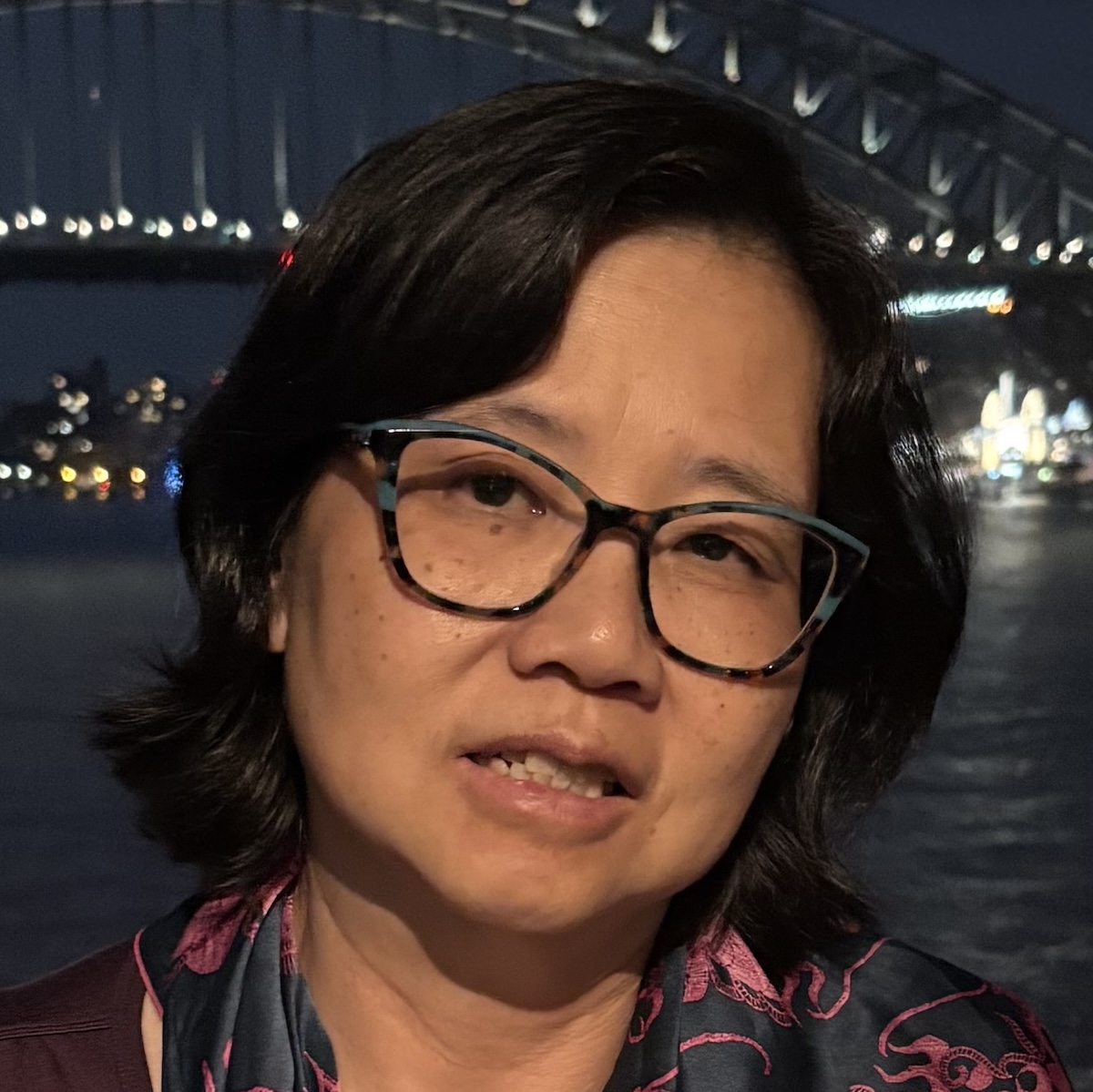
Janaline Oh
Janaline is a former diplomat and current climate, environment and anti-racism activist.
“As a longstanding Canberra-based bureaucrat, I believe in the power of policy to shape and improve lives. I am also acutely aware of the importance of having those policies understood by the people affected by them.
“I started Why Can’t They Just? as way of moving beyond slogans and into what policies really are and what they mean for real people.”
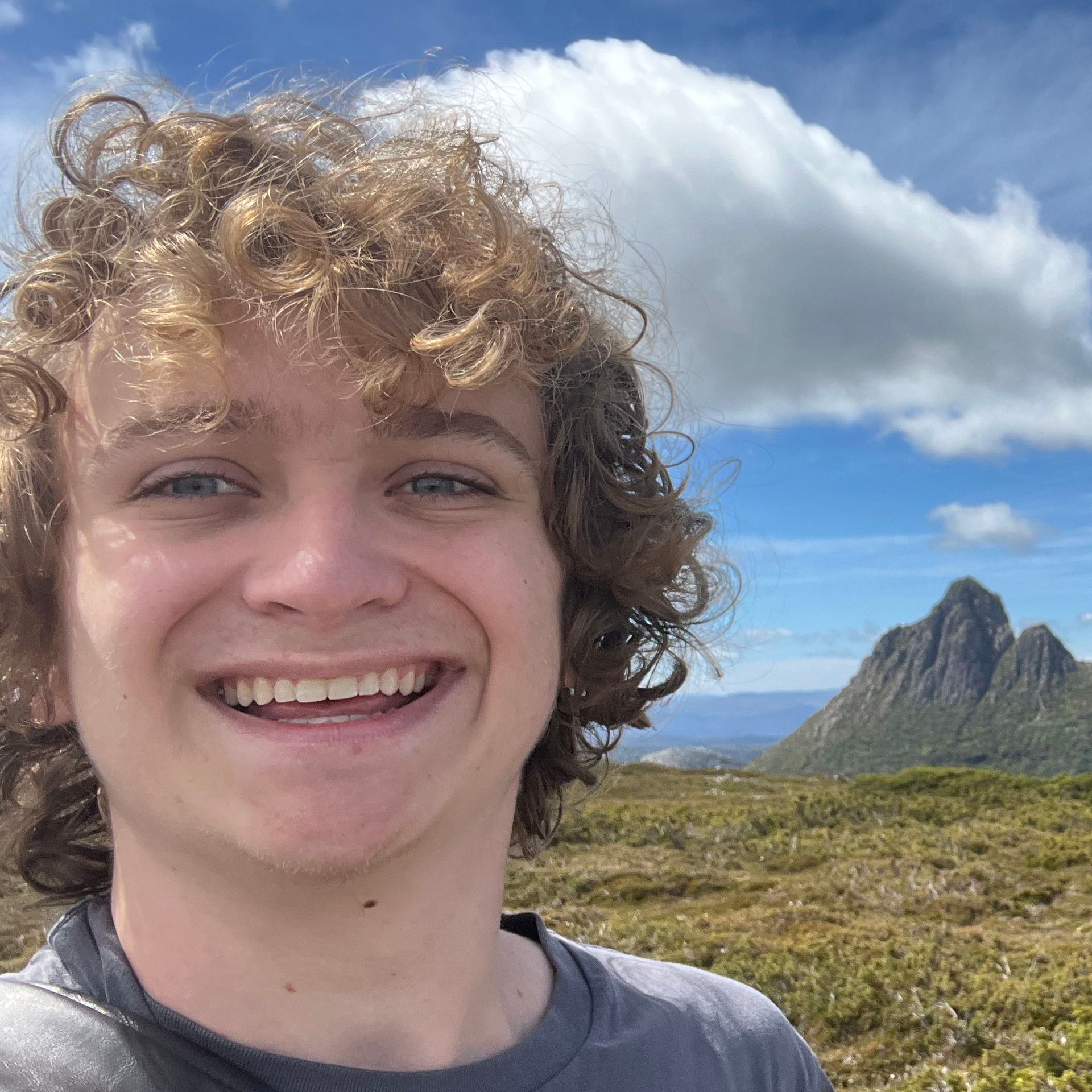
Luke Robertson
Luke is a student in conservation biology and environmental policy.
“I got interested in public policy and particularly environmental policy around 2020, seeing the damage that things like the ‘Wild Horse Heritage Bill’ did to Kosciuszko National Park, as well as budget cuts made to the national parks service that eventually worsened the Black Summer Bushfires.
“I joined the Policy for People and Why Can’t they Just team after seeing the hard fought passage of the Environment Protection and Biodiversity Conservation Act and the power of community organising for good. I am now hoping to help with community outreach in all areas of policy to make Australia the fairest and most equitable country that it can be.”