Venezuela, US Foreign Policy and Australia's Response [S1-11]
Posted on Thursday, Jan 15, 2026 | international law, national security, foreign policyShow Notes
Please leave a comment, particularly if you have your own “Why can’t they just…” question, or email us at whycanttheyjust@gmail.com. We’d love to hear from you.
Please also feel free to rate and review us, as it does help people to find us.
Music: “Insurrection”
Written by Pierre Chrétien
Performed by the Soul Jazz Orchestra
Courtesy of Do Right Music Inc.
Transcript
William Sinclair
Welcome to Why Can’t They Just, looking at politics, policy and getting stuff done. My name is William Sinclair, and I’m a member of the Labor Party.
Janaline Oh
And I’m Janaline Oh. I’m also a member of the Labor Party. I would like to acknowledge today that William is recording on unceded lands of First Nations people in Australia. I’m actually in Japan today, so yes, recording from Kyoto.
William Sinclair
This episode’s going to be focusing on Venezuela. Just to recap, for those of you who haven’t - who’ve missed the story - on the 3rd of January 2026, the United States military attacked Venezuela, capturing Venezuelan President Nicolas Maduro and his wife Cilia Flores.
The attack, codenamed Operation Absolute Resolve, began around 2:00 am local time, when explosions were observed. More than 150 United States armed forces aircraft were involved in the operation, which bombed infrastructure across northern Venezuela to support an apprehension force that landed on Caracas. Venezuelan Vice President Delcy Rodriguez denounced the capture as a kidnapping.
Janaline, what are your first thoughts?
Janaline Oh
Yeah. So obviously this is a pretty shocking and unexpected development. I mean, Trump has been talking about wanting to invade Venezuela for some time. He’s amassed troops in the Caribbean. He’s been blowing up boats that he claims are drug running boats and other people claim are just fishing boats, killing all the people. He has gone to some lengths to make sure there are no witnesses from those because the survivors have basically been killed.
I mean, looking at both US domestic law and international law, I am struggling to see a legal basis for it. So, under US domestic law, the US Constitution Article 1 gives Congress the power to declare war. The President cannot just declare war without Congress. Congress was not even consulted.
Donald Trump, when asked this question said, ‘oh, Congress just leaks all the time. We didn’t want any leaks’. Which is pretty funny from the President whose Secretary of War literally sent war plans to the editor of a newspaper.
Under international law, under the United Nations Charter, there are very, very constrained circumstances in which countries can use force against each other, and obviously the reason for that is because the UN was actually invented after the Second World War to stop countries from declaring war on each other. One of the reasons is self defence. A second reason is if authorised by the United Nations Security Council to preserve international peace and security. Clearly the second didn’t happen.
On the first, so the US administration is saying oh, but this was self defence because Venezuela is flooding our country with drugs and this is a security threat to the US. That is a very, very tenuous argument. There is no armed threat involved in Venezuela sending drugs to the US. The quantity of drugs coming from Venezuela to the US is very small compared to the quantity of drugs coming through the Mexican border, for example. By that logic, the US should be invading Mexico. I’m not suggesting that the US should invade Mexico.
William Sinclair
I just want to jump in. Janaline, don’t give Trump any ideas.
Janaline Oh
Yeah. Well, look, I mean, people have raised this, actually. Marjorie Taylor Greene, interestingly, the representative - Republican representative from Georgia, who used to be one of his biggest cheerleaders and has recently broken with him, actually posted a very lengthy thing on social media saying exactly that. You know, she strongly supports strong borders. She has supported his migration policies. But if you are concerned about drugs coming into the US, Venezuela is not the major source.
The other thing that makes it kind of absurd is, you know, they’re saying they had to take Maduro because he has been charged in the US over drug crimes. You know, a couple of months ago, Donald Trump pardoned Juan Orlando Hernandez, who was a former president of Honduras, who was actually convicted in the United States for very substantial crimes relating to trafficking drugs into the US. Trump pardoned him. So is he really that concerned about drug traffickers or is he only concerned about drug traffickers that he doesn’t like?
William Sinclair
I think clearly the veil that hangs over this whole dispute is the Venezuelan oil, which I think Trump has pretty much openly admitted that he’s interested in the US taking control of or US oil companies taking control of. It would seem reasonable to me that that’s the reason why he invaded.
Janaline Oh
So as a casus belli, which is the case for a just war, taking somebody else’s oil resources does not cut it as a reason for war. So yes, I think he has said absolutely the quiet bit out loud. He’s pretended it’s been about drugs and self defence, and then he said and we’ve got tonnes of oil and it’s really great because we can take over the oil and, you know, we need that oil. Like, there are so many things that are wrong with this from an international legal perspective.
Now there are precedents for the US going into a Latin American country with armed force, and in one case deposing a leader, and in another case actually doing something similar to what they did to Maduro, which is capture the president and take him to the US for law enforcement purposes.
Now the first case was Grenada. In 1983, Ronald Reagan went in and deposed the then President, who was a general who’d taken over in a coup. So he had deposed the legitimately elected Prime Minister, Maurice Bishop, who was then murdered. The US went in, basically overthrew the military coup and left it to the Grenadans to sort themselves out. So then the Grenadan President cobbled together a transitional government. There was a process. The US did not try to run Grenada after that. They went in, they deposed the military, and then they came out again.
Now, was that legal? Arguably, that could count as a legal action.
So in a universe where the Venezuelan opposition, because the other thing that happened in Venezuela a year ago, is that a guy called Eduardo Gonzalez won an election and he won it quite decisively. There were a lot of, you know, reports, credible reports from voting booths, election observers, you know, independent people who demonstrated that Gonzalez won, probably by up to about a 30 point margin.
The opposition leader, who didn’t run in that election because she was disqualified, Maria Corina Machado, was recently awarded the Nobel Peace Prize for her efforts in trying to bring democracy to Venezuela. She, unusually for a Peace Prize recipient, used that platform to call for an armed invasion of Venezuela to overthrow Maduro.
Now, again, in a universe where she had been coordinating with the Trump administration, they went in overthrew Maduro and then said, OK, the duly elected president is Eduardo Gonzalez. He should come back, form a transitional government, take power in the way that he was supposed to a year ago, and the US will support that. That is arguably a legitimate action under international law.
That did not happen. There is no evidence that the opposition was involved in any of the planning of this. After the event, when asked by some journalists about Maria Corina Machado and whether she should be the one to take over, and is this about restoring her party to power after the election was stolen from them, he basically completely dismissed it. He said ‘oh, I don’t think she has a lot of support there. I don’t think she’s the person that we should be dealing with’.
The second example from Panama in 1989 was when the US went in and captured General Manuel Noriega, took him to the US, charged him with pretty serious drug offences and ended up imprisoning him. He ended up going back to prison in Panama and he died, but after kind of, 30 something years in prison.
Noriega was also arguably a different case - this was George HW Bush - because just before the US invaded, Panama had actually declared war on the US.
So the congressional power to declare war doesn’t have to refer to if somebody declares war and attacks the US, the executive can respond without going to Congress. So the Bush administration argued that the Panama action was legal without congressional approval because Panama had actually declared war before the US went in. I think it’s a little bit tenuous because it’s not clear that the US went in because the Panama parliament declared war on the US.
Their argument then on why Noriega didn’t get sovereign immunity for a head of state was because he was not a legitimate head of state. That is an argument that, no doubt, they will put forward in the case of Maduro. I think that is actually a credible argument because very few countries recognised the legitimacy of his last election, so I think it is arguable that you could say he is not a head of state and therefore can be prosecuted in a US court. The charges which they have brought against him, I think are a lot more dubious. So the drug trafficking charges, I think would definitely hold. They were - they’ve successfully prosecuted cases like that against El Chapo from Mexico, Noriega, Hernandez.
Some of the charges they’ve put forward in that sheet of - the indictment sheet - seem very odd to me because they effectively relate to owning firearms against the interests of the United States. I don’t see how you could argue that a person who was in charge of a foreign military should be subject to US domestic firearms laws. That seems just kind of absurd.
William Sinclair
I’m no fan of the Nicolas Maduro regime, and certainly there’s a lot of domestic problems which he was not helping. But to go in and capture a president seemingly for the reasons of securing the oil supply to me is just another unfortunate, disgraceful example of aggression by great power politics. Just like the Ukraine invasion, just like China’s thinking about invading Taiwan. It’s just another chapter in the book of the neo-colonial world we live in, where great powers can just go in with special forces and kill and kidnap whoever they want and the rest of the world does pretty much nothing.
The Albanese response seems to be fairly lukewarm. The fact that Albanese said ‘oh, we want to wait for more information, we would like the democratic transition of power.’
I get that Albanese is in a tricky position because we need their submarines, but I guess I would have hoped for a more full throttled response to what is an illegal invasion.
Janaline Oh
So I think in terms of the Albanese government’s response, I think it is reasonable for them to be cautious. Because we haven’t fully established the reasons and the basis. So I think what Albanese has said is that the Maduro regime was illegitimate. We didn’t recognise it. Nobody in the West has recognised it. That we need to have a democratic transition of power driven by the Venezuelan people who made their views clear in an election a year ago. I think that is all very reasonable.
I think it is also reasonable to say ‘and everybody has to abide by international law’, which is what he said. Now should he have added the bit that the Secretary General of the United Nations added, which was and it looks like people haven’t abided by international law. Now, if it were me, I think I would have been inclined to say something like that. I don’t think I would have gone as far as the governments of Brazil and Spain and said this is a blatantly illegal, you know, this is a blatantly illegal act of aggression and I don’t think I would have gone to where the New Zealand Labour Party went, which was to say something similar.
I think a government in Australia does need to be a bit cautious. It would help over the course of the next little while if they’re just a little bit more assertive about insisting that people need to abide by international law. I think the Government gets into a very tricky space once the facts do become clear, because I mean my expectation and I’m pretty sure their expectation is that, when the facts become clear, it is going to reveal that this was illegal.
And that’s going to be really hard because it is very, very difficult for Australia to condemn the United States. And it’s not just about the submarines, it’s about the history of two countries that have been really close allies for basically the entirety of Australia’s existence as an independent country. It’s not just, you know, we need their submarines. At the end of the day, you know, if it really came to a the submarines are not the main game in the US relationship. The main game in the US relationship is the US relationship.
I think the Government is going to find itself in a pretty difficult spot and I imagine there are a whole lot of people in DFAT beavering away very, very hard at the moment trying to find appropriate words to express our support for the international rules-based order which Trump has just shredded and not just over Venezuela. I mean, in so many ways he has just shredded it.
And this is very problematic for Australia because we depend on the international rules-based order, because unless great powers are willing to be constrained by rules, countries like Australia are basically screwed.
So yeah, I think the Government’s in a very difficult position and I hope that they will ratchet up the robustness of, at very least, their strong defence of international law.
William Sinclair
Whether or not it was legal or illegal, or what the Australian response is, it would seem like this is exactly the kind of US operation in the style of Iraq where the US is going to get bogged down in this local area for a really long time, losing international reputation, losing money.
I assume we’re in agreement that this is a bad idea, whether it’s legal or illegal. I mean this is going to fall over. This is going to be a disaster.
Janaline Oh
Yeah. So I would agree that this is going to be a disaster on the first point. As I said, had it been done differently, had it been done in coordination with the legitimately elected Venezuelan government as in the government led by Eduardo Gonzalez and Maria Corina Machado, I am not willing to say that an armed intervention would not have been justified. It might have been justified.
Having said that, this is not that. I think we’ve now established.
I think in terms of the US running Venezuela, the US is terrible at occupation. It absolutely failed in Iraq. The US occupation of Iraq was a catastrophe. And it was a catastrophe because they didn’t listen. This was under George W Bush. They didn’t listen to the people who said if you are going to take over a whole functioning state, you actually need to keep in place as much as that functioning state as you possibly can to keep it functioning. The US in Iraq decided that the Ba’athists, in other words, people who belong to Saddam Hussein’s party, should all be purged from every part of the government. Now, unfortunately, when you have a dictatorship like Saddam Hussein’s, a lot of people joined the Ba’ath Party not because they were loyalists and true believers in its objectives, but because they wanted to have jobs. And so basically what happened is they gutted the civil service, they gutted the military, they tried to demobilise a whole bunch of people who had a lot of weapons and a lot of weapons training, no loyalty to the occupiers and a whole lot of grievances. And we ended up with violence for 20 years.
I have no confidence that Trump would be able to do this because the other thing about Venezuela is that while Maduro was unquestionably very unpopular, I don’t think very many Venezuelans would be unhappy that he’s not there, but they also don’t want to be run by the US. They also don’t want a foreign occupation. They actually want the Government that they voted for.
There are also a lot of armed militias who are sympathetic to Maduro, who are well armed and well trained and who know the terrain and who, you know, understand Venezuela in a way that the US and certainly the Trump administration does not. So I cannot see how any US occupation of Venezuela is going to be anything but catastrophic. It is going to be horrible and violent, and I think people are very, very nervous.
Now whether the US actually tries to do this is also unclear because Trump says we’re going to run Venezuela and then Marco Rubio gets up and says maybe not.
I think it remains to be seen what happens. The other thing that Trump’s been making big noises about is, oh, and Colombia’s next. And by the way, if I were in Cuba, I’d be very, very nervous. Like I wouldn’t put it past Trump to want to do those things. I am not sure that even the might of the US military would be enough to run three invasions and three occupations simultaneously.
So yeah, I don’t know what happens next and what happens next is so important. If, even at this stage, the Americans basically back off, support, you know, the properly elected Venezuelan government to do a transition process and actually send Venezuela back into a path of relative stability, then I think it can be salvaged and Venezuela doesn’t have to end up in a bloodbath. And then the very difficult process of reconstruction can start.
But Trump seems to be talking to the previous Vice President Delcy Rodriguez, who has denounced the invasion but who also said she would cooperate with the Trump administration and who Trump has openly threatened, as in if she doesn’t do everything I say, then she’s going to end up in a much worse state than Maduro. I don’t know what happens at this point, but yes, I agree with you, I don’t see how the US can do one occupation, let alone the three that Trump is now musing about.
William Sinclair
The other reaction that I had is that he ran on a ticket of I’m the President that ends wars. I’m not a President that starts wars. All these other Democratic Party, all these other Democratic Presidents started all these wars and I ended them. This would seem to totally run against the grain of what he ran on.
The other theory I suppose running around is that this is all just a distraction from the Epstein files. Do you think there’s much credence to that?
Janaline Oh
Look, I think there is no doubt that he, that Trump would like to talk about anything other than the Epstein files, whether he has actually launched an attack on a country, in order to do that, I wouldn’t be willing to go that far. I wouldn’t rule it out, but I don’t think there is clear evidence that that is the reason. I mean, he’s been running this Venezuela low-key operation for quite some time.
On the domestic political issue, I mean, a lot of his base voted for him because he promised to end the wars and bring the troops home. I mean, invading a country and sending in an occupying force is the opposite of stopping wars and bringing troops home, it is actually deliberately sending troops out to do a thing that people didn’t want them to be doing.
Marjorie Taylor Greene is, I think, a bit of a representative of that part of his base, like absolutely full on pro-Trump, until the Epstein files where she - that was where she broke with him, where she said this is all part of - you’re just part of the cover up, and over the foreign adventurism.
William Sinclair
Do you think that this is a sea change in America’s international reputation?
Janaline Oh
Honestly, America’s international reputation has been plummeting since Trump took office in January. I mean, it’s crazy. It’s not even a year since this guy was sworn in for the second time and he has trashed the North Atlantic alliances. He has declared economic war on Canada and Mexico, and said he wants to annex Canada as the 51st state. He’s threatened Greenland, which you know is part of Denmark’s sovereign territory - Denmark, the NATO ally. He has sucked up to Putin. He has - like, I’m not sure how much of the US’s international reputation there is left to destroy at this point. He has alienated every friend, sucked up to all sorts of strategic enemies.
Basically made the US - and it’s not just his sort of foreign diplomatic actions, it’s also things like gutting American science. It’s also his immigration policy which is stopping a whole lot of really smart foreigners from taking up PhD scholarships in the US, and going elsewhere.
He has destroyed all of US soft power. So USAID, Voice of America, Radio Free Asia, all of those mechanisms by which the Americans went to foreign countries and basically, firstly gave populations that were living under authoritarian regimes hope for democracy and freedom, and also information about what was actually happening in the world.
And all of this goodwill that is built up over decades and decades since the Second World War has just been destroyed. The US is going to be poorer and stupider and more fearful and less secure because of the actions of the Trump administration. And this is only the first year. I don’t know that this is actually a sea change. It is a big thing, I’m not saying it’s not a huge thing, but it just seems to be very consistent with the general destruction of US power that is being - and the impoverishment of the US people - that this Administration seems absolutely hellbent on.
William Sinclair
All right, that does bring me to my final question. Janaline, invoking the title of the show, why can’t the Albanese government just rethink the US Australia Alliance and stop being quite so sycophantic to a government that now seems openly willing to do things which are in complete contradiction to Australia’s values.
Janaline Oh
Well, I think they are rethinking the US relationship. I think you know, they say, oh, the US is still, you know, US relationship is still strong. They have to say that. I think they’re absolutely rethinking the US relationship. I mean, look at what they’ve been actually doing.
They are having very serious economic and security conversations with Japan and Korea, with Indonesia. We recently signed a security agreement with Indonesia, which is a country that has been absolutely adamantly neutral forever. They signed a security agreement with Australia. That would not have been an easy thing to achieve. They would have put a huge amount of diplomatic effort into achieving that.
We’ve signed security agreements now with several Pacific island countries. We’re pursuing more. They have stepped up the relationship with India. They are working very, very hard with countries in Southeast Asia. They have tried very, very hard to stabilise and improve the economic relationship with China, and make clear that we need to cooperate on a whole range of things even as we disagree on some important kind of human rights and security issues.
You know, they’ve revived the US, the EU FTA talks. They’re cooperating a lot more intensively with the European Union than I think they have in the past.
So I think all of this is evidence that the Government has been rethinking the US relationship and well before Donald Trump, because we went through Trump One and we understood that Trump Two was always going to be a possibility.
So I would push back on this idea that they’re being sycophantic. I think they’re being cautious. They haven’t done what the Opposition did, which was welcome the US action in Venezuela. They haven’t - they’ve definitely defied the US over the recognition of Palestine. The US is very, very, very unhappy about that. You know, I think they are pursuing an independent foreign policy. So whether we buy submarines from the US or not, I think they are looking very, very carefully at all of their security options.
William Sinclair
That was this week’s episode of Why Can’t They Just. If you have a question that you’d like us to answer, feel free to send an e-mail in the description. My name is William Sinclair.
Janaline Oh
My name is Janaline Oh and this is Why Can’t They Just.
Hosts
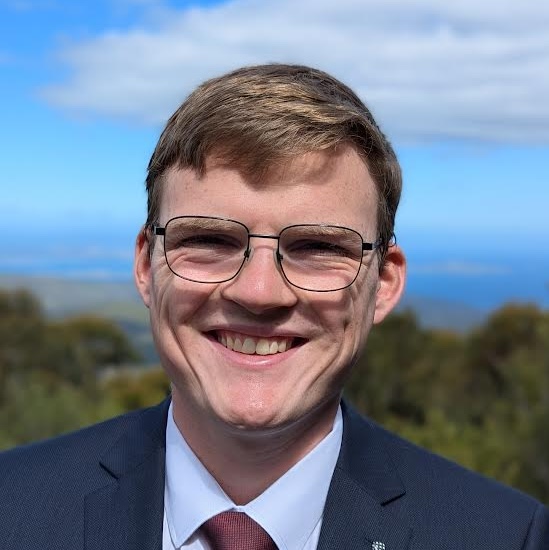
William Sinclair
William is an economist and mathematician.
“People on the progressive end of the political spectrum have legitimate questions: Why can’t they just stop new coal and gas? Why can’t they just end the AUKUS program or stand up to Donald Trump or do all the ambitious things that progressively minded people would support?
“This podcast tries to answer these sorts of questions in a compassionate way without the dismissiveness that often accompanies mainstream politics. We try to examine the other side’s point of view without condescension or contempt. I wanted to make a podcast that would rise above the petty politics of gossip, horserace punditry and psychological conjecture on politicians that passes for analysis. I wanted to talk about the thing that really matters: policy.
“I hope our listeners will hear an argument they genuinely find novel and reach their own conclusions about what we’re discussing.”
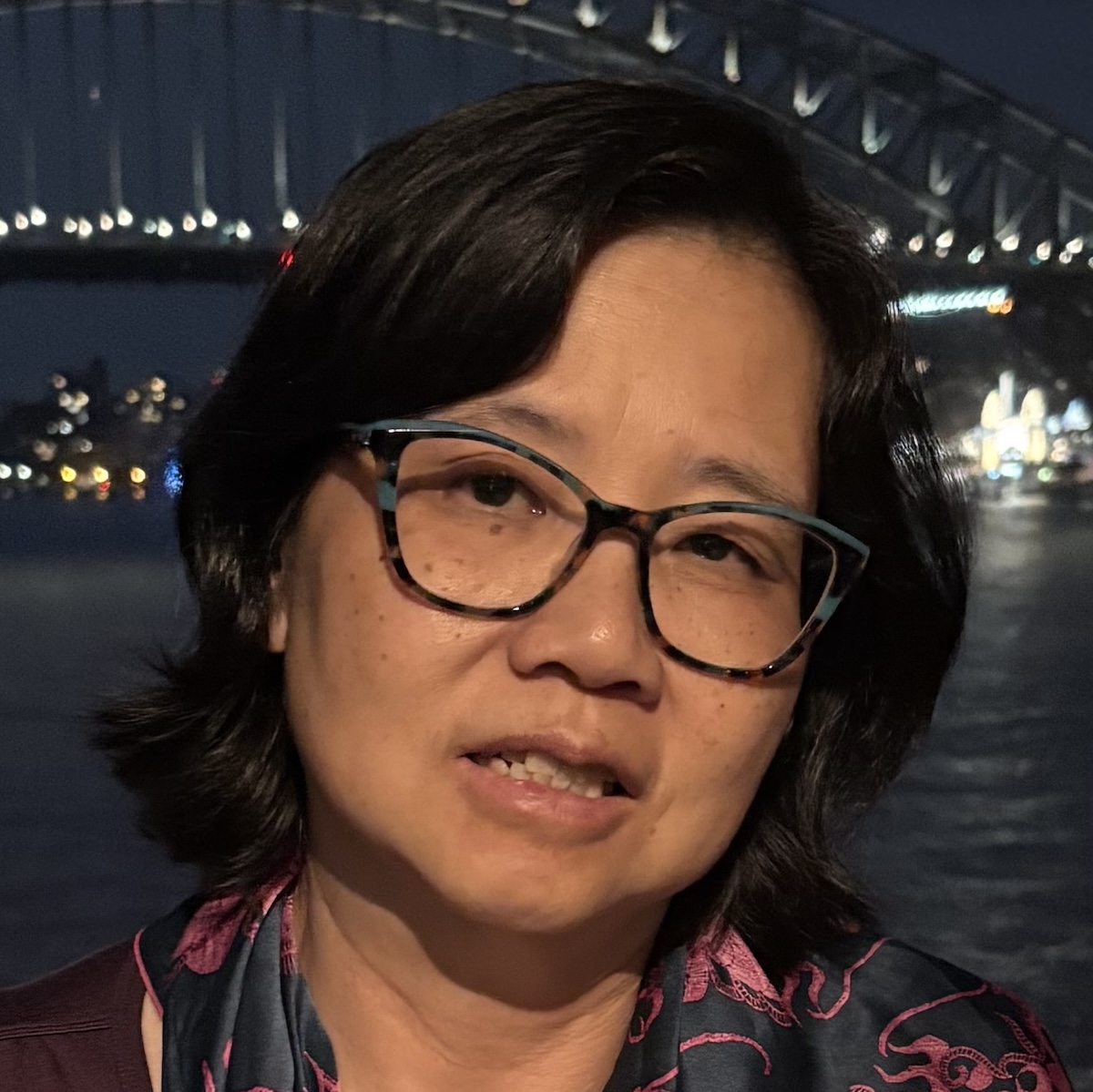
Janaline Oh
Janaline is a former diplomat and current climate, environment and anti-racism activist.
“As a longstanding Canberra-based bureaucrat, I believe in the power of policy to shape and improve lives. I am also acutely aware of the importance of having those policies understood by the people affected by them.
“I started Why Can’t They Just? as way of moving beyond slogans and into what policies really are and what they mean for real people.”